
Livraison le jour même ou le lendemain

Qualité garantie

Débloquez vos offres de bienvenue: Livraison GRATUITE | Jusqu'à -80 % | 30 jours d'essai gratuits à JoyPlus
Téléchargez l'application
Waking up with sneezes, a runny nose, and itchy eyes? If this sounds familiar, you're likely one of the millions of people allergic to dust mites. These microscopic pests love to nest in our mattresses and sofas. To get rid of them, the dust mite vacuum cleaner has become the go-to solution. The problem: between marketing promises and sometimes obscure technical jargon, it's hard to know what to choose.
As a product expert at Joybuy, my mission is to help you cut through the noise. Let's forget the marketing jargon and focus on what's essential: here are the pitfalls to avoid and the criteria that really matter to make the right choice.
Investing in an ineffective device is a waste of money that allows allergens to thrive. Here are three major pitfalls to avoid:
For an effective fight against dust mite allergies, three technical features are crucial. This is what separates a gadget from a truly effective device.
To eliminate dust mites from beds and sofas, you first need to dislodge them. This is the role of the tapping (or vibrating) function. A good device should offer a frequency of several thousand beats per minute. This vibration detaches mites and their eggs from textile fibres. Next, powerful suction (generally above 10,000?Pa) is needed to permanently extract them from the fabric. One is ineffective without the other.
A HEPA (High-Efficiency Particulate Air) filter can capture 99.97% of particles as small as 0.3 microns. This includes mite droppings, pollen, and other microscopic allergens. It's your guarantee that the air expelled by the device is cleaner than the ambient air. Some models even offer dual filtration for enhanced safety—a real bonus for the most sensitive individuals.
In addition to the tapping/suction duo, two features add genuine value:
Rather than an endless list, we've selected models that meet our demanding criteria, matching them with specific user profiles.
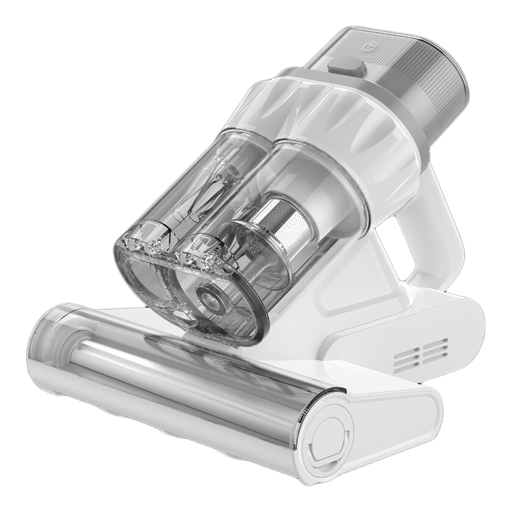
Why we chose it: This model is designed for those who want to make no compromises on mechanical action. Its very high tapping frequency is engineered to dislodge the most stubborn allergens from thick mattresses or dense upholstery.
It doesn't rely on suction alone. It combines a power of 12,000 Pa with a tapping frequency of 72,000 beats/min, ensuring deep action where others only act on the surface.
The 65 °C hot air function helps create a dry, hostile environment for dust mites, complementing the mechanical and suction action.
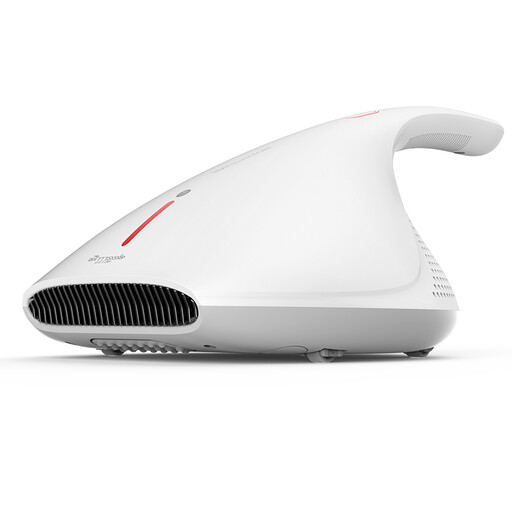
Why we chose it: Ideal for regular use on various surfaces (mattresses, sofas, rugs). Its balanced approach and advanced filtration system make it a reliable ally for maintaining a healthy home day-to-day.
It directly tackles the faulty filtration trap with its dual-layer HEPA filtration system, which ensures maximum capture of allergens and prevents them from being released back into the air.
Its 4-in-1 system (tapping, 13,000 Pa suction, 50°C hot air, and UV-C lamp) offers a comprehensive and versatile cleaning approach.
We have compiled a comprehensive, up-to-date list of products that meet our strict selection criteria and current quality standards.
For allergy sufferers, weekly use is recommended to keep the mite population and allergen concentration low. For general hygiene maintenance, using it every two weeks or once a month may be sufficient.
It depends on the model. Some HEPA filters are designed to be rinsed with water and reused, while others are disposable and must be replaced every 3 to 6 months. It is crucial to read your device's manual carefully. A poorly maintained filter loses its effectiveness and can damage the appliance.
No, it is a complementary device. A dust mite vacuum is specifically optimised for upholstery and textiles thanks to its tapping, hot air, or UV-C sterilisation functions. A canister or stick vacuum remains essential for cleaning floors and other hard surfaces.