
Livraison le jour même ou le lendemain

Qualité garantie

Débloquez vos offres de bienvenue: Livraison GRATUITE | Jusqu'à -80 % | 30 jours d'essai gratuits à JoyPlus
Téléchargez l'application
By the Joybuy Editorial Team – Published August 26, 2026
Sneezing when you wake up, a runny nose, nighttime itching? If this combination sounds familiar, you're likely living with dust mites. These microscopic creatures thrive in warm, humid environments like mattresses, pillows, and sofas, where they feed on our dead skin cells. For allergy sufferers, daily life can quickly become a nightmare, with a serious decline in sleep quality.
To get rid of them, a dust mite vacuum cleaner is often presented as the perfect solution. But be careful—the market is flooded with models making vague marketing promises. Before you pull out your credit card, here are the pitfalls to avoid so you don't invest in an ineffective gadget.
For an informed choice that will provide a real solution to your allergy problem, focus on three non-negotiable technical features.
The secret to a deep mattress clean lies not in suction alone, but in the combination of suction and a tapping function. Integrated vibrating pads tap the fabric at a very high speed (several thousand times per minute).
Vacuuming up allergens is one thing; trapping them is another. A device without adequate filtration will just release the smallest allergenic particles back into your bedroom air, which would only worsen the problem.
When well-designed, these two functions provide a real advantage.
We analysed several models based on the technical criteria described above. Here are our recommendations, tailored to different needs and budgets.
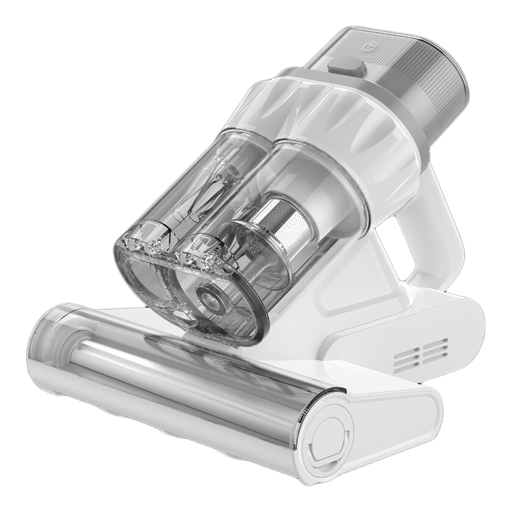
Why it stands out: For those who are serious about allergies, the ability to dislodge allergens from deep within fabrics is the number one criterion. This model focuses entirely on a very high tapping performance for maximum mechanical action.
It goes far beyond simple suction. Its tapping frequency of 72,000 beats/min is designed to dislodge the most deeply embedded mites. Its 65°C hot air is also a major asset, far superior to the average.
The combination of ultra-fast tapping and very hot air creates an uninhabitable environment for mites. The sanitisation is thorough and effective.
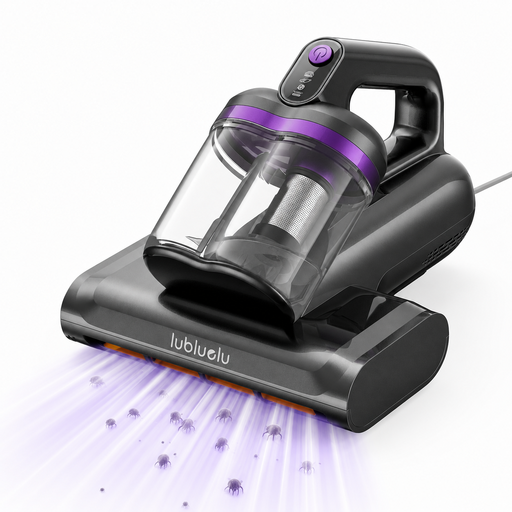
Why it stands out: For regular maintenance of children's bedding, sofas, and play mats, you need a device that is both powerful and versatile. This model checks all the boxes with strong suction and a large dustbin.
It combines powerful 15 kPa suction with vibrations and 55°C hot air drying. This 3-in-1 approach ensures a much more thorough clean than simple suction.
Its high suction power and 650 ml dustbin make it perfect for cleaning multiple mattresses or a large sofa without having to empty it every five minutes.
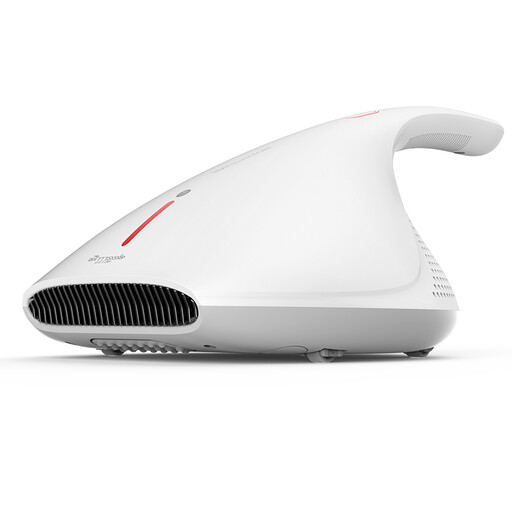
Why it stands out: For those who want a handheld anti-mite vacuum that's easy to integrate into their routine, this lightweight and easy-to-handle model is the perfect place to start.
Rather than focusing on a single feature, it relies on the synergy between all key functions: tapping (8,000/min), suction (13 kPa), hot air (50°C), and a UV-C lamp.
Its feather-light weight (1.45 kg) and ergonomic design make it an incredibly easy-to-handle ally for the regular maintenance of mattresses, sofas, and other textiles.
Explore our full range of products that meet our selection criteria and safety standards.
For allergy sufferers, weekly or even bi-weekly use on the mattress is recommended to maintain a low concentration of allergens. For general hygiene maintenance, a pass every two weeks is sufficient. Sofas, cushions, and other textiles can be treated once a month.
Absolutely not, and this is a common mistake. A conventional canister vacuum, even with an upholstery tool, does not have the high-frequency tapping function that is essential for dislodging mites. Furthermore, if it isn't equipped with a high-performance HEPA filter, it's more likely to release allergens back into the room's air. The hot air and UV lamp functions are also absent.
Rest assured, maintenance is very simple. It involves emptying the dustbin after each use to maintain optimal suction. The HEPA filter should be cleaned regularly according to the manufacturer's instructions. Most filters are washable with water, but it is imperative that it is completely dry before being put back in place to preserve its effectiveness and prevent mould growth.