
Livraison le jour même ou le lendemain

Qualité garantie

Débloquez vos offres de bienvenue: Livraison GRATUITE | Jusqu'à -80 % | 30 jours d'essai gratuits à JoyPlus
Téléchargez l'application
Over time, a mattress accumulates dust, dead skin cells, pet hair and fine particles. For those sensitive to dust mites, families or households with pets, regular use of a dedicated device can complement airing the room, washing the bedding and using a suitable mattress protector.
However, be aware: the market includes both genuine appliances designed for bedding and simple stick vacuums fitted with a light. Before buying a vacuum cleaner for dust mites on mattresses, it's worth separating the genuinely useful features from the harder-to-verify claims.
A high figure in kilopascals or watts does not, on its own, guarantee deep cleaning of your mattress. Performance also depends on the head design, how well it contacts the fabric, the airflow and the filter's ability to stay effective as it starts to fill up.
A very powerful machine that is heavy or awkward to manoeuvre will likely end up at the back of a cupboard. For regular maintenance, ergonomics, weight and cord length are almost as important as the advertised power.
The presence of a UV light does not mean the entire mattress surface is disinfected instantly. Its effectiveness depends on distance, exposure time, how clean the lamp is and how quickly you move the device.
UV disinfection of the bed should therefore be seen as a supplementary feature, not a substitute for washing your sheets, airing the room or following the manufacturer's care instructions. Never look directly at the UV source and always follow the safety instructions carefully.
A bagless vacuum cleaner saves you buying replacement bags, but emptying it can release more dust into the air if the bin is poorly designed. A filter that is difficult to remove or dry can also make daily use more of a chore.
Check for a removable dust bin, a washable filter (where the manufacturer recommends it) and a sealing system that is sufficiently airtight. The filter must be maintained according to the instructions and should never be refitted while still damp.
To choose a powerful dust mite vacuum, start by looking at the combination of suction and cleaning head. A brush designed for mattresses should lift particles without snagging excessively on the fabric or damaging it.
The specifications quoted by some models offer a few points of comparison:
For pillows and bedding, choose a manoeuvrable device with a stable handle and a sufficiently wide head. Slow, steady passes generally make better use of the suction than quick movements.
A vacuum cleaner with a HEPA filter can help limit the release of fine particles during use. However, take the time to check the exact wording on the spec sheet: "HEPA filter", "high-efficiency filtration" and "multi-layer filtration" do not necessarily mean the same level of equipment.
Even with good filtration, the dust bin should be emptied carefully. If you are allergic, wearing a mask during maintenance can be helpful. When possible, empty the device outdoors and follow the manufacturer's recommendations.
A mattress vacuum with an LED display can show the mode in use, operating status or certain parameters. For the Uwant M300, the product listing mentions a smart display that shows the dust mite level and ambient humidity. These readings should be taken for what they are: information provided by the device, not a medical measurement or a diagnosis of your bedding's condition.
On a cordless model, check the actual battery life depending on the mode selected, the charging time and whether a replacement battery is available. In a child's bedroom, a corded model can also make sense if you prefer to avoid interruptions for recharging.
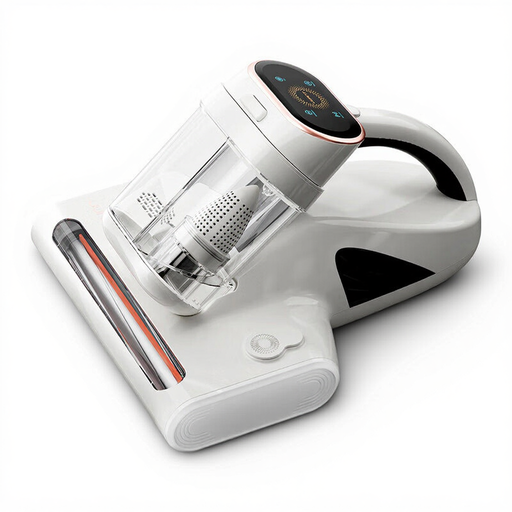
Why this choice suits this profile: Its dedicated mattress design, claimed weight of 2.2 kg and 4.5 m cord make it a suitable device for regular maintenance of beds, pillows and upholstery fabrics.
The bagless bin and removable filter make emptying and maintenance simple. The UV light remains a supplementary function, to be used in accordance with the instructions in the manual.
Claimed suction of 13 kPa, HEPA filter, LED display and noise level given as 65 dB.
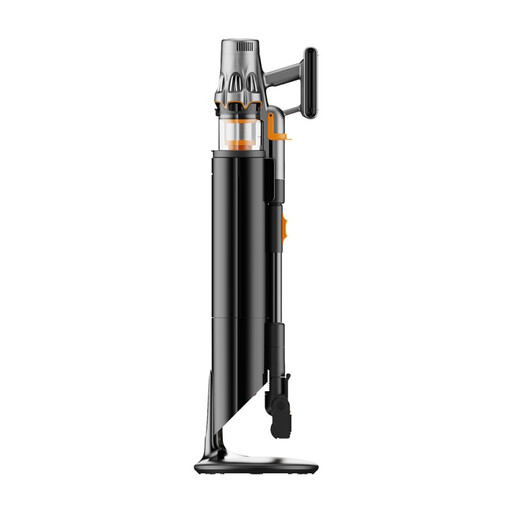
Why this choice suits this profile: This cordless model is aimed at larger homes and those who want to tackle floors, carpets, sofas and bedding with a single versatile device.
Its automatic emptying station means you don't have to handle the dust bin after every use. However, it is still essential to check that the accessories are suitable for direct use on a mattress.
Claimed battery life of up to 100 minutes, 0.6 l dust bin, multi-layer filtration and a station with a UV function according to the product listing.
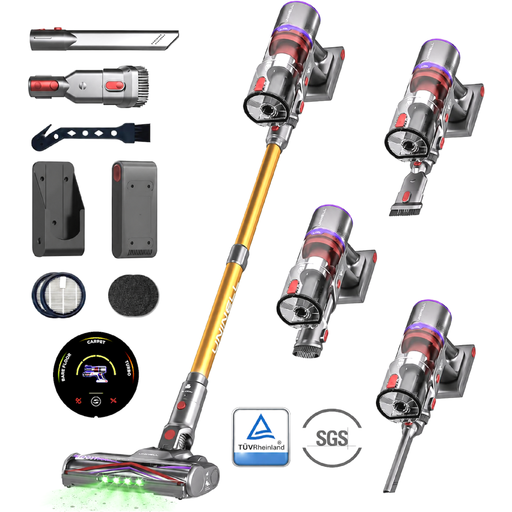
Why this choice suits this profile: It converts into a handheld vacuum and comes with several accessories for moving from floors to sofas, stairs, nooks and fabric surfaces.
The screen shows remaining battery life and certain maintenance needs. The anti-tangle brush is useful in homes with pets, though it doesn't replace regular brush cleaning.
Claimed battery life of up to 65 minutes, 700 ml dust bin, seven-stage filtration and an LED light integrated into the head.
We have put together a comprehensive, real-time updated selection of products that meet these criteria as well as European safety requirements.
Remove the sheets and let the mattress air out before you start. Use the device on a dry surface, move it slowly and focus on the seams, edges and the most used areas. Don't press too hard on the head: you risk reducing the airflow.
Once you have finished cleaning, empty the dust bin and maintain the filter following the instructions in the manual. Washing your sheets at the temperature indicated on their label, airing the room and reducing humidity remain essential steps to complement this.
No. UV light can complement suction, but its effectiveness depends on the conditions of use and the actual exposure of the surface. It does not replace regular bedding maintenance or measures tailored to individual sensitivities.
It depends on how often you use it, how much dust is sucked up and how well it is maintained. The motor, the battery on cordless models, the filter and the brush are all parts to keep an eye on. A clogged filter can reduce performance; it should be replaced according to the manufacturer's instructions.
A corded model uses electricity each time you use it, while a cordless model needs to be recharged and may require a battery replacement in the longer term. A bagless bin saves you buying bags, but filters and certain wear-and-tear parts may still need replacing. Consider all these costs, in addition to the purchase price, before making your choice.