
Livraison le jour même ou le lendemain

Qualité garantie

Débloquez vos offres de bienvenue: Livraison GRATUITE | Jusqu'à -80 % | 30 jours d'essai gratuits à JoyPlus
Téléchargez l'application
Waking up with sneezes, a runny nose, or simply seeking a healthier sleep environment? Rest assured, you're not alone. Our mattresses, sofas, and other upholstery are home to millions of invisible guests: dust mites. To tackle this, buying a dust mite mattress vacuum seems like the perfect solution. However, the market is flooded with products making tempting promises that don't always deliver.
As a product expert at Joybuy, my mission is to help you see things more clearly. Let's cut through the marketing jargon and focus on what really matters. Here are the 3 most common pitfalls that can lead to buyer's remorse, and more importantly, how to avoid them.
Pitfall #1: Relying Solely on Wattage High power (measured in watts) is often promoted as a guarantee of effectiveness. This is a critical mistake. To dislodge dust mites and their allergenic waste, which cling tightly to textile fibres, suction alone is not enough. A device without mechanical action will merely skim the surface, leaving the core of the problem untouched.
Pitfall #2: Believing in the Magic of a Simple Blue LightUV bed sterilisation is an appealing feature, but be warned: not all lamps are created equal. Let's be clear: a simple blue LED has no germicidal effect. To be effective, the device must be equipped with a genuine UV-C lamp, which emits at a specific wavelength (around 254 nm). What's more, its effectiveness depends on exposure time. A quick pass renders the feature completely useless.
Pitfall #3: Overlooking the Filtration System Vacuuming up allergens is one thing. Preventing them from being immediately released back into the room's air is another. A device with a poor-quality filter or a poorly sealed chassis can actually worsen the situation by dispersing the finest particles—the ones most irritating to the respiratory system.
To avoid falling into these traps, there are three technical criteria you must check before you buy. They are the foundation of a truly effective device for eliminating dust mites.
The non-negotiable criterion. To extract dust mites from deep within your mattress or for an anti-allergy sofa cleaning, the device must create vibration or a beating action.
Once the dust mites are dislodged, a complementary action can help sanitise the surface.
This is the last line of defence. A certified anti-allergy vacuum must trap what it vacuums up.
Rather than an endless list, we've selected devices that meet specific needs, all evaluated against the objective criteria defined above.

Why it's a great choice: This is a true specialist, designed from the ground up for bedding and upholstery. It hits the mark by targeting users who need a focused, powerful solution for allergens and pet hair.
It combines high power (600W) with a dual rotating brush for deep mechanical action. Its UV sterilisation technology is paired with ultrasound, and its patented dual-cyclonic filtration with a washable filter prevents particle exhaust.
The LED dust sensor, which automatically adjusts power, is a real bonus. The dual-brush design is especially effective for tackling even the most stubborn pet hair.
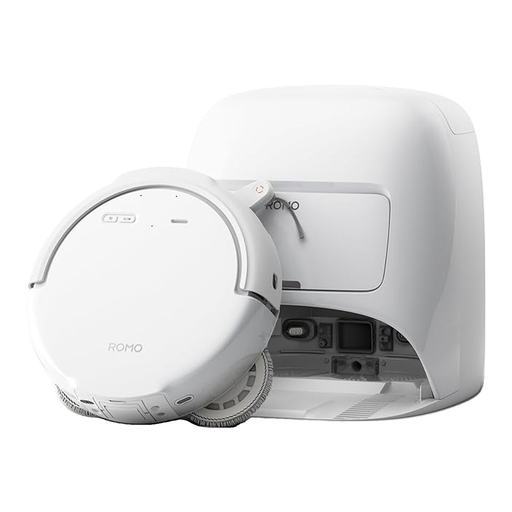
Why it's a great choice: For those who prefer a holistic solution, this robot vacuum tackles the problem at its source. By reducing the allergen load (dust, pollen, hair) on floors throughout the home, it perfectly complements a targeted cleaning of your bedding.
While it's not a handheld bed vacuum, it prevents build-up. Its powerful suction (25,000 Pa) and anti-tangle brush effectively capture allergens on the floor before they become airborne and land on your bedding.
Its fully automated operation, from obstacle detection to self-emptying and mop drying, offers a nearly effortless deep-cleaning solution.
We have prepared a complete, up-to-date selection of products that meet our strict selection criteria and current safety standards.
For sensitive or allergic individuals, a weekly pass is an excellent baseline. For general hygiene maintenance, once or twice a month is sufficient. Don't forget to also treat pillows, duvets, and sofas.
Yes, without a doubt for this specific task. A standard canister vacuum, even a powerful one, typically lacks the beating action or rotating brushes needed to dislodge mites embedded deep in the fibres. Furthermore, specialised models are lighter, more manoeuvrable, and equipped with filtration and sterilisation systems designed specifically for this purpose.
No, provided the device is well-designed. Reputable, standards-compliant models include proximity sensors. The UV-C lamp only activates when the vacuum is flat against a surface and instantly shuts off when lifted, eliminating any risk to the user.