
Livraison le jour même ou le lendemain

Qualité garantie

Débloquez vos offres de bienvenue: Livraison GRATUITE | Jusqu'à -80 % | 30 jours d'essai gratuits à JoyPlus
Téléchargez l'application
A durable plastic fence can be used to define a garden boundary, secure a work area, create an animal enclosure or provide privacy on a balcony. However, not all mesh fencing is designed to withstand the same conditions. Mesh suitable for a flower bed may not be appropriate for an aviary or an installation exposed to strong winds.
Before placing your order, check three points that are often overlooked in marketing claims:
To avoid buying a product that is not the right size or specification, match the material, dimensions and installation method to the intended use.
Polypropylene is commonly used for plastic mesh fencing. It makes it possible to produce a lightweight, flexible structure that is resistant to corrosion. Unlike metal fencing, it does not rust, which can make a real difference in damp areas or near the coast.
However, check for the terms UV stabilised or UV resistant. These indicate that the material is designed to retain its properties despite prolonged exposure to sunlight. This does not make the mesh indestructible: regular inspections are still essential, particularly after a period of strong winds or frost.
The height and length of the roll determine both the number of supports required and the installation time. A 1 × 10 m roll may be suitable for a small divider, temporary protection or a modest-sized building site. A 1 × 100 m model is more suitable for large plots, enclosures or agricultural installations.
The mesh size should also be chosen according to what you want to contain or prevent from getting through. For mesh intended for domestic animals, mesh that is too wide may allow smaller animals to escape. In a garden, it may simply be used to mark out a boundary or protect plants.
Although lightweight and easy to install, a fence must be securely attached to posts, a structure or an existing support. Cable ties, staples and other fasteners are not always included, so remember to have them ready before installation.
Plastic fencing mesh should not be used as a climbing net, guard rail or safety barrier unless it has the certification required for that purpose. If you are using it for animals, also avoid areas where it could form a loop or leave a sharp edge after cutting.
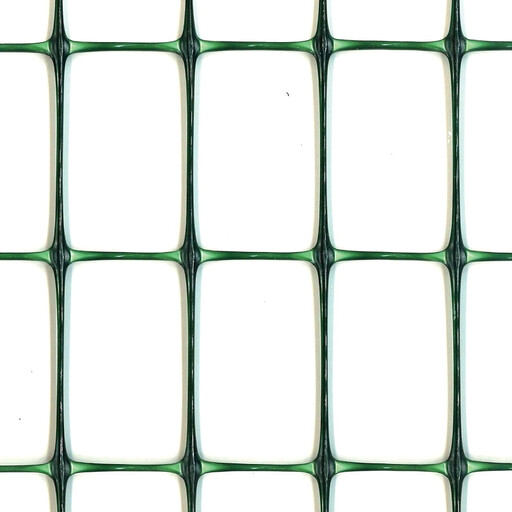
Why this product suits this profile : With its 1 × 10 m format and stated weight of 2 kg, this roll is easy to handle for a first garden project, a divider or temporary protection.
The stated dimensions make it possible to estimate the coverage area before buying, while the plastic material avoids the corrosion problems associated with some metals.
A 1,000 cm by 100 cm roll, lightweight construction and suitable for use in gardens, landscaping or on a building site.
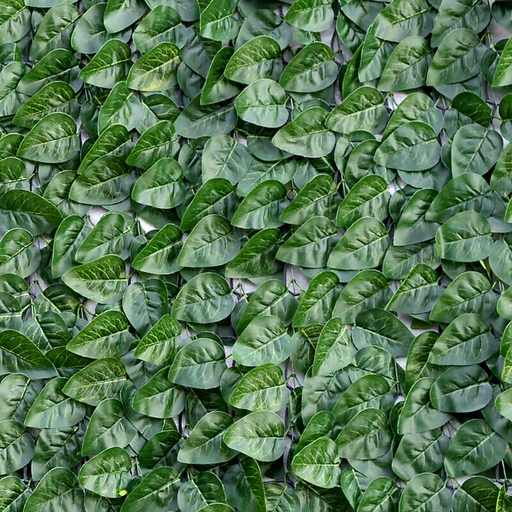
Why this product suits this profile : This 150 × 300 cm artificial privacy hedge is designed for terraces, balconies, pergolas and fences where appearance matters just as much as creating a divide.
This panel is designed to be attached to a fence, wall or pergola, so it should not be mistaken for a freestanding structure.
High-density polyethylene foliage, flexible plastic mesh and materials stated to be resistant to UV rays and the weather.
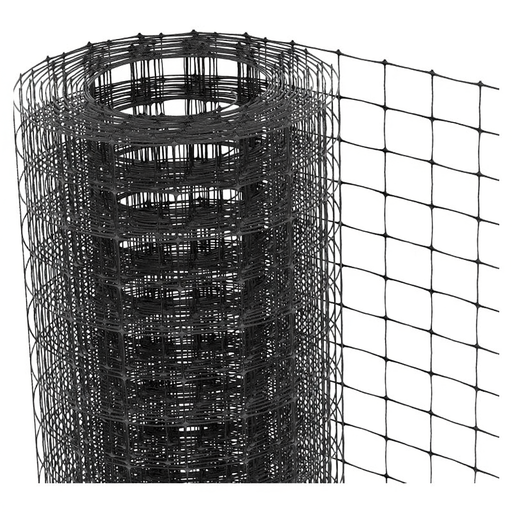
Why this product suits this profile : At 1 × 100 m, this roll is suitable for enclosures, poultry runs, aviaries, large gardens and projects requiring numerous cuts.
Its use for domestic and farm animals is clearly stated, with a warning against using it as a safety barrier or climbing net.
Polypropylene treated using molecular bi-orientation, UV stabilisation, easy cutting with scissors and cleaning with water.
For a permanent residential installation, the Tenax Millennium Silver 2 × 50 m is also worth considering if you are looking for polypropylene fencing with a metallic appearance. Its 2 × 50 m dimensions, 35 × 48 mm mesh and stated resistance to saltwater corrosion and UV rays make it particularly suitable for exposed sites. It must nevertheless be securely anchored to suitable posts or a suitable structure.
We have put together a complete, real-time updated selection of products that meet these demanding selection criteria and European safety regulations.
It depends on the material, its UV stabilisation, the quality of the fixings and its exposure. A product advertised as resistant to UV rays and the weather may be suitable for outdoor installation, provided it is inspected regularly. Wind, friction and impacts can shorten its lifespan.
Unroll it along posts or a frame, then secure it with cable ties, staples or fasteners compatible with the support. The fixing points should be distributed across the full height and length. Plastic mesh should not be left unanchored or used as a freestanding barrier unless it was designed for that purpose.
Routine maintenance is limited : remove leaves and dirt, then rinse with water if necessary. This does not eliminate the need for regular checks. Garden fencing or mesh for domestic animals should be replaced as soon as a section of mesh, a fixing or part of the fence becomes unstable.