
当日/次日达

品质保障

开启新人专享福利: 全场免邮 | 低至 2 折 | 免费试用 30 天 JoyPlus 会员
下载 Joybuy
A duck feather and down duvet often provides a cosy, enveloping feel while effectively regulating temperature. However, with sometimes vague terminology, care instructions and differences in filling, product descriptions do not always give you a clear idea of the comfort you can expect. A duvet described as “natural” will not necessarily be suitable for every season or every bedroom in the UK.
Before placing your order, three common pitfalls are worth bearing in mind:
The composition should be stated clearly and unambiguously. A duvet made from 90% duck feathers and 10% down will generally offer more support than a model filled mainly with down. It may suit sleepers who prefer a substantial cover that stays nicely in place on the bed.
By contrast, a high proportion of down often creates a lighter, softer duvet. Comfort also depends on the filling weight and the quality of the stitching, however. It is therefore better to consider the composition as a whole rather than focusing solely on the word “down”.
The same distinction applies to accessories:
A cover made from cotton or organic cotton generally feels pleasant against the skin and helps air circulate. Some of the models featured here use a satin-finish organic cotton percale with a stated density of 129 threads/cm².
Square quilting keeps the filling in place and helps prevent cold spots from forming. This is particularly useful with a warm duck down duvet designed for cold nights or poorly heated bedrooms.
Certifications shown on a product page should be considered in context. References such as OEKO-TEX Standard 100, CertiPUR-US, Sanitized or ISO 9001 relate to compliance requirements or quality-management processes stated by the manufacturer. They are not medical guarantees and, on their own, are not enough to determine whether a product is suitable for someone with allergies.
Here are a few guidelines to help you avoid choosing the wrong size:
Also remember to measure the depth of your mattress and decide how much overhang you would like. For a shared bed, a wider duvet can help prevent midnight arguments and unwanted tugging.
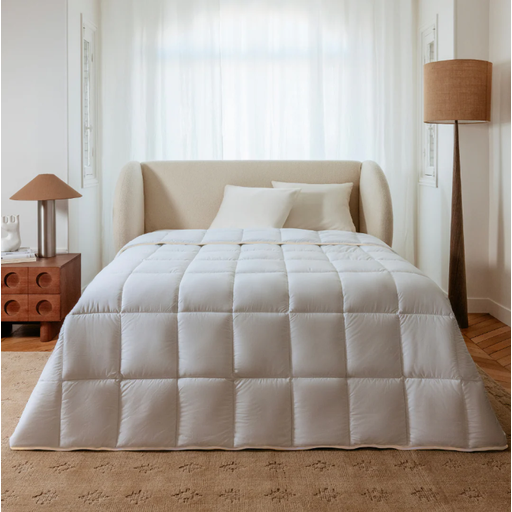
Why this choice suits this profile : Its single-bed size and high warmth rating make it an affordable choice for a cold or poorly heated bedroom.
The stated composition of 90 % feathers and 10 % down is clearly indicated, as are the instructions to wash at a maximum of 40 °C.
140 x 200 cm size, square quilting, a stated organic cotton satin cover and a recommendation to tumble dry gently.
Why this choice suits this profile : This large size is ideal for couples and double-bed owners looking for generous winter coverage.
The size is clearly specified, while the square quilting helps distribute the filling evenly across the entire surface.
240 x 260 cm dimensions, stated natural filling, organic cotton satin cover and care instructions allowing washing at a maximum of 40 °C.
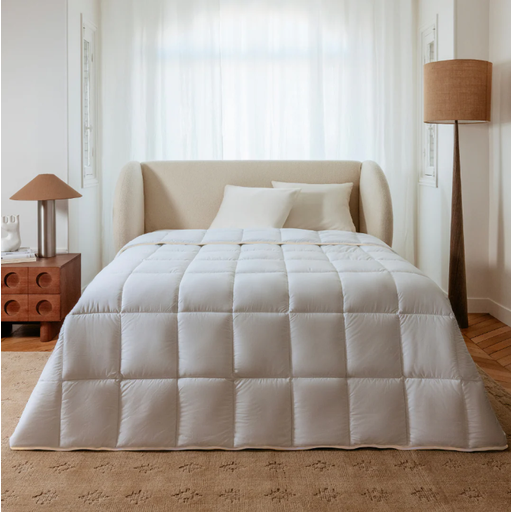
Why this choice suits this profile : This lightweight all-season duvet is suitable for homes where the temperature varies and for people who would rather not change their bedding throughout the year.
The product description distinguishes its all-season use from that of a winter duvet and specifies the washing instructions and low-temperature drying requirements.
220 x 240 cm size, stated filling of 90 % feathers and 10 % down, square quilting and organic cotton satin cover.
We have put together a complete, real-time updated selection of products meeting these exacting criteria, in compliance with European safety regulations.
A duck feather and down duvet will retain its loft better if it is aired and shaken regularly. Avoid leaving it compressed for long periods in an airtight bag, except for seasonal storage, and use a suitable duvet cover.
For the models featured, the care instructions generally recommend:
Drying deserves particular attention: filling that is still damp may lose its volume and retain odours. Always check the sewn-in care label, which takes precedence if it differs from the general recommendations.
To complete your bedding set, a 50 x 70 cm or 60 x 60 cm pillow can use a similar feather and down composition. A 140 x 190 cm, 160 x 200 cm or 180 x 200 cm mattress topper will, meanwhile, alter the initial feel of the mattress. Before ordering, check the dimensions, whether elasticated straps are included and the available washing options.
Not necessarily. A very warm winter duvet is better suited to cold bedrooms and sleepers who feel the cold. For more versatile use, choose a model described as lightweight or all-season, taking the room’s heating level into account.
For a double bed, 200 x 200 cm, 220 x 240 cm and 240 x 260 cm are the most common sizes. The right choice depends on the width of your mattress and the overhang you want. Measure your bed and compare the exact dimensions with those of the available duvet cover.
Air the duvet in a dry place, shake it gently and allow it to dry completely after each wash. A breathable duvet cover, changed regularly, also helps minimise moisture build-up. If you are sensitive, check the detailed specifications and the manufacturer’s instructions rather than relying solely on the term “hypoallergenic duvet”.