
Livraison le jour même ou le lendemain

Qualité garantie

Débloquez vos offres de bienvenue: Livraison GRATUITE | Jusqu'à -80 % | 30 jours d'essai gratuits à JoyPlus
Téléchargez l'application
Choosing the right food for your cat can quickly become overwhelming. With shelves overflowing with promises, it's hard to separate marketing hype from genuine quality. Duck p?té for cats, often marketed as a gourmet, easily digestible option, is no exception. As the Head of Product Curation at Joybuy, my mission is to help you navigate this landscape. We're breaking down the common pitfalls to avoid and the criteria that truly matter, so you can make an informed choice.
Before you fill their bowl, watch out for these common mistakes that can be costly—for both your wallet and your cat's health.
The term "with duck" on packaging is often misleading. European regulations allow this claim even if the product contains as little as 4% duck! The rest is often just a mix of unspecified meats and animal by-products of questionable quality. You might think you're serving a feast, but your cat is actually consuming only a minuscule fraction of the meat promised on the label.
Never forget that cats are obligate carnivores. Their digestive systems are not designed to process large amounts of carbohydrates. Yet, many commercial p?tés are packed with grains (like wheat and corn), which primarily serve as cheap fillers. As for added sugars, sometimes hidden under names like "various sugars," they offer no nutritional value and can contribute to long-term health problems. Choosing a grain-free cat p?té is therefore a great first step toward higher quality.
Not all p?tés are created equal, nutritionally speaking. A complete food is, as the name suggests, formulated to cover 100% of your cat's daily nutritional needs. Conversely, a complementary food, such as a liquid duck treat for cats, is just a treat. Serving it as a main meal would expose your pet to serious nutritional deficiencies.
To avoid falling for these tricks, here are the three things to check before choosing a duck wet food for your cat.
A quality product is defined by its transparency. Prioritise labels that specify the exact meats and parts (e.g., "50% duck meat," "15% turkey hearts") and avoid vague terms like "meat and animal derivatives." A high percentage of clearly identified meat at the top of the ingredient list is the best indicator of quality.
Look for labels like "grain-free," "gluten-free," and "no added sugars." The absence of artificial preservatives, colourants, and flavourings is another excellent sign. As a rule of thumb, a short, understandable ingredient list is the sign of a healthier product that respects your cat's needs.
The packaging format also matters. An 85g or 125g duck freshness pouch for cats is perfect for a single serving, ensuring optimal freshness and minimising waste. The more economical 400g cans are a good option if you have multiple cats, provided you can use them quickly after opening (typically within 24 to 48 hours, refrigerated).
To help you choose, here are a few products that tick all the right boxes and meet specific needs.
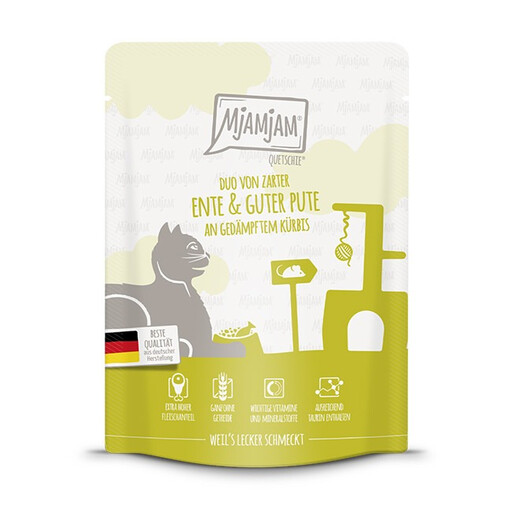
Why we chose it: For owners who refuse to compromise on quality. This recipe combines two premium meats for an intense flavour and features an ultra-transparent ingredient list, perfect for the most discerning palates.
The ingredient list is crystal clear: 56% turkey and 14% duck. That's a far cry from the 4% minimum. The formula is guaranteed grain-free, gluten-free, and has no added sugars.
Extremely high meat content (70%) and the use of real cuts (meat, stomachs, liver). A complete and perfectly balanced food.
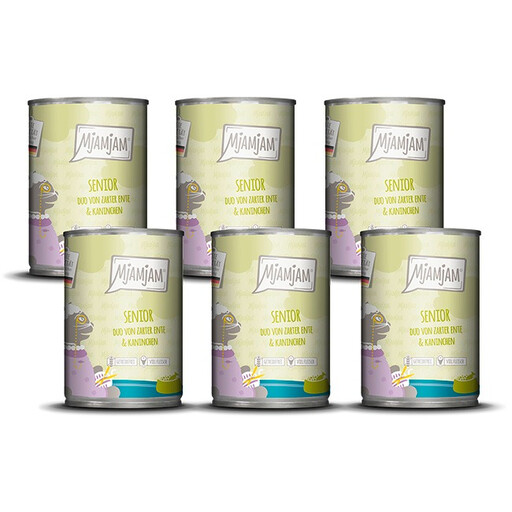
Why we chose it: A formula specially designed for the needs of older cats. Its moderate fat content and enriched recipe help support the vitality of seniors.
This senior cat p?té with duck is grain-free and includes beneficial ingredients like salmon oil and green-lipped mussel, all without unnecessary additives.
The recipe is truly tailored for seniors (highly digestible proteins, controlled phosphorus) and the rabbit/duck duo offers a unique flavour profile.
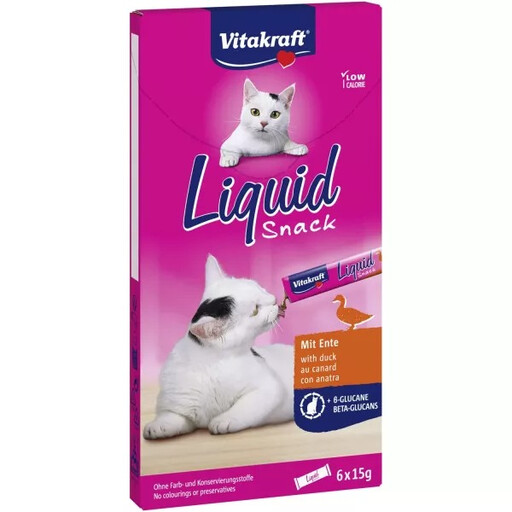
Why we chose it: Ideal for a bonding moment, hydrating your cat in the summer, or stimulating a picky eater's appetite. Tip: this liquid treat can be frozen to create an ultra-refreshing cat-friendly ice cream.
This product is transparent about its purpose: it's a complementary food, not a meal. This eliminates the risk of nutritional deficiencies. As a bonus, its formula is low-calorie.
Its liquid format in individual sachets makes it incredibly convenient. It can be hand-fed, poured over kibble to make it more appealing, or even frozen.
Discover our full selection of duck p?tés, all rigorously chosen according to our quality criteria.
The serving size depends on many factors: your cat's weight, age, activity level, and of course, the type of product (complete or complementary). As a guideline, for a complete food, an adult cat weighing 4 kg will consume an average of 200 to 300g of p?té per day, ideally split into several meals. The safest approach is to follow the manufacturer's recommendations on the packaging and adjust based on your cat's weight changes.
Yes, duck is a protein known for being highly digestible and having a low allergenic potential. A grain-free, single-protein duck p?té (meaning duck is the only meat source) is often an excellent choice for a cat with a sensitive stomach or allergies. Since every animal is different, remember to introduce any new food gradually.
Once opened, the p?té must be stored in the refrigerator, either in an airtight container or covered with plastic wrap. Consume it within 24 to 48 hours to ensure its freshness and prevent bacterial growth. Pro tip: take it out of the fridge a few minutes before serving to let it return to room temperature. Most cats will enjoy it much more