
Livraison le jour même ou le lendemain

Qualité garantie

Débloquez vos offres de bienvenue: Livraison GRATUITE | Jusqu'à -80 % | 30 jours d'essai gratuits à JoyPlus
Téléchargez l'application
A duck feather and down duvet can offer a soft, cosy feel and natural temperature regulation. However, not all options are created equal. Ambiguous composition, poorly chosen dimensions or more demanding care than expected – a few checks are essential before you place your order.
Down is generally lighter and more lofty, while feather provides more structure and density. A duvet made up of 90% feathers and 10% down won’t have the same loft or feel as a model filled mainly with down. Always check the composition details: the simple word “down” in the title isn’t enough.
A warm duvet can be pleasant in a poorly heated bedroom, but quickly become stifling in a well-insulated home. Conversely, a lightweight duvet may not be enough for those who feel the cold. The weight, filling density and your room’s usual temperature are often more telling than commercial labels like “warm” or “all-season”.
A poorly compartmented duvet can develop cold spots if the filling shifts. Box-stitching or compartment construction helps maintain a more even distribution. Also, check your washing machine’s capacity: some models require a machine of at least 12 kg, or even professional cleaning.
For a natural duvet, look separately at the proportion of feathers and down, then at the cover material. A cotton cover, whether sateen or percale, offers a different feel to a polyester one. Cotton is often appreciated for its more breathable sensation, while polyester appeals for its generally simpler care and more accessible price.
Certifications alone don’t guarantee comfort or suitability for your needs. Oeko-Tex Standard 100, CertiPUR, Sanitized and ISO 9001 refer to different standards and compliance information. Their presence doesn’t automatically mean the duvet will suit all allergy sufferers. For hypoallergenic or anti-dust mite claims, refer to the product page details and labelling.
A breathable duvet doesn’t eliminate perspiration. That also depends on your room temperature, bedding and sleeping habits.
The mattress size alone isn’t enough to determine the right dimensions: you also need to allow for overhang on the sides. The most common sizes include:
Measure your mattress, check your duvet cover dimensions and consider everyone’s preferences before confirming your purchase.
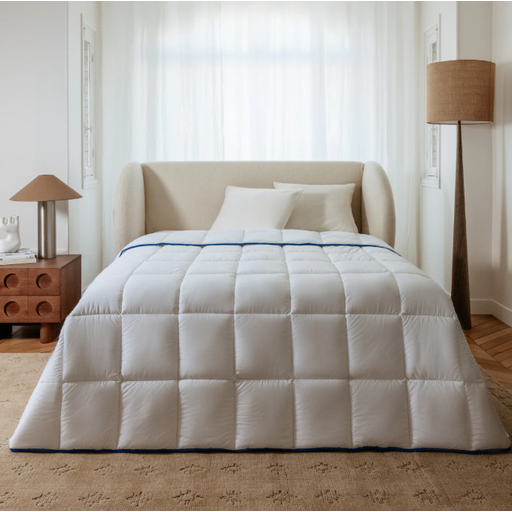
Why this choice suits this profile: this single size makes a good first duvet for a temperate bedroom or warm nights.
The composition, 250 g/m² weight and recommended use in rooms from 20 °C are clearly stated.
Cotton percale cover, hollow polyester fibre filling and machine washable at 40 °C, according to the product page.
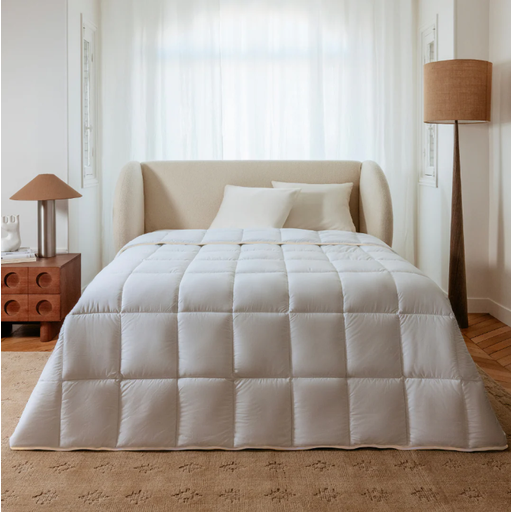
Why this choice suits this profile: its large size and natural filling suit couples looking for ample coverage and a soft feel.
The box-stitching helps maintain an even distribution and limits the formation of less-filled areas.
Filling stated as 90% duck feathers and 10% down, organic cotton sateen cover and 240 x 260 cm size.
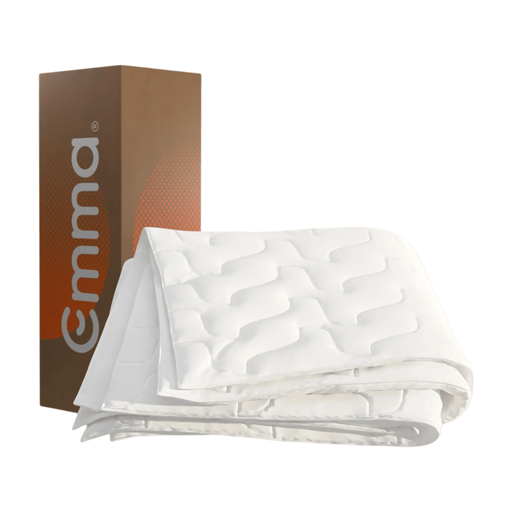
Why this choice suits this profile: the two removable layers allow you to adjust the warmth when your room temperature or the season changes.
The 3-in-1 design avoids buying a separate summer and winter duvet, provided you like this type of construction.
Two thicknesses, natural and recycled materials stated, all in a 240 x 220 cm size.

Why this choice suits this profile: this model is presented as a warm duvet intended for winter, poorly heated rooms and those who feel the cold.
The warmth level and composition are specified, allowing you to compare them with your room’s actual temperature.
220 x 240 cm size, filling stated as 90% feathers and 10% down, washable up to 40 °C according to the product page.
A machine-washable duvet should only go in the machine if its label allows it. For natural models, some product pages recommend washing once or twice a year, at a maximum of 40 °C. Gentle tumble drying can help redistribute the filling, but dry cleaning or professional cleaning remains preferable when your domestic machine is too small.
Air the duvet regularly and shake it gently, without beating it vigorously. Use a suitable duvet cover and avoid storing it damp or compressed for long periods. If you have allergies or sensitive skin, check the materials, the certifications mentioned and, if necessary, seek advice from a healthcare professional: no commercial promise can replace personalised advice.
We’ve selected a complete range, updated in real time, of products that meet these demanding criteria and European safety regulations.
Compare the mattress width with the desired overhang. A 200x200 duvet can suit some compact configurations. The 220x240 and 240x260 sizes offer more room for two, especially with a wide or thick mattress.
Yes, provided you choose a lightweight filling and warmth level. A summer duvet or a 4-season duvet used with a single layer can work in a warm bedroom. Still, check your room’s usual temperature and the composition before buying.
It all depends on the quality of the filling, frequency of use, the protection offered by the cover and the care it receives. A duvet that is regularly aired, washed according to instructions and properly dried will generally retain its properties longer than one that is compressed or poorly cleaned. Replacement becomes appropriate when the filling distributes unevenly, the cover is damaged or the comfort no longer meets your needs.