
Livraison le jour même ou le lendemain

Qualité garantie

Débloquez vos offres de bienvenue: Livraison GRATUITE | Jusqu'à -80 % | 30 jours d'essai gratuits à JoyPlus
Téléchargez l'application
The dual-tip brush pen has become the go-to tool for artists, bullet journal enthusiasts, and crafting hobbyists. But with an overwhelming number of options, who hasn't been frustrated by a pen set with tips that fray after just a few strokes or ink that bleeds right through the paper? To help you avoid throwing your money away, we've broken down the common pitfalls to avoid and the criteria that truly matter.
Don't be swayed by a tempting colour palette. Certain deal-breaking flaws can turn your purchase into a real disappointment.
To make an informed decision, scrutinise these three technical features. They are the key to the versatility and durability of your next set of drawing pens.
The type of ink determines the primary use for your pens.
The quality of a dual-tip marker depends on how well its two ends complement each other.
Don't fall into the "more is better" trap. A set of 12 or 24 richly pigmented, blendable colours will be far more useful than a box of 100 dull shades. While a wide range is great for illustration, a more focused yet coherent selection is more than enough for hand lettering or note-taking.
Here are a few options that meet specific needs, taking into account the quality criteria we've discussed.
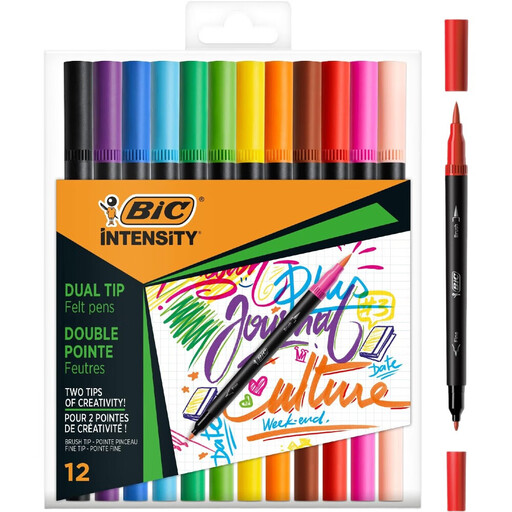
Why it's a great choice: Perfect for getting started with drawing or bullet journaling without breaking the bank. The dual tip (fine and brush) offers excellent versatility for exploring different techniques.
The tips are designed for regular use, and the fast-drying, water-based ink minimises bleeding—a common flaw in entry-level models.
Vibrant water-based ink; dual tip (0.5 mm fine and brush) for maximum versatility.
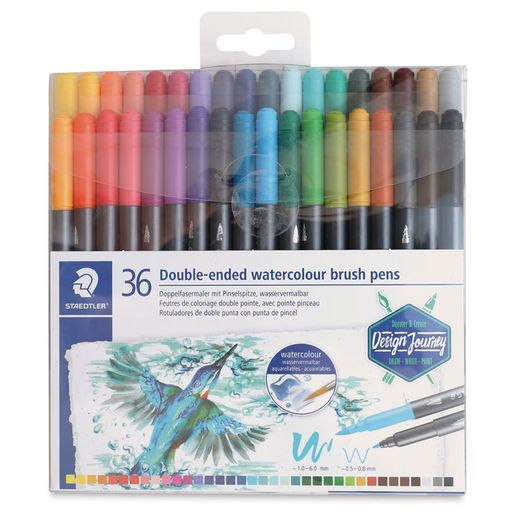
Why it's a great choice: This set offers a wide palette of 36 colours and high-quality watercolourable ink. It allows you to create complex gradients and wash effects worthy of a traditional painting.
The water-based ink is formulated for blending without bleeding through suitable paper (like watercolour paper). The highly flexible brush tip holds its shape use after use.
High-quality watercolourable ink for painting effects; a broad spectrum of 36 vibrant, blendable colours.
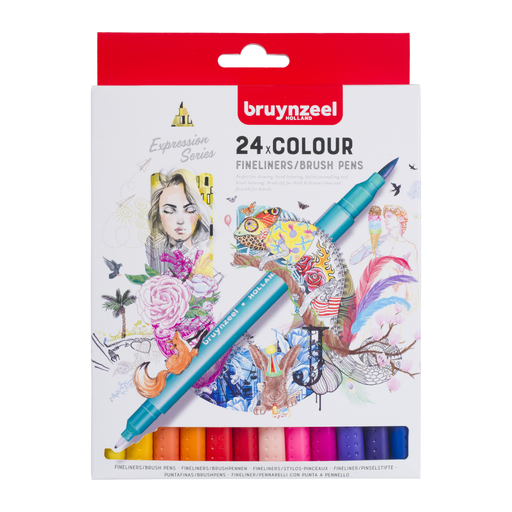
Why it's a great choice: The combination of a flexible brush tip, ideal for the thick and thin strokes of lettering, and a 0.4 mm fineliner tip is perfect for structuring a bullet journal or practising modern calligraphy.
The durable plastic fine tip resists crushing, while the water-based ink ensures a consistent, bleed-free flow for consistently sharp lines.
Highly precise 0.4 mm fine tip; flexible brush tip suitable for hand lettering.
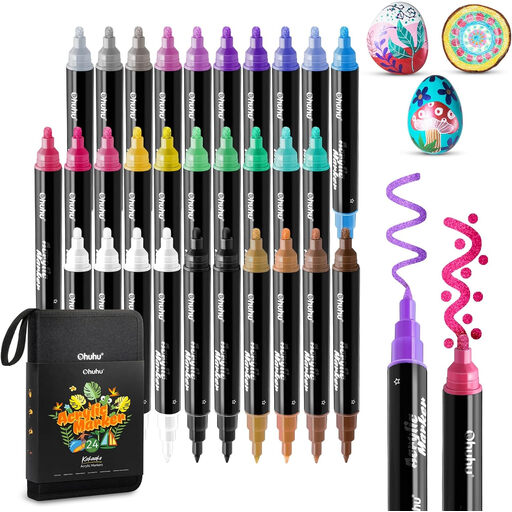
Why it's a great choice: Thanks to its opaque, water-resistant acrylic ink, this set is the perfect partner for creating on surfaces beyond paper: wood, ceramic, plastic, canvas, and more.
Where water-based pens fail to adhere, this acrylic ink provides excellent coverage and durability. No need to buy a specific marker for each material!
Opaque and permanent acrylic ink; works on multiple surfaces (wood, glass, ceramic).
Discover our full selection of tested and approved pens, all of which meet our quality criteria and current standards.
The first rule: always recap your pens immediately after use. The pro tip: store your pens horizontally. This position ensures the ink is evenly distributed between both tips and prevents the top one from drying out.
Absolutely not; paper choice is crucial. For a watercolour pen, use dedicated watercolour paper or a heavy-weight mixed-media paper (over 200 g/m²) to prevent buckling or bleed-through. For lettering or bullet journaling, a smooth, fairly thick paper (around 100-120 g/m²) is ideal for preserving the tips and achieving crisp, bleed-free lines.
Water-based ink is perfect for paper-based work: blending colours, creating watercolour effects, and more. It's generally odourless and easy to clean up. Acrylic ink, on the other hand, is opaque and becomes permanent when dry. It adheres to a multitude of surfaces (wood, glass, fabric) and is water-resistant, making it better suited for decoration or customisation projects.