
Livraison le jour même ou le lendemain

Qualité garantie

Débloquez vos offres de bienvenue: Livraison GRATUITE | Jusqu'à -80 % | 30 jours d'essai gratuits à JoyPlus
Téléchargez l'application
Waste sorting is a part of our daily lives. Yet, finding the perfect bin to integrate into your kitchen can be a real headache. A 2-compartment kitchen recycling bin needs to be practical, hygienic, and, if possible, stylish. The problem? The market is flooded with models making tempting promises that too often hide deal-breaking flaws. As a product manager at Joybuy, my mission is to help you avoid these pitfalls and make an informed, and above all, lasting choice.
Before pulling out your credit card, be wary of these three design flaws that can quickly turn a promising purchase into a daily frustration.
removable inner buckets is a nightmare to clean. Even when removable, some buckets are moulded from low-grade plastic that absorbs odours or, worse, are riddled with nooks and crannies where debris gets trapped.designer kitchen bin in a photo can quickly disappoint in person. Low-end stainless steel finishes are notorious fingerprint magnets, while poor-quality painted coatings chip or scratch at the slightest impact, ruining your kitchen's aesthetic in a matter of weeks.To make the right choice and invest in a model that will last, here are the three key points to check.
A pedal bin is an essential standard for hygiene. It allows you to dispose of waste without ever touching the lid with your hands—a game-changer when you're cooking.
However, not all pedals are created equal. Opt for models with an all-metal mechanism, which is far more resistant to wear and tear. Paired with a soft-close bin system, it provides a welcome touch of quiet: the lid closes gently and silently. No more loud "clangs!" echoing through the kitchen.
The body of the bin should combine durability with ease of maintenance. Steel remains the gold standard material for its robustness. Models with a powder-coated finish (like a cream-coloured bin or a black one) are often easier to clean than brushed stainless steel, which requires near-constant upkeep to avoid becoming a collection of fingerprints.
Inside, the presence of two removable buckets is non-negotiable. Ensure they are made of PP (polypropylene) plastic. This material is known for being lightweight, impact-resistant, and, most importantly, for its non-porous surface that doesn't retain stains or odours. Handles on each bucket are not just a gimmick: they make handling them for emptying and cleaning much easier.
A dual-compartment bin should be suited to the size of your household and the frequency of waste collection in your area.
recycling bin.Before ordering, carefully measure the space where you plan to place the bin. The crucial detail: don't forget to measure the total height with the lid open, especially if the bin is intended to fit under a countertop or shelf.
Rather than a lengthy comparison, we've chosen to highlight one model that strikes the perfect balance between design, practicality, and durability. The ideal candidate for today's households.
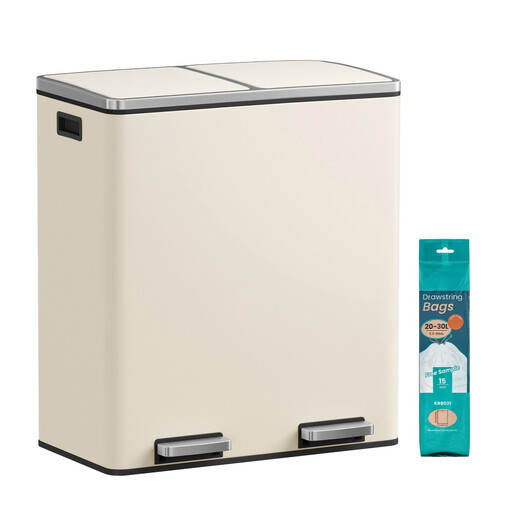
Why it stands out: Ideal for those seeking an effective sorting solution without sacrificing aesthetics. Its cream colour and minimalist design blend seamlessly into contemporary kitchens, while its large capacity (2 x 30L) is perfectly sized for a family's needs.
The steel body and robust pedal mechanism prevent premature wear. The PP plastic inner buckets with handles ensure impeccable hygiene and lightning-fast cleaning, while also preventing bad odours.
It combines a clean design with essential features (pedal, soft-close). Maintenance is a breeze thanks to the removable buckets, which truly simplifies daily waste sorting.
We have curated a complete range of products that meet our standards for quality and durability.
For best-in-class maintenance, remove the inner buckets once a week. Wash them with warm, soapy water, then rinse and dry them completely before putting them back. For the external steel body, a simple wipe with a damp cloth is sufficient. Avoid abrasive sponges or harsh chemicals that could damage the finish.
Longevity depends directly on the quality of the materials. A plastic mechanism can show signs of weakness in less than a year. In contrast, a system with a metal pedal and linkage is designed to withstand tens of thousands of uses, ensuring several years of peace of mind.
Modern steel kitchen bins are treated to resist corrosion. Those with a powder-coated finish (oven-baked paint) offer excellent protection. As long as the bin is used indoors and its base is not left in constant contact with water, the risk of rust appearing is virtually zero.