Which homes and drying habits is it suitable for?

Small home with laundry in the living area

You have limited space for hanging laundry and moisture builds up in a small area. Start by checking the existing ventilation and extraction, then choose between regular mechanical drying and a supplementary appliance for the ambient air. ADEME highlights that air-drying laundry indoors is a particularly significant source of moisture.

Households wanting to get rid of the airer

A heat-pump tumble dryer could be a good choice if you need reliably dry laundry and have a dedicated space available. Compare the dimensions, capacity, noise level, EPREL data and condensate management before making your choice.

Users who still air-dry certain fabrics

If you prefer to air-dry certain fabrics, a dehumidifier can complement your room’s moisture management. Your choice will depend in particular on the actual room volume, water collection and whether continuous drainage is possible.

Criteria for choosing the right solution

Airer with suitable ventilation

Best for: if you have a large, well-ventilated room or mechanical ventilation extraction and the drying time remains acceptable.

Bear in mind: hanging laundry introduces a lot of moisture into the indoor air, especially in a small space.

Heat-pump tumble dryer

Best for: if you often dry full loads and no longer want to rely on the space taken up by an airer.

Bear in mind: the appliance requires space, electricity and maintenance suited to the model.

Dehumidifier near the airer

Worth considering: if you continue to air-dry laundry, particularly fabrics that you do not want to put in a drum.

Bear in mind: results depend on the room conditions, and the tank must be emptied if continuous drainage is not available.

Priority What to check Your needs
Ventilation and humidity Check the room volume, ventilation and whether there is an extraction vent. ADEME recommends a large, well-ventilated room or a room fitted with mechanical ventilation extraction for hanging laundry. I dry laundry in a small room or living area and want to avoid concentrating moisture there.
Time and available space For a tumble dryer, compare capacity, dimensions, noise level, eco programme duration and weighted energy consumption per cycle in EPREL. For a dehumidifier, check the stated extraction rate and the intended room volume. I want to make drying less of a chore without buying an appliance that cannot be installed in my home.
Everyday use Check the noise level, tank, continuous drainage option and filter or condenser maintenance required for the model. I would rather plan for the emptying, noise and maintenance needed over the weeks.

Mistakes to avoid before buying

  • Using a dehumidifier instead of ventilation

    A dehumidifier removes water from the air, but it does not provide air renewal. Within its scope, the decree of 24 March 1982 requires homes to have general and permanent ventilation.

    First check the air inlets and extraction, then consider the dehumidifier as an additional way to manage humidity.

  • Comparing tumble dryers solely by capacity

    Two models with the same capacity can differ in weighted energy consumption per cycle, eco programme duration, noise level, dimensions and condensation efficiency.

    Compare the data available in EPREL, then consult the exact model’s product information for installation, condensate management and maintenance.

  • Forgetting about drainage and installation space

    A tumble dryer or dehumidifier may require you to empty a tank or connect continuous drainage. The appliance dimensions do not necessarily include the clearances required in the installation instructions.

    Measure the space, identify any possible drainage point and check the installation instructions before ordering.

  • Expecting a fixed drying time from a dehumidifier

    Dehumidification time varies according to the room conditions. An extraction rate expressed in litres per day therefore cannot guarantee the same result in every home.

    Use the extraction rate as a comparison point, but also consider the room volume, starting humidity, noise level and drainage.

Relevant brands for these solutions

Bosch

A range of heat-pump tumble dryers for households looking for standard capacities of 8 to 9 kg and detailed technical specifications for each model.

  • For the WQG2450SFR, Bosch states a capacity of 9 kg, a noise level of 64 dB and a water drainage hose.
  • These specifications apply to this model only; check the available space and whether the drainage connection is compatible with your home.

Miele

A range of heat-pump tumble dryers for shoppers who want to consider gentle drying, filtration and maintenance parts according to the model.

  • Miele presents the TEA525WP as an 8 kg heat-pump model and offers washable plinth filters for certain appliances.
  • Specifications, maintenance requirements and suitability for the available space must be checked for each model.

Whirlpool

A range of heat-pump tumble dryers that lets you compare capacities, humidity sensors and noise levels published on French product pages.

  • For the CWD84MWWSFR, Whirlpool states a capacity of 8 kg, 63 dB and dimensions of 59,8 × 84,6 × 60,7 cm.
  • The brand recommends regular maintenance for its heat-pump appliances; also check how the chosen model manages condensate.

De’Longhi

A range of dehumidifiers suited to air-drying laundry while managing ambient humidity.

  • De’Longhi states 10 litres per day for the DEP210 and continuous drainage through a 5 m hose for the DD230P.
  • According to De’Longhi, dehumidification time depends on the room conditions and cannot be precisely determined in advance.

Joybuy products for drying laundry indoors

These Joybuy options cover air-drying with ambient humidity management, as well as a heat-pump tumble dryer for households able to install a dedicated appliance.
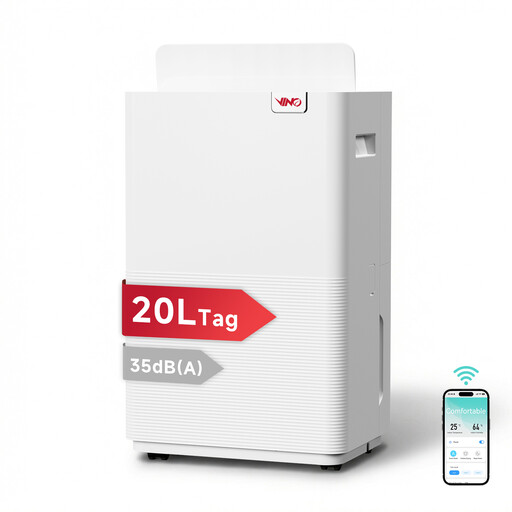
VINO 20L Smart Dehumidifier with WiFi control

VINO 20L Smart Dehumidifier with WiFi control

For an airer in a damp room, the stated Dry mode is designed to help limit ambient humidity, without replacing room ventilation or extraction.

Stated extraction of up to 20 L/day at 30 °C and 80% RH, 2.5 L tank, continuous drainage and three modes: Auto, Dry and Sleep. Check the noise level in the mode you will actually use.

Joybuy
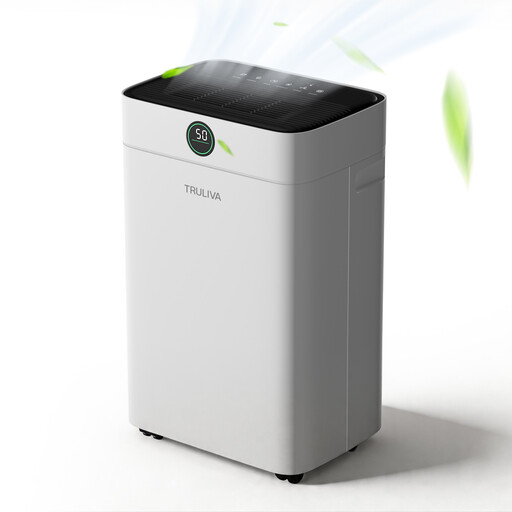
TRULIVA 25L per day Dehumidifier with laundry drying

TRULIVA 25L/day with laundry drying

This model is designed to support an airer with its laundry-drying mode and stated continuous drainage.

Stated extraction of up to 25 L/day at 90% RH and 95 °F, 2.8 L tank, automatic shut-off, automatic defrosting and continuous drainage hose. Check that it is suitable for the actual room volume.

Joybuy
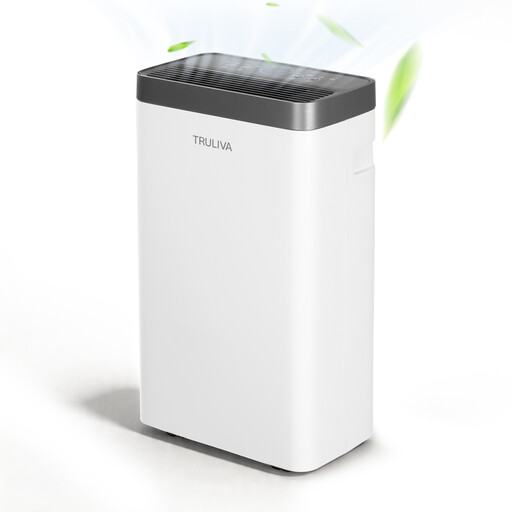
TRULIVA Dehumidifier for approximately 32 m² with laundry drying

TRULIVA Dehumidifier for approximately 32 m² AP10-2012EE

The stated DRYING mode could be suitable near an airer in a damp flat, with continuous drainage if connected.

Stated coverage of approximately 32 m², extraction of up to 16 L/day at 95 °F and 90% RH, 1.35 L tank, 24-hour timer, automatic defrosting and washable filter.

Joybuy

Hotpoint CHD84MWBSEE 8 kg heat-pump tumble dryer

Hotpoint CHD84MWBSEE 8 kg heat-pump tumble dryer

An option for households that want to dry a full load regularly without leaving all their laundry on an indoor airer.

8 kg capacity, stated noise level of 64 dB, fabric programmes, 2-in-1 Easy Cleaning filter and the option of connecting directly to a drain. Check the dimensions, clearances and EPREL data for the exact model.

Joybuy
Comfee 10 L per 24 hours Dehumidifier MDDN-10DEN7

Comfee 10 L/24 h Dehumidifier MDDN-10DEN7

Its compact format could suit a small room where laundry remains on an airer, provided the home’s ventilation continues to work effectively.

Stated extraction of up to 10 L/day, noise level of 45 dB, 2.1 L tank, continuous drainage, automatic defrosting and dimensions of 21,5 × 32 × 42 cm. Check the recommended area for the exact model.

Joybuy

Frequently asked questions

Can a dehumidifier replace mechanical ventilation or faulty ventilation?

No. It can remove water from the air, but it does not replace the general and permanent ventilation required by the decree of 24 March 1982 within its scope. For laundry on an airer, ADEME recommends a large, well-ventilated room or one fitted with a mechanical ventilation extraction vent.

Which appliance should you choose to get dry laundry faster?

A heat-pump tumble dryer is the most direct choice if you can install a dedicated appliance and want a repeatable drying cycle. Compare capacity, dimensions, noise level, weighted energy consumption per cycle, eco programme duration, condensation efficiency and water drainage in EPREL or on the model’s product information page.

When does a dehumidifier make more sense than a tumble dryer?

It may make more sense if you need to keep using an airer, particularly for fabrics you do not want to tumble-dry, and also want to limit the room’s humidity. Check the relevant volume, stated extraction rate, noise level, tank and continuous drainage; do not rely on a fixed drying time.

Do these appliances need to have water emptied?

Yes, depending on the configuration. Condenser and heat-pump tumble dryers collect water in a tank or can drain it through a hose, depending on the model. A dehumidifier can operate with its tank or with a continuous drainage hose if the model and installation allow it.

What maintenance does a tumble dryer require?

Consult the model’s instructions for filter and condenser maintenance. Miele states that a torn or excessively worn filter can reduce drying performance or cause a fault; cleaning and replacing filter components when necessary should therefore be part of regular use.