What should you prioritise?
First, decide where your clothes can dry. Then work out whether your main concern is moisture in the room, how quickly you need to get through your laundry or installing an appliance. The spin cycle does its job before drying begins; a dehumidifier supports air-drying rather than replacing it.
| Concern |
What to check |
Who it matters to |
| Moisture in the room |
Room size and suitable ventilation or extraction; position the airer so it doesn’t block air inlets or outlets. |
If I keep using an airer, I want to choose a room where I can manage the moisture from my washing. Around 36 % of consumers would put this concern first. |
| Laundry routine |
Spin efficiency and settings; tumble dryer capacity and programme duration. |
When I have back-to-back loads, I need a drying option that fits my routine rather than waiting for the airer to become free. This pace would be a priority for around 29 % of consumers. |
| Space and installation |
Dimensions and required clearance; noise level and access to the tank or a condensate drain. |
In a flat where space is tight, I need to be able to install the appliance and manage the collected water without making every wash more complicated. Around 21 % of consumers would prioritise these constraints. |
| Care and fabrics |
Emptying and cleaning requirements; programmes suited to garment care labels. |
I want an easy routine to follow, while avoiding machine-drying fabrics that aren’t suitable for it. For around 14 % of consumers, this would be the main concern. |
Appliances to consider on Joybuy
These appliances represent three different choices: use a heat-pump tumble dryer for loads you want to dry by machine, consider the spin cycle when choosing a washing machine, or use a dehumidifier alongside your airer. Whatever appliance you choose, the room and its ventilation still matter.
 Image unavailable
Hotpoint CHD84MWBSEE, 8 kg heat-pump tumble dryer
Worth considering if frequent washing makes air-drying impractical. The product title states an 8 kg capacity and C energy rating.
Before deciding where to put it, check the dimensions, noise level, energy consumption shown on the label and how condensate is managed.
View on Joybuy
 Image unavailable
Comfee CD08EHP05W-HR, 8 kg heat-pump tumble dryer
An option for machine-drying loads rather than tying up your airer. The title states an 8 kg capacity and D energy rating; choose programmes according to the care labels on your clothes.
Check the dimensions, noise level, energy consumption and how condensate is collected before installation.
View on Joybuy
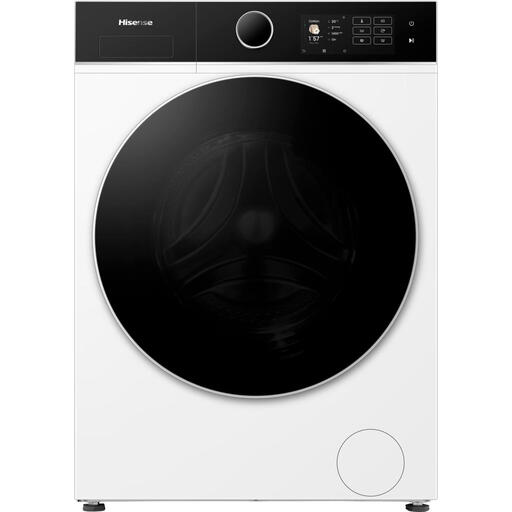 Image unavailable
Hisense WF5I8043BWF, 8 kg washing machine, 1 400 tr/min
Worth comparing if you’re replacing your washing machine and want to look at the spin cycle before air-drying your clothes. The title states an 8 kg capacity and a maximum spin speed of 1 400 tr/min.
Check the spin efficiency and the speeds available for your chosen programmes. Even well-spun clothes still need to dry in a suitable room or another appliance.
View on Joybuy
 Image unavailable
TRULIVA, 25 L/day dehumidifier, 2.8 L tank
Worth considering as an extra aid if you’ll still be drying clothes on an airer. The title states that it has a laundry mode, a 2.8 L tank and a hose for continuous drainage.
The 25 L/day capacity is stated at 90 % relative humidity and 95 °F. Compare these conditions with those in your room. This appliance does not bring in fresh air.
View on Joybuy
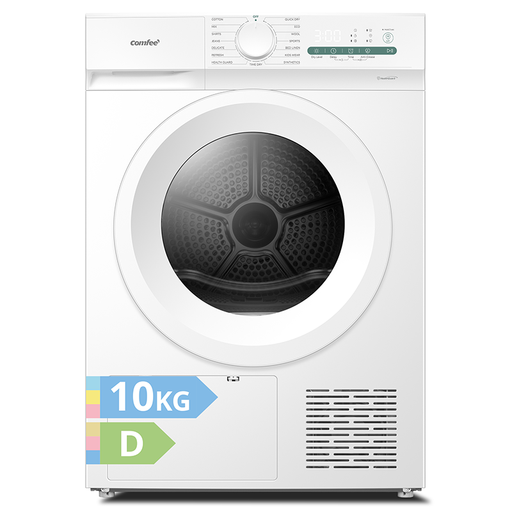 Image unavailable
Comfee CD10EHP05W-HR, heat-pump tumble dryer
Worth considering if you want to machine-dry your clothes, provided you confirm that this variant suits your loads. Its energy rating is listed as D.
The title states a 10 kg capacity, but the product description also mentions 8 kg. Confirm the exact capacity before choosing. Check the dimensions, noise level and how condensate is managed too.
View on Joybuy
Frequently asked questions
Can a dehumidifier replace airing the room or a mechanical ventilation system?
No. It removes moisture from the room’s air, but doesn’t bring in fresh air. ADEME notes that ventilation helps to renew the air, among other things. So, if you keep using an airer, check that the room is also well ventilated or has suitable extraction.
Is a vented tumble dryer suitable for a flat?
It needs a suitable way to vent air outside the home. The European Commission says that heat-pump technology is required for new domestic tumble dryers placed on the EU market since 1 July 2025. Check the type of appliance you’re considering and its installation instructions.
What should you compare on a tumble dryer’s energy label?
Compare the energy rating on the A to G scale and energy consumption in kWh per 100 cycles, then consider the capacity, programme duration and noise level for your needs. Don’t compare this scale directly with the old A+++ rating.
How can you reduce the risk of clothes shrinking in a tumble dryer?
Only put clothes in the tumble dryer if their care label says they’re suitable, and choose a programme that’s right for the fabric. Electrolux notes that the fabric and programme you choose can play a part in shrinkage.
Do you need a water drain for a tumble dryer or dehumidifier?
Check the requirements for your chosen model and where you plan to put it. Water may collect in a tank, while some appliances offer continuous drainage. If you choose this option, check which accessories you need and whether the hose can reach the drain before you buy.


