How do the options compare?
First, decide where your laundry will dry and how long you can wait. Then compare the size of each load with the space the appliances need: a high washing capacity won’t, on its own, solve a drying-space problem.
| Factor |
What to check |
Who it suits |
| Washing capacity |
Compare the capacity in kg with the size of your usual loads. If you air-dry clothes after spinning, also check the spin-drying efficiency class on the label. |
If the size of my laundry loads varies, I want a machine that suits the loads I actually wash, rather than choosing a large capacity just in case. Around 31% of consumers would prioritise this need. |
| Space for a combined appliance |
Measure the space and the clearance around it. For a washer-dryer, compare the capacities in kg and the usage information for washing alone and for the combined cycle. |
When I only have room for one appliance, I still want to be able to dry my clothes mechanically, and I’m happy to split a load if needed. Around 31% of consumers would prioritise this space-saving option. |
| Drying speed |
For a separate tumble dryer, check its capacity, noise level and the space available, as well as how the model handles condensed water. |
If I have several loads to get through, I want to be able to start the washing machine again while the previous load is drying, provided I have room for a second appliance. Around 23% of consumers would prioritise this approach. |
| Drying without a machine |
Consider how much space you need to hang out a load and how long you’re happy to wait before putting your clothes away; check the washing machine’s spin performance. |
I can hang out my laundry at home and wait for it to dry, so buying a drying appliance isn’t my first concern. Around 15% of consumers would prioritise this approach. |
Brands to consider
These range examples can help you identify features to compare on specific models; they aren’t a ranking of the brands.
Bosch
Bosch offers heat-pump tumble dryers. Its WQG133DBFR product information is a useful example of the details to compare with the size of your load and the space you have available.
- For this model, Bosch lists an 8 kg capacity, a noise level of 63 dB(A), a half-load option and programmes for certain fabrics.
- These specifications apply to the WQG133DBFR only: check the dimensions and maintenance instructions for the model you’re considering.
Whirlpool
Whirlpool washer-dryers make it easy to compare the figures for washing alone with those for a combined wash-and-dry cycle.
- For the FFWDD 1176258 BCV FR, Whirlpool lists an 11 kg washing capacity, a 7 kg drying capacity, and B and E ratings for washing alone and washing with drying respectively.
- These capacities and ratings apply to this specific model and shouldn’t be assumed to apply to the entire range.
Miele
Miele offers a range of heat-pump tumble dryers, with models listed at 8 kg and 9 kg.
- Depending on the model, the brand offers installation under a worktop or in a stacked configuration, sometimes with a suitable stacking kit.
- Before planning to stack your appliances, check that the installation and kit are compatible with the exact models you’re buying.
Electrolux
Electrolux’s French range of heat-pump tumble dryers features programmes for different fabrics.
- Electrolux includes programmes for wool, silk and certain outdoor garments.
- Check the available programmes, capacity, noise level and maintenance instructions for the model you choose.
Appliances for different laundry routines
These models cover three ways to manage your laundry: combine washing and drying in a washer-dryer, add a separate tumble dryer, or choose a washing machine if you’ll dry clothes separately. Start by comparing the function you need, then check the capacities and space required.
 Image unavailable
Samsung WD11DG6B85BEU3 washer-dryer, 11 kg / 6 kg
Consider this if you want to wash and dry your clothes with a single appliance.
The product name lists an 11 kg washing capacity and a 6 kg drying capacity, so a full wash load can’t be dried in one go at the stated capacity. Also check the dimensions and clearances specified in the manual.
View on Joybuy
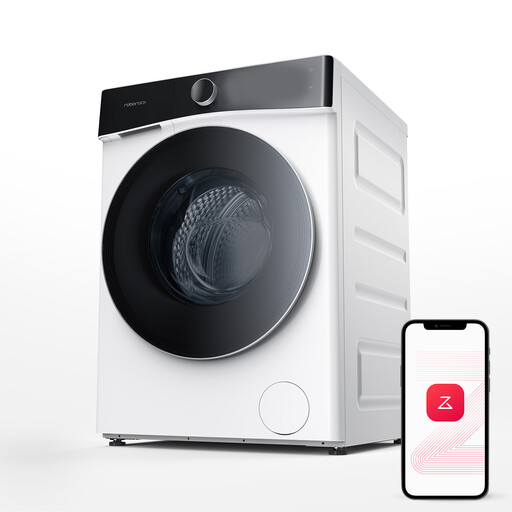 Image unavailable
White Roborock Zeo Lite washer-dryer, 10 kg / 6 kg
This washer-dryer is for households looking to use a single space for both functions.
Its name lists a 10 kg washing capacity and a 6 kg drying capacity, as well as Zeo-Cycle, app control and LintClear. Be prepared to split loads that exceed the drying capacity, and check the appliance dimensions.
View on Joybuy
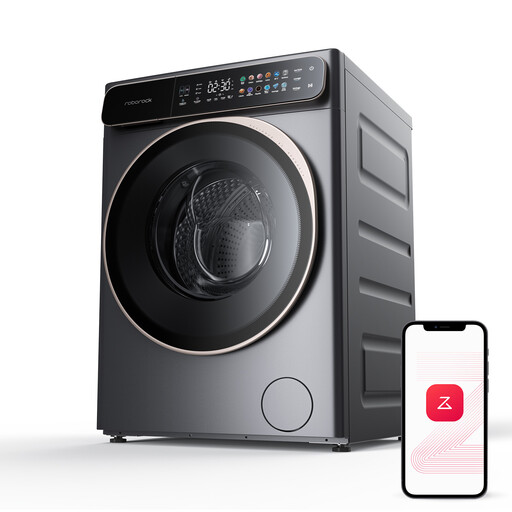 Image unavailable
Grey Roborock Zeo One washer-dryer, 10 kg / 6 kg
Consider this if you want to combine washing and drying in one appliance, provided it fits the space you have available.
The product title lists a 10 kg washing capacity, a 6 kg drying capacity, Zeo-Cycle, LintClear and automatic dosing. Confirm the capacities on the model’s product page and check the manual for dimensions and installation requirements.
View on Joybuy
 Image unavailable
Hotpoint CHD84MWBSEE heat-pump tumble dryer, 8 kg
This separate tumble dryer suits households that already have a washing machine and can make room for a second appliance.
The product name lists an 8 kg drying capacity and heat-pump technology. Check the dimensions, water handling and maintenance requirements for this model.
View on Joybuy
 Image unavailable
White Hisense WF5I8043BWF washing machine, 8 kg, 1 400 rpm
Consider this if you can dry your laundry separately and are looking for an appliance dedicated to washing.
The product name lists an 8 kg capacity, a 1 400 rpm spin speed and an Inverter motor. This appliance doesn’t offer mechanical drying, so check the space needed for installation and connections.
View on Joybuy
Frequently asked questions
Does a condenser tumble dryer need an external air vent?
No. The European Commission states that condenser tumble dryers don’t need an air duct leading outside. Depending on the model, water is collected in a tank or sent to a drain; check the set-up and installation instructions for the appliance you choose.
What should you compare on a washer-dryer’s label?
Compare the information for washing alone with that for the wash-and-dry cycle. The European Commission states that the label includes details such as efficiency classes, energy use per 100 cycles, water use per cycle, programme duration and noise level. Relate these figures to the mode you’ll use.
Does the durability index apply to washing machines sold in France?
Yes, for household washing machines covered by the requirement. ADEME states that displaying the durability index has been mandatory for these machines since April 2025. Check the index shown for the specific model you’re considering.
What maintenance does a tumble dryer need?
At a minimum, check the instructions for cleaning the filter and, depending on the appliance, the condenser. Electrolux recommends cleaning the filter after every cycle in its maintenance guide. Access to the condenser and how often to carry out other maintenance tasks depend on the model and its manual.


