Without an external vent, a heat-pump condenser tumble dryer is worth considering if you have room for two appliances and do laundry frequently. UFC-Que Choisir explains that it does not need a vent hose, while Guide Topten France reports that it uses less electricity than models with a heating element. If you only have space for one appliance, a washer-dryer combines both functions, but its drying capacity is lower than its washing capacity, according to UFC-Que Choisir. Check the duration and energy and water use of the full cycle too. Another option is to use a washing machine and an indoor airer, if you’re happy to let your washing dry in the room.
Who are these options for?
Homes without a vent or external opening
A vented tumble dryer isn’t suitable for this type of setup: it needs an opening or a vent hose, unlike a condenser model, as UFC-Que Choisir explains. When choosing between condenser models, also consider the space available and the installation requirements for the room.
People living in smaller homes
If there isn’t room for two appliances, a washer-dryer combines washing and drying. Check its dimensions and drying load, though: according to UFC-Que Choisir, this is lower than its washing load.
Households that do laundry frequently
If you do load after load, drying capacity and cycle duration matter just as much as electricity use. Compare these details for the programmes you plan to use, then check what maintenance each appliance requires.
What should you compare before choosing?
First rule out any appliances that aren’t suitable for a home without an external vent. Then weigh up a separate tumble dryer, washer-dryer or indoor airer based on the space available, the load you need to dry and how often you do laundry.
| Priority | What to check | My needs |
|---|
| Installation |
UFC-Que Choisir distinguishes between vented tumble dryers, which need an opening or vent hose, and condenser models. For the model you choose, check its dimensions and the room requirements in the manual. |
I don’t have an external vent, so I need an option that will fit in the space available. |
| Electricity use |
Guide Topten France compares the electricity use of heat-pump tumble dryers with models that have a heating element. To compare specific tumble dryers, check the kWh/100 cycles, capacity and eco programme duration on labels from the same generation. |
If I regularly dry full loads, I want to compare the appliances’ energy use and find a capacity that suits my laundry. |
| Load and space |
Check the washing and drying capacities of a washer-dryer separately. UFC-Que Choisir says its drying capacity is lower than its washing capacity; also compare its dimensions with those of two separate appliances. |
I only have room for one appliance, but I need to know whether I can dry my usual load without taking some of the washing out. |
| Duration and water use |
Check the duration and resource use of a washer-dryer’s wash-and-dry cycle. UFC-Que Choisir reports that most models included in its testing protocol also use water during drying; check the figures for the specific model and cycle you’re considering. |
When I have several loads to do, I need to know how long the appliance will be in use and what resources the full cycle uses. |
| Room and maintenance |
Check the manual for operating conditions and instructions for maintaining the filters, condenser or tank, depending on the model. Check the noise level if the appliance will be near a living area. |
I want to be able to use and maintain the appliance in the room I’ve chosen, without overlooking how noisy it may be day to day. |
What mistakes should you avoid?
-
Choosing a vented tumble dryer without an external vent
UFC-Que Choisir says this type of appliance needs an opening to the outside or a vent hose, so it isn’t suitable for the home described.
Limit your search to options that suit the room, then compare their capacities and installation requirements.
-
Comparing an old A+++ rating directly with a new A to G rating
Gifam says a new energy label has been displayed on tumble dryers since 1 July 2025. Ratings on the old and new scales aren’t directly equivalent.
Check which generation of label you’re looking at, and compare kWh/100 cycles, capacity and eco programme duration on a like-for-like basis.
-
Confusing washing capacity with drying capacity
With a washer-dryer, the drying load is lower than the washing load, according to UFC-Que Choisir. So if you fill the drum to its washing limit, you may need to split the load before drying.
Make a note of both capacities in kg and plan the combined cycle around the drying limit.
-
Choosing a two-in-one without checking the full cycle
Saving space doesn’t tell you how long the cycle takes or what resources it uses. UFC-Que Choisir notes, for example, that most of the washer-dryers included in its testing protocol use water during drying.
If you only have room for one appliance, compare the wash-and-dry cycle details for the models you’re considering and check the maintenance requirements in the manual.
Which brands should you consider?
These examples highlight features to check on a specific model; they don’t represent every product range from each brand.
Bosch
Bosch France’s product page for the WQG24502FR heat-pump tumble dryer lists a maximum capacity of 8 kg.
- Bosch lists a self-cleaning condenser and a noise level of 61 dB(A) for this model.
- Before choosing this model for your room, check its dimensions and installation requirements in the manual.
Electrolux
Electrolux France’s product page for the GentleCare 600 EW6HI5829SB heat-pump tumble dryer lists a drying capacity of 8 kg.
- The product page lists an energy rating of C and a noise level of 67 dB for this model.
- Electrolux lists an operating temperature range of 5 °C to 35 °C for this model. Check that this suits the conditions in the room you have in mind.
Samsung
Samsung France’s range includes heat-pump tumble dryers as well as a heat-pump washer-dryer.
- These two appliance types let you explore both separate and combined setups from the brand.
- Check the exact model’s washing and drying capacities, dimensions and details for the cycle you want to use.
A washer-dryer option on Joybuy
This freestanding washer-dryer combines both functions in one appliance. It’s an option to consider if you’re looking for a combined model because there isn’t room for a separate tumble dryer. Bear in mind that its drying capacity is lower than its washing capacity.
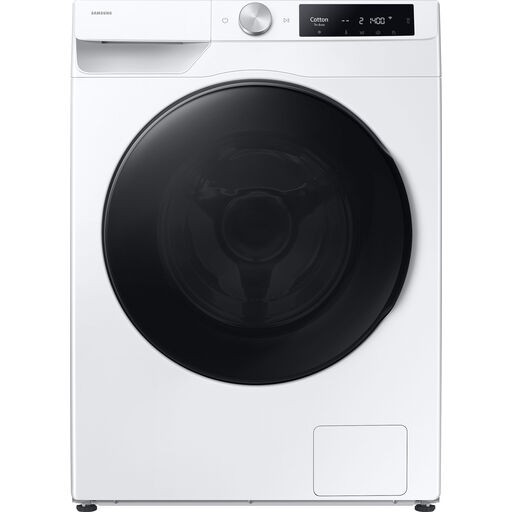 Image unavailable
Samsung WD11DG6B85BEU3, 11 kg / 6 kg washer-dryer
This freestanding model combines washing and drying when you only have room for one appliance. Its stated capacities are 11 kg for washing and 6 kg for drying, so adjust the load before running a combined cycle. Check the manual for installation requirements in your room, and look at the details for the programme you plan to use when comparing resource consumption.
View on Joybuy
Frequently asked questions
Can you use a vented tumble dryer without an external opening or vent hose?
Not in the type of home described. UFC-Que Choisir explains that a vented tumble dryer needs an opening to the outside or access to a vent hose, unlike a condenser model. If you choose a condenser model, check the installation instructions for the specific product too.
What should you compare on a tumble dryer’s energy label?
Compare the energy rating, kWh/100 cycles, capacity and eco programme duration on labels from the same generation. Then check the noise level and any relevant water collection information for a condenser model. Gifam says the new tumble dryer label was introduced on 1 July 2025, so don’t treat an old A+++ rating as directly equivalent to a rating on the new A to G scale.
Can you wash a full load and then dry it without taking any clothes out?
Only if the load is within the model’s drying capacity. UFC-Que Choisir says a washer-dryer’s drying capacity is lower than its washing capacity, so check both figures before planning a combined cycle.


