Criteria to check before choosing
Start with the room’s ventilation and humidity levels, then compare the volume of laundry, washing frequency and installation requirements of each solution.
| Priority |
What to check |
Your needs |
| Humidity and indoor air |
Large, well-ventilated room or one with an MVHR extract vent; unobstructed air inlets and vents; signs of condensation or odours. |
I want to air-dry laundry without allowing humidity to build up in living areas. ADEME recommends a well-ventilated room or one with an MVHR extract for air-drying laundry. |
| Drying time |
Washing frequency; usual load size; space occupied by the airer; need for mechanical drying or a laundry mode on a dehumidifier. |
I want dry laundry more regularly without adding more airers or having to keep a room out of use. |
| Electricity consumption |
Type of tumble dryer; complete energy label; cycle duration; whether an airer can still be used when air-drying is manageable. |
I want to limit the electricity used for regular drying. According to UFC-Que Choisir, heat-pump tumble dryers stand out for their lower electricity consumption compared with conventional condenser or vented models. |
| Installation and condensate |
Dimensions and clearances; capacity suited to your laundry; actual external outlet for a vented model; tank or connection to a drain, depending on the model. |
My appliance must suit the available room and the way water will be collected or discharged. An opening to the outside or a compatible duct is essential for a vented tumble dryer, according to UFC-Que Choisir. |
Joybuy products for drying laundry
This selection brings together a heat-pump tumble dryer for regular washing and dehumidifiers to use alongside an indoor airer, while maintaining effective ventilation.
 Image unavailable
Hotpoint CHD84MWBSEE 8 kg heat-pump tumble dryer
Worth considering for regular washing when you want to dry laundry mechanically without using an airer.
Stated 8 kg capacity, heat pump, 2-in-1 Easy Cleaning filter, a range of fabric programmes and stated option for direct connection to a drain.
Check the required dimensions and clearances, the stated noise level of 64 dB and the complete energy label before installation.
View on Joybuy
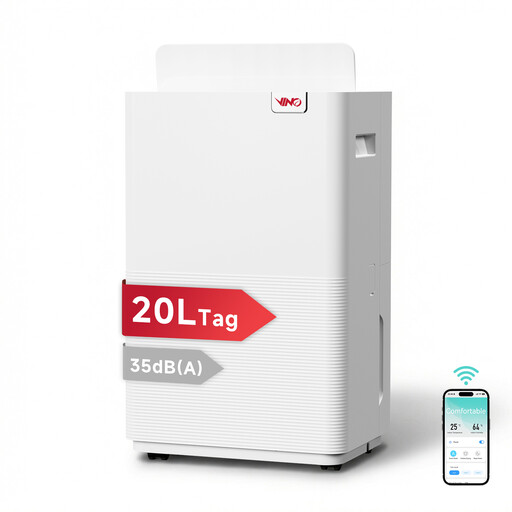 Image unavailable
VINO connected 20 L dehumidifier with Dry mode
A supplementary option for a room where an airer is still needed, without replacing MVHR or airing.
Dry mode, stated extraction of up to 20 L/day, 2.5 L tank, continuous drainage, WiFi app and stated Auto, Dry and Sleep modes.
The 20 L/day capacity is stated at 30 °C and 80% relative humidity. Also check the specified 20 cm clearance and whether gravity drainage is possible.
View on Joybuy
 Image unavailable
TRULIVA 25 L/day dehumidifier with laundry drying
Worth considering alongside an airer when humidity is slowing down indoor drying.
Stated laundry-drying mode, automatic defrost, 2.8 L tank, automatic shut-off and included continuous drainage hose.
The stated capacity of 25 L/day is measured at 90% relative humidity and 95 °F. Allow at least 10 inches of clearance around the appliance.
View on Joybuy
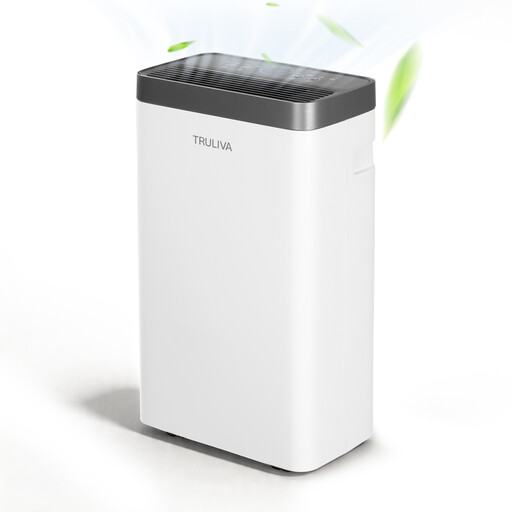 Image unavailable
TRULIVA AP10-2012EE dehumidifier with Drying mode
A supplementary option if you keep an airer in a damp room and want to automate dehumidification.
Stated extraction of up to 16 L/day, humidity control, 24-hour timer, automatic defrost, washable filter and continuous drainage with hose.
The stated 1.35 L tank requires regular emptying without a continuous connection; the 16 L/day capacity is stated at 95 °F and 90% relative humidity.
View on Joybuy
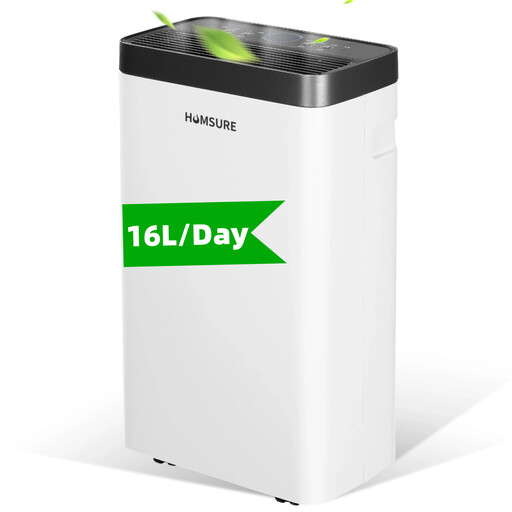 Image unavailable
HUMSURE 16 L/day dehumidifier for 25 m²
Worth considering as a supplement to an airer in a moderately sized room, while keeping ventilation running.
Drying mode, stated extraction of up to 16 L/day, 1.4 L tank, 24-hour timer, automatic defrost, automatic shut-off and continuous drainage.
The stated coverage is approximately 25 m². Check the room’s actual volume and the noise level in drying mode, which is not listed in the supplied specifications.
View on Joybuy
Frequently asked questions
Can you dry laundry on an airer in a bedroom or living room?
Yes, provided you choose a suitable room. ADEME recommends a large, well-ventilated room or one equipped with an MVHR extract vent. If there is condensation, a damp smell or mould, limit drying in that room and investigate the cause of the problem.
Can a dehumidifier replace MVHR or airing?
No. A dehumidifier can provide additional support by reducing humidity while laundry dries, whereas ventilation continuously removes humidity and pollutants. ADEME recommends not switching off the MVHR or blocking air inlets and vents.
What should you check before buying a tumble dryer?
First check the location, dimensions, capacity and type of appliance. A vented tumble dryer requires an opening or duct to the outside. A condenser model, including a heat-pump model, does not need this connection but collects water in a tank or, depending on the model, can be connected to a drain.
Does ventilation need maintaining when using a tumble dryer or dehumidifier?
Yes. These appliances do not replace ventilation maintenance. ADEME recommends keeping the MVHR active, not blocking air inlets or extract vents, and cleaning the removable, washable parts of the vents every three months.


