If you regularly dry full loads and have space for a second appliance, consider a heat pump tumble dryer. If you only have room for one machine, a washer-dryer saves space, but its drying capacity is generally lower than its washing capacity. If you use a clothes airer, first choose a room that is large and well ventilated, or has suitable extraction. A dehumidifier can support this set-up, but it doesn’t replace ventilation.
Who are these options for?
Anyone concerned about damp from drying clothes indoors
If you mainly dry your laundry on an airer, managing moisture is just as important as the space it takes up. ADEME recommends using a large, well-ventilated room or one with suitable extraction.
Households that do frequent, full loads of washing
A dedicated appliance is worth considering if you regularly need to dry large loads. Compare its capacity and energy consumption, and check what maintenance it requires.
Small homes with room for just one machine
A washer-dryer combines both functions in one appliance. To find out if it suits your laundry needs, check its drying capacity first: according to UFC-Que Choisir, this is generally lower than its washing capacity.
How do the options compare?
Your choice depends first on how much space you have and whether you can dry laundry without allowing moisture to build up in the room. Capacity, energy consumption and maintenance will help you choose between appliances.
Heat pump tumble dryer
Consider it: if you do laundry regularly and have room for a second appliance.
Bear in mind: you’ll need a dedicated space and must follow the maintenance instructions in the manual. UFC-Que Choisir says this technology uses less electricity than conventional condenser or vented tumble dryers.
Washer-dryer
Consider it: when you only have space for one appliance to wash and dry your clothes.
Bear in mind: its drying capacity is generally lower than its washing capacity, as UFC-Que Choisir points out.
Clothes airer in a ventilated room
Consider it: if you have a sufficiently large, well-ventilated room, or one with suitable extraction, where you can put your laundry.
Bear in mind: the airer takes up space while your clothes dry, and they release moisture into the room, notes ADEME.
Dehumidifier with a clothes airer
Consider it: as an extra measure if you continue to dry clothes indoors.
Bear in mind: you’ll still need the airer, and the appliance won’t replace effective ventilation.
| What matters | What to check | What consumers are looking for |
|---|
| Indoor humidity |
Room size and how well it is ventilated or extracted; if using a dehumidifier, check it’s suitable for the room. |
When I leave laundry on the airer, I want to stop moisture building up in the room. Around 36 % of consumers would put controlling humidity first. |
| Drying frequency and energy use |
Drying capacity, the consumption shown on the energy label and the Eco programme duration, comparing like with like. |
When I do laundry frequently, I want to dry my loads regularly while keeping an eye on electricity use. This would be a priority for around 29 % of consumers. |
| Available space |
Dimensions in the intended space, with the door open, and the separate washing and drying capacities of a washer-dryer. |
I only have room for one machine and need to know whether it can dry my laundry too. Around 21 % of consumers would make space their main consideration. |
| Maintenance and fabrics |
Required filter and condenser cleaning, and the programmes available for the fabrics you need to dry. |
If I dry a variety of fabrics, I want suitable programmes without overlooking maintenance tasks. This would be the main concern for around 14 % of consumers. |
Mistakes to avoid before buying
-
Choosing an airer or appliance without checking the ventilation
ADEME points out that clothes dried indoors release a lot of moisture into the air. Buying a dehumidifier alone doesn’t guarantee that the air in your home is being properly refreshed.
Check your existing ventilation and extraction, and only dry clothes on an airer in a sufficiently large, well-ventilated room or one with suitable extraction.
-
Relying on a washer-dryer’s washing capacity alone
According to UFC-Que Choisir, a washer-dryer generally holds less laundry for drying than for washing. So, if you wash a full load, you may need to split it before drying.
Compare the two capacities separately, then check the dimensions with the door open and the figures for a full wash-and-dry cycle.
-
Assuming a self-cleaning system means no maintenance is needed
Maintenance tasks vary by model. Bosch says, for example, that the fluff filter on the relevant appliances must be cleaned after every use.
Check the manual for the model you’re considering to find out which filters and condenser need cleaning, and how often.
-
Comparing different generations of energy labels directly
The French National Consumer Institute says that the energy label for the domestic tumble dryers concerned switched to the A to G scale from 1 July 2025. An old A+++ rating and a rating on the new scale aren’t directly equivalent.
When comparing models, use the same scale and also check the stated energy consumption, capacity, Eco programme duration and noise level.
Brands to consider for different needs
Bosch
A brand to consider if maintenance is an important factor in choosing a heat pump tumble dryer.
- Bosch offers several systems for managing fluff and the condenser; check which one is fitted to the model you’re considering.
- These systems don’t necessarily remove the need to clean the filters as instructed in the manual.
Miele
A brand to consider for a dedicated heat pump tumble dryer, depending on the capacity and features of the model.
- Miele’s TEA525WP, for example, has a stated capacity of 8 kg, a condensate container and an integrated drainage kit.
- Programmes and features vary between models, so check the details of the one you’ve chosen rather than assuming they’re available across the whole range.
LG
A brand to consider if you need a washer-dryer that fits into a limited space.
- LG states that the F852SV52IRS has an 8.5 kg washing capacity, a 5 kg drying capacity and a depth of 47.5 cm.
- These figures apply to this model only, so check the capacity and dimensions of the one you’re considering.
Joybuy products for each option
These models cover three of the options discussed here: a washer-dryer if you only have room for one machine, a dedicated tumble dryer for regular loads, and a dehumidifier to use alongside an indoor clothes airer.
 Image unavailable
Samsung WD11DG6B85BEU3, washer-dryer, 11 kg / 6 kg
Combines washing and drying in one machine. Its drying capacity is lower than its washing capacity, so check whether it can dry the size of loads you want to wash without splitting them.
Check the connections and installation space in the manual.
View on Joybuy
 Image unavailable
Hotpoint CHD84MWBSEE, 8 kg heat pump tumble dryer
For regularly drying laundry in a dedicated appliance, if you have room for an extra machine. Compare energy consumption and Eco programme duration on the energy label, then check the dimensions in the manual.
View on Joybuy
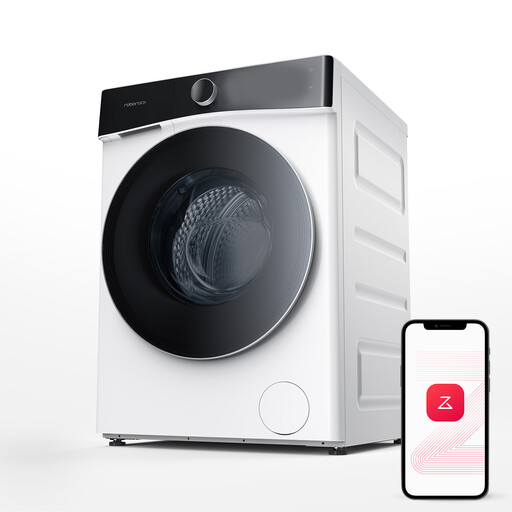 Image unavailable
Roborock Zeo Lite, 10 kg / 6 kg washer-dryer with LintClear
For using a single machine when there’s no room for a separate tumble dryer. Don’t assume you can dry a full wash load in one go; check the dimensions and cycle details before buying too.
View on Joybuy
 Image unavailable
Comfee CD08EHP05W-HR, 8 kg heat pump tumble dryer, class D
For drying regular loads without keeping a clothes airer in the room, provided you have space for a dedicated appliance. Check the energy label for consumption and Eco programme duration, and the manual for installation and maintenance instructions.
View on Joybuy
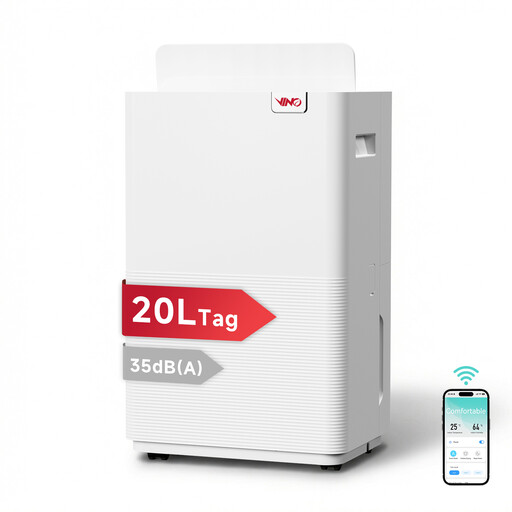 Image unavailable
VINO 20L Smart, dehumidifier with a 2.5 L tank
Worth considering as an extra measure if you still dry clothes on an indoor airer. This model has a Dry mode, but it won’t replace an airer or effective ventilation. If noise matters to you, check the figure for the model you’ve chosen.
View on Joybuy
Frequently asked questions
Does a heat pump tumble dryer need to be vented outdoors?
No. A condenser tumble dryer with a heat pump doesn’t need the outdoor vent required by a vented model. However, check the manual for the space it needs and how it handles condensed water, either in a tank or through a drain connection if supported by the model.
Can I dry a whole load of washing in a washer-dryer?
Yes, as long as the load is within the model’s drying capacity, not just its washing capacity. UFC-Que Choisir points out that the former is generally lower than the latter, so compare the two figures before planning a full wash-and-dry cycle without removing any laundry.
Does a dehumidifier replace ventilation when drying clothes indoors?
No. ADEME distinguishes between managing humidity and refreshing the air. Check that your ventilation and extraction are working, even if you use a dehumidifier near a clothes airer. When drying clothes indoors, choose a large, well-ventilated room or one with suitable extraction.
How do I compare tumble dryer energy labels?
Compare models using the same scale and comparable usage figures. For the domestic tumble dryers concerned in France, the French National Consumer Institute says the A to G label has applied since 1 July 2025. Also check the stated energy consumption, capacity, Eco programme duration and noise level, rather than looking at the letter alone.


