If you often dry large loads and have space for an extra appliance, a standalone tumble dryer gives you dedicated drying capacity; check its dimensions and how it handles condensed water. If you only have room for one appliance, a washer-dryer combines both functions, but its drying capacity is usually lower than its washing capacity. If you use an indoor airer, consider the spin cycle and ventilation instead: a suitable spin cycle cannot replace ventilation that removes moisture from your home.
Which option suits you?
Households with several large loads to dry
If you often have large loads to dry, a standalone tumble dryer lets you dedicate one appliance to the job, provided you have room to install it. Check the stated capacity against the programmes and fabrics you use: it doesn’t mean every load can be dried in the same way.
People with room for just one appliance
A washer-dryer combines washing and drying in one appliance. However, you’ll need to plan your laundry around its drying capacity: UFC-Que Choisir points out that these machines have a lower drying capacity than washing capacity. So, if you wash a full load, you may need to reduce it before drying.
People who still use an indoor airer
If drying laundry on an airer is still practical for you, consider the washing machine’s spin performance in relation to the fabrics and programmes you use. Your laundry will still dry in the room, though. ADEME highlights the importance of keeping your home’s ventilation running to remove moisture.
What should you compare?
Start with the space you actually have, then think about how much laundry you need to dry in each load. If you’ll be using an airer, factor in your ventilation too, rather than relying on the spin cycle alone.
| Your priority |
What to check before buying |
Who this matters to |
| Drying large loads |
Compare the drying capacity with your usual loads, then measure the space and access needed for the appliance. |
When laundry piles up, I want to dry a suitable load without taking up a room with an airer. Around 31% of consumers would prioritise this need for capacity. |
| Fitting into a single space |
For a washer-dryer, check the washing and drying capacities separately, then make sure you have enough depth. |
If I can only install one appliance, having washing and drying in one matters more to me than drying a whole large load at once. This lack of space would be a priority for around 31% of consumers. |
| Reducing the amount of damp laundry on the airer |
Work out how much of your laundry will still go on an airer, and check that air inlets, extractor vents and your mechanical ventilation system (if your home has one) are working properly. |
When I regularly dry laundry in a living space, my main aim is to reduce the amount of damp laundry without neglecting ventilation. Around 23% of consumers would put this concern first. |
| Keeping air-drying on an airer |
Check the washing machine’s programmes and spin performance, and follow the stated limits for your fabrics. |
I can still hang my laundry out to dry and would rather improve that routine than add another appliance. For around 15% of consumers, spin performance would be the main deciding factor. |
Mistakes to avoid
-
Checking only a washer-dryer’s washing capacity
A rating of 9/6 kg refers to two separate capacities: 9 kg for washing and 6 kg for drying. Electrolux lists this configuration for its EW7IW4966BG, so a 9 kg load cannot be dried in full within the 6 kg limit.
Check both figures on the model’s product page and size your initial load for drying, or plan to remove some laundry before the drying cycle.
-
Choosing a vented tumble dryer without a suitable outlet
According to UFC-Que Choisir, this technology needs an outlet to the outside or access to an air duct, unlike a condenser tumble dryer.
Make sure you can vent the appliance before choosing this type. For a condenser model, check instead how the collected water will be emptied or directed to a drain.
Creating an outlet or adapting a room could make installation more complicated.
-
Expecting an appliance to fix poor ventilation
Drying laundry is just one source of moisture among many. ADEME recommends keeping your home’s ventilation running; a tumble dryer can’t replace working air inlets and extractor vents.
Check that these openings aren’t blocked. If you still have a damp problem, have your ventilation checked separately from your choice of appliance.
-
Choosing based only on a cycle’s stated duration
Cycle time alone doesn’t tell you about an appliance’s capacity, technology or the conditions in which you’ll use it. For a useful comparison, choose two appliances with comparable programmes and loads.
Check the energy label, drying capacity and programmes that suit your fabrics, then review the conditions behind the stated cycle times.
Brands to consider
These model examples show different configurations to compare; their features don’t apply to every appliance from the same brand.
Bosch
The WQG2450SFR is an example of a standalone heat pump tumble dryer for anyone with space for a dedicated appliance.
- Bosch lists a 9 kg capacity and dimensions of 842 × 598 × 613 mm for this model.
- You’ll need a suitable space for this capacity; also check access and the planned drainage solution for your installation.
Electrolux
Two of the brand’s washer-dryers show why you need to check washing and drying capacities separately.
- Electrolux lists capacities of 9/6 kg for the EW7IW4966BG and 8/4 kg for the EWW8416DB.
- In both cases, a load at the maximum washing capacity exceeds the stated drying capacity. Also compare the dimensions of the model you choose.
LG
The F964R35WR is another washer-dryer to consider if a combined appliance is a better fit for your available space.
- LG lists a washing capacity of 9 kg and a drying capacity of 6 kg for the F964R35WR.
- The 6 kg drying capacity is the limit to bear in mind if you want to run both cycles without removing any laundry in between.
Appliances to suit your routine
These appliances suit three ways of managing laundry without regularly drying it outdoors: use a separate appliance, combine washing and drying, or keep using an airer after spinning. First choose the setup that works for your space; the capacities listed apply to each specific model.
 Image unavailable
Electrolux EDH1018CD GentleCare, 8 kg
For drying laundry in a standalone appliance when you have room for one. This condenser model has a stated drying capacity of 8 kg; compare it with your loads and check how much space you’ll need before installation.
View on Joybuy
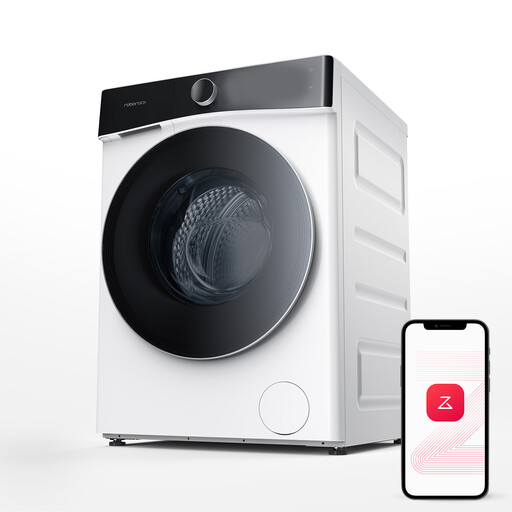 Image unavailable
Roborock Zeo Lite, 10/6 kg washer-dryer
For combining washing and drying in one appliance. It has a stated capacity of 10 kg for washing and 6 kg for drying, so you’ll need to remove some laundry before drying a larger load. Check the dimensions and cycles to make sure they suit your needs.
View on Joybuy
 Image unavailable
Hotpoint CHD84MWBSEE, 8 kg heat pump tumble dryer
For dedicated drying without relying on an airer for every load. It has a stated capacity of 8 kg; before choosing this heat pump model, check its dimensions, how it handles water and the energy information for the cycles you’ll use.
View on Joybuy
 Image unavailable
Candy TCA464TM4-S ProWash 500, 6 kg, 1 400 rpm
For continuing to dry laundry indoors while choosing a washing machine with a spin cycle. This top-loading model has a stated washing capacity of 6 kg and a maximum spin speed of 1 400 rpm. Laundry will still need to be dried after washing; choose a spin programme that’s suitable for your fabrics.
View on Joybuy
 Image unavailable
Haier X Series 11 HW100-BD14397PGU1, 10 kg, 1 400 rpm
For washing larger loads while continuing to dry your laundry separately on an airer. This washing machine has a stated washing capacity of 10 kg and a maximum spin speed of 1 400 rpm; results will depend on the programme and fabrics. It has no stated drying function.
View on Joybuy
Frequently asked questions
Does a condenser tumble dryer need an outlet to the outside?
No. UFC-Que Choisir distinguishes condenser tumble dryers from vented models, which need an outlet to the outside or access to an air duct. For a condenser appliance, check whether the water is collected in a tank or whether the model and installation allow it to drain away.
Can a 9/6 kg washer-dryer dry a 9 kg load?
No, not as a single 9 kg drying load: 9/6 kg means 9 kg for washing and 6 kg for drying. Electrolux lists these capacities for the EW7IW4966BG. To run both cycles, limit the initial load to the applicable drying capacity or remove some laundry after washing.
What should I do if I still dry laundry on an indoor airer?
Keep your home’s ventilation running and choose a spin setting that suits your fabrics before hanging them up. ADEME recommends leaving your mechanical ventilation system running; spinning can reduce the water left in laundry, but it won’t remove the moisture released as it dries in the room.


