What should you consider before choosing?
First, work out whether your home really has a suitable place for a clothes airer, then count the available spaces for appliances. Drying capacity and practical features will help you narrow down your options.
Separate tumble dryer
Consider this if: you have space for a second appliance and want to avoid using an airer in an unsuitable room.
Bear in mind: you’ll need an extra appliance, and should check its space requirements and installation conditions.
Washer-dryer
Consider this if: one space needs to serve both purposes.
Bear in mind: its drying capacity is lower than its washing capacity, so you may need to remove some laundry before drying, according to UFC-Que Choisir.
Clothes airer
Keep using one if: you can dry laundry indoors in a large, well-ventilated room or one with suitable extraction, in line with ADEME’s recommendations.
Bear in mind: the laundry releases moisture into the room as it dries.
| Consideration |
What to check |
Who is this for? |
| Moisture in the room |
Check whether the room where you dry your laundry is large and well ventilated, or has suitable extraction. ADEME advises against treating a small, poorly ventilated room as a regular drying space. |
If my laundry currently dries in a poorly ventilated room, I want to avoid regularly adding moisture to it; around 36% of consumers would make this a priority. |
| Space and capacity |
Measure the space, including the door and connections. For a washer-dryer, compare its washing and drying capacities separately. |
If I can only install one machine, it also needs to dry my usual loads without disrupting every laundry day; nearly 29% of consumers would prioritise this constraint. |
| Energy use, programme length and noise |
Compare the energy label, stated energy consumption, programme length and noise level for similar capacities and uses. |
With an appliance near my living areas, I need to balance its operation with cycle times and energy use; around 21% of consumers would make this their priority. |
| Combining drying methods |
If you keep using a clothes airer, check the ventilation or extraction conditions. If you’re considering a dehumidifier as an additional appliance, check the model’s specifications without overlooking ventilation. |
I want to keep using an airer for some loads, but only in a suitable room; around 14% of consumers would put this flexibility first. |
Appliances to suit your space and laundry loads
These Joybuy appliances cover two options discussed here: installing a separate tumble dryer or combining washing and drying in one machine. First compare the space available with the load you need to dry. Compact models designed for very small loads are not suited to the same tasks as an appliance for a regular laundry load.
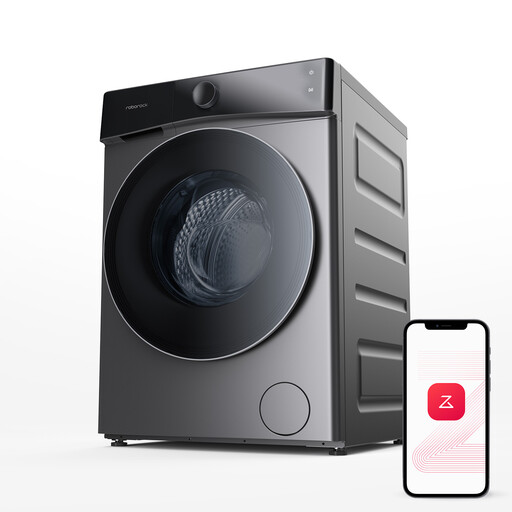 Image unavailable
Roborock Zeo Lite Gray, 10/6 kg washer-dryer
Worth considering if you only have space for one appliance to wash and dry your laundry. The title lists a 10 kg washing capacity and a 6 kg drying capacity, so size your load to suit the latter.
The title mentions Zeo-Cycle drying, 27 wash programmes, app control and the LintClear system. Before choosing a spot for it, check the model’s dimensions, noise levels, cycle times and energy consumption.
View on Joybuy
 Image unavailable
Hotpoint CHD84MWBSEE, 8 kg heat pump tumble dryer
A separate appliance for drying laundry if you have space for a second one. The title lists an 8 kg capacity and a C energy rating.
Check the depth, how water is collected, programme lengths and stated energy consumption to make sure it suits your installation.
View on Joybuy
 Image unavailable
Comfee CD08EHP05W-HR, 8 kg heat pump tumble dryer
Another option if you have space for a separate tumble dryer. The title lists an 8 kg capacity and a D energy rating.
Compare its stated energy consumption and programmes with those of appliances sized for your laundry loads. Also check the dimensions and noise level for the space where you plan to put it.
View on Joybuy
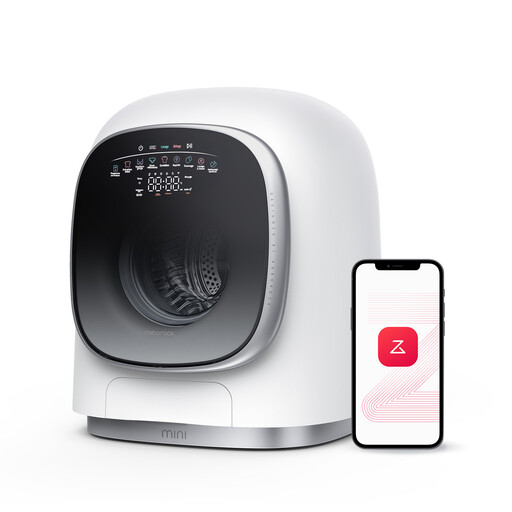 Image unavailable
Roborock Marshmallow Zeo Mini White, 1/0.5 kg washer-dryer
Only consider this for very small loads: the title lists a 1 kg washing capacity and a 0.5 kg drying capacity, not the capacity needed to dry a regular laundry load.
The title also mentions Zeo-Cycle drying and the LintClear system. Check the dimensions, programme lengths and energy consumption before opting for this size.
View on Joybuy
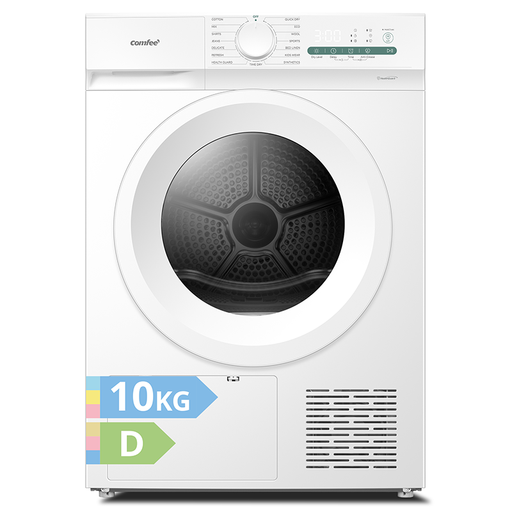 Image unavailable
Comfee CD10EHP05W-HR, heat pump tumble dryer
This model is for drying laundry in a separate appliance. Be sure to confirm the capacity of this version before matching it to your loads: the title lists 10 kg, while the detailed description states 8 kg.
The title lists a D energy rating. Then compare the energy consumption, programme lengths, dimensions and noise level of the exact model.
View on Joybuy
Frequently asked questions
Can you keep a clothes airer indoors?
Yes, if the room is suitable. ADEME recommends using a large, well-ventilated room or one with a suitable extraction vent. A bathroom with no window or mechanical ventilation is not suitable for regular indoor drying.
Does a tumble dryer need to be connected to an outside vent?
It depends on the technology: a vented tumble dryer needs an outlet to the outside, unlike a condenser model. For the latter, check how the water is collected or drained, and follow the model’s installation and maintenance instructions.
Which energy label should you compare for a new tumble dryer?
For new tumble dryers covered by the rules on the EU market since 1 July 2025, compare the label on the A to G scale. The European Commission explains this scale, and you can also find energy information for the model in the European EPREL database.
Can a washer-dryer dry a full wash load?
Not necessarily: its drying capacity is lower than its washing capacity, as UFC-Que Choisir points out. Check both figures for the model you choose. For example, Electrolux lists a 10 kg washing capacity and a 6 kg drying capacity for its EW9W1166RA.
Can a dehumidifier replace ventilation?
No, you shouldn’t treat it as a replacement for ventilation in your home. If damp persists, ADEME recommends finding the cause and reviewing your ventilation system. Assess any additional appliance separately, based on its specifications and your installation.


