If there’s room for just one appliance in your home, a washer-dryer lets you wash and dry your laundry in one go, provided you keep the load within its drying capacity, which is generally lower than its washing capacity, according to Que Choisir. If you can fit a compatible stacked setup, a separate heat pump tumble dryer offers dedicated drying capacity, but you’ll need to check that the appliances can be stacked and that there’s adequate ventilation. A clothes airer means you won’t need a second appliance, but it will take up space while your laundry dries.
Who are these options for?
Room for just one appliance
If you want to wash and then dry your laundry without transferring it between machines, a washer-dryer meets this space constraint. However, compare its drying capacity with the amount of laundry you usually wash: Que Choisir points out that the two capacities differ.
Plenty of height, but limited floor space
A stacked setup can let you keep two separate appliances. Que Choisir recommends checking that the machines are compatible for stacking. You’ll also need to consider how stable the floor is, how easily you can access the appliances and whether the room is well ventilated.
Frequent drying of large loads
If you regularly dry bedding, towels or several loads of washing, compare the drying capacity of a separate appliance with that of a washer-dryer. If you’re considering a heat pump model, also check programme times and the stated energy consumption for the way you plan to use it.
How do the options compare?
First, work out whether you really only have space for one appliance, or whether two can be stacked in line with their instruction manuals. Remember to factor in the space you’ll need to set up a clothes airer, too.
Washer-dryer
Worth considering: if one appliance needs to handle both washing and drying, without you having to transfer the laundry.
The trade-off: to run both cycles back to back, the load must stay within the drying capacity, which is lower than the washing capacity, according to Que Choisir.
Separate heat pump tumble dryer
Worth considering: if you have space for a second appliance or a compatible stacked setup, so you can keep your washing machine separate.
The trade-off: dedicated drying capacity means an additional appliance to install, and programmes can take a long time.
Clothes airer
Worth considering: if you can’t install another tumble dryer and have an area you can set aside for drying laundry.
The trade-off: drying won’t start automatically when the wash finishes, and the airer will take up space for a variable amount of time.
| Consideration |
What to check before you buy |
Who is this for? |
| Floor space |
Appliance dimensions and the clearance needed to open the door; the space actually available for a clothes airer. |
If there’s no room for a second appliance, I want to be able to wash and dry my laundry in one space. Around 31% of consumers in this situation would make saving space their top priority. |
| Capacity and cycle time |
Separate washing and drying capacities, in kg, followed by the programme time for the load you expect to dry. |
If I do large or frequent loads, I want to avoid taking some of the laundry out before drying it. Capacity would be the top priority for around 25% of consumers in this situation. |
| Energy and water use |
Energy figures for the relevant programme and, for a washer-dryer, water consumption for the wash-and-dry cycle. |
For regular drying, I’d rather compare consumption based on how I’ll use the appliance, even if a programme takes longer. Around 25% of consumers in this situation would prioritise this. |
| Installation and ventilation |
Clearance and ventilation requirements in the instruction manual; if stacking, check that the appliances are compatible and that the floor is stable. |
In a room with limited space, I first need to know whether the proposed installation is practical without putting the tumble dryer in an unventilated space. This would be the top consideration for around 19% of consumers in this situation. |
A standard condenser tumble dryer can be a useful point of comparison if you already own one. The European Commission states that domestic tumble dryers newly placed on the EU market from 1 July 2025 must use heat pump technology. This market requirement alone is not enough to determine the status of any particular older appliance.
Mistakes to avoid
-
Looking only at washing capacity
A washer-dryer may be able to wash more laundry than it can dry. If the load exceeds its drying capacity, you’ll need to remove some items or run more than one drying cycle, as Que Choisir points out.
Compare both capacities in kg and size any load you want to wash and dry in one go according to the drying capacity.
-
Assuming standard condenser dryers are an equivalent new option
The European Commission states that domestic tumble dryers newly placed on the EU market from 1 July 2025 must use heat pump technology. Having a water tank does not, by itself, tell you which technology a dryer uses.
For a new purchase in France, check the technology stated for the model, then compare its energy label and programmes.
-
Assuming no external vent means no need for ventilation
A condenser tumble dryer, including a heat pump model, doesn’t need a vent to the outside. But that doesn’t mean you can use it in any enclosed cupboard: Electrolux France, for example, warns against installing one in an unventilated cupboard.
Check the model’s instruction manual for clearance requirements and make sure the room can be ventilated.
-
Stacking two appliances without checking they’re compatible
An unsuitable stacked setup may be unstable, particularly when the washing machine is spinning. Que Choisir says the tumble dryer must go on top, never the other way round.
Before installation, check the instruction manuals for both appliances, use a suitable stacking kit and make sure the floor is stable.
Brands to consider
Bosch
Bosch Home Appliances France features, among other products, a Series 6 WNG24402FR washer-dryer, stated to have a 9 kg washing capacity and a 6 kg drying capacity, as well as separate heat pump tumble dryers.
- These two categories let you consider either a single appliance or a setup with two appliances.
- Check the capacities, cycles and installation requirements for each model; the details of one model don’t represent the entire range.
LG
LG France offers washer-dryers that combine both functions in one appliance, including models stated to have a 9 kg washing capacity and a 6 kg drying capacity.
- This category is designed for situations where there’s only room for one appliance to handle both tasks.
- Saving space doesn’t eliminate the difference between washing and drying capacities. Check the cycle time and energy and water use for your chosen programme, too.
Electrolux
Electrolux France features, among other products, the separate YW6HI841DC heat pump tumble dryer, stated to have an 8 kg capacity.
- The product information for this model lets you check its capacity and specific energy figures.
- Before considering a stacked setup or enclosed space, check the instruction manual for the model’s installation and ventilation requirements.
Appliances to suit your available space
The washer-dryer below is an option if you’re looking for a single appliance. Separate heat pump tumble dryers are worth considering if you can keep your washing machine and find a suitable space for the dryer. Their inclusion here doesn’t confirm that they can be stacked in your home.
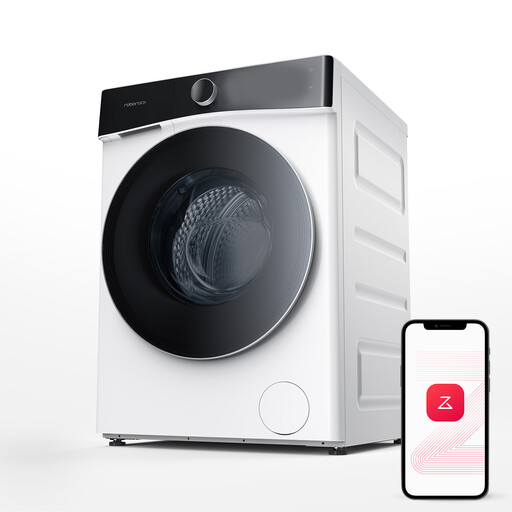 Image unavailable
Roborock Zeo Lite Zeo-Cycle washer-dryer, 10 kg/6 kg
Worth considering if you want to combine washing and drying in one appliance.
Stated capacities: 10 kg for washing and 6 kg for drying. To run both functions without removing any laundry, keep the load within the drying capacity.
Before buying, compare its dimensions with your available space and check the duration and energy and water use of the wash-and-dry cycle you’re interested in.
View on Joybuy
 Image unavailable
Hotpoint CHD84MWBSEE, 8 kg heat pump tumble dryer
Worth considering if you have space for a tumble dryer separate from your washing machine.
This model has a stated capacity of 8 kg and an energy rating of C.
If you’re planning a stacked setup, check compatibility in the instruction manuals for both appliances. Also check the dimensions, ventilation requirements, programme time and energy use for the cycle you plan to use.
View on Joybuy
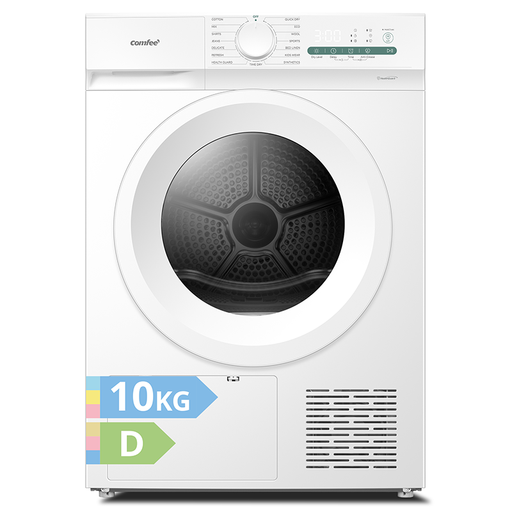 Image unavailable
Comfee' CD10EHP05W-HR, 10 kg heat pump tumble dryer
Its stated 10 kg capacity may appeal to households looking to dry larger loads in a separate tumble dryer.
This model has a stated energy rating of D. The rating alone doesn’t replace comparing energy use and programmes.
Before choosing this appliance for a small home, check its dimensions and ventilation requirements, and confirm that it can be stacked if needed.
View on Joybuy
 Image unavailable
Comfee CD08EHP05W-HR, 8 kg heat pump tumble dryer
Worth considering if an 8 kg standalone tumble dryer suits your loads and can be installed beside or above your washing machine.
This model has a stated energy rating of D, and the product name also mentions a refresh programme.
Check the instruction manuals for clearance and ventilation requirements, and confirm whether stacking is possible. Then compare the cycle times and energy use of the programmes you’ll use.
View on Joybuy
Frequently asked questions
Can you run a wash and dry cycle back to back with a full washer-dryer?
Only if the load is within the stated drying capacity. Que Choisir points out that this is lower than the washing capacity, so compare both figures in kg for the model you’re considering.
Does a heat pump tumble dryer need an external vent?
No. This type of condenser tumble dryer doesn’t need an external vent, as Que Choisir explains. However, you’ll still need to follow the clearance and ventilation guidance in its instruction manual.
What should you check before stacking a washing machine and tumble dryer?
Check the instruction manuals to make sure the two appliances and the stacking kit are compatible, then confirm that the floor is stable. Que Choisir says the tumble dryer must go on top of the washing machine, not the other way round.
Is a standard condenser tumble dryer still an option when buying new?
For domestic tumble dryers newly placed on the EU market from 1 July 2025, the European Commission requires heat pump technology. If you’re comparing an older appliance, distinguish its date of being placed on the market from the date you buy it.
How can you compare the energy and water use of a washer-dryer and a separate tumble dryer?
Compare the figures for the programmes and types of use that matter to you, rather than looking only at the energy ratings. The European Commission says the label for a washer-dryer includes information on energy, water and programme duration. For a separate tumble dryer, check the figures for its own drying programme without treating the two cycles as equivalent.


