If you often dry full loads of laundry and have space set aside for an appliance, compare heat pump tumble dryers by capacity, dimensions, noise and programme length. If you only have room for one appliance, a washer-dryer saves space, but check its drying capacity separately. If you prefer to keep using a clothes airer, a compact model or dehumidifier could meet a specific need without replacing the ventilation recommended by ADEME.
Who are these solutions for?
Renters with very little floor space
If a clothes airer gets in the way or there’s no room for a second appliance, measure the space it needs both when in use and when stored away. If you’re considering a washer-dryer, also check the door clearance and drying capacity, which is separate from its washing capacity.
Households that often dry full loads
If you can set aside space for a tumble dryer, compare its capacity and programme length with your laundry routine. Noise, energy consumption and condensation efficiency are among the criteria used by the European Commission to compare models listed in EPREL.
People whose rooms get damp when drying clothes indoors
First, choose a suitable place for your laundry to dry. ADEME recommends a large, well-ventilated room or one with mechanical extract ventilation. A dehumidifier can complement air-drying, but it doesn’t replace the need for fresh air.
Which factors matter most?
Your choice depends first on the space available and whether you can ventilate the room, then on how much laundry you need to dry and which practical compromises you’re willing to make.
Heat pump tumble dryer
Consider it if: you often dry full loads and have space for an additional appliance.
Bear in mind: you’ll need to transfer the laundry, make room for the appliance and follow the maintenance instructions in its manual.
Washer-dryer
Consider it if: you only have room for one appliance to wash and dry your laundry.
Bear in mind: its maximum drying load may be smaller than its washing capacity, and the complete cycle can take a while.
Dehumidifier
Consider it if: you want to use it alongside a clothes airer and your main concern is humidity in the room.
Bear in mind: your laundry will still be hanging up, and the room will still need suitable ventilation.
Compact or heated clothes airer
Consider it if: you prefer air-drying and want an airer that fits the space available.
Bear in mind: damp laundry will remain in your home. A heated model also needs to be used in accordance with its electrical safety instructions.
| Factor | What to check | Who it matters to |
|---|
| Humidity and ventilation |
Choose a suitable room and check its ventilation and whether it has mechanical extract ventilation. For a dehumidifier, look at the water tank and drainage options. |
When laundry is left to dry in a room that gets damp, I want to manage the humidity without neglecting ventilation; around 29% of consumers prioritise this need. |
| Space available |
Measure the space needed when the appliance is in use, door clearance and access routes. For a clothes airer, check its folded dimensions too. |
If I need to reclaim space between loads, storage or avoiding a second appliance comes first; this is the top priority for around 29% of consumers. |
| Drying time |
Compare the maximum load and programme length for the model you’re considering. If you use a clothes airer, allow for the spin cycle beforehand, which ADEME recommends when laundry needs to dry quickly indoors. |
When I do laundry often, I don’t want a load left on the airer for too long; reducing the wait is a priority for around 24% of consumers. |
| Energy use and maintenance |
Check the model’s energy use, noise levels and programme length, then read the manual for information about filters, the condenser or water tank. The European Commission notes that there is no harmonised EU energy label for dehumidifiers. |
If the appliance runs regularly in my living space, I want to know about its noise, energy use and maintenance requirements; around 18% of consumers make this their top criterion. |
What should you avoid?
-
Assuming an appliance makes ventilation unnecessary
ADEME points out that air-drying laundry releases a lot of moisture into your home. A dehumidifier alone can’t replace fresh-air ventilation.
Choose a large, well-ventilated room or one with mechanical extract ventilation, then select equipment to suit the laundry you need to dry and the space available.
-
Confusing washing capacity with drying capacity
A washer-dryer’s washing and drying capacities can differ: LG lists 8.5 kg for washing and 5 kg for drying on the F852SV50WRS.
Check the capacity, programme length and energy use for the wash-and-dry cycle on the model you’re considering, rather than relying on its washing capacity alone.
If a washed load exceeds the drying capacity, you may need to remove some laundry before starting the drying cycle.
-
Comparing dehumidifiers using an A to G energy rating
The European Commission says there is no EU energy-labelling system for dehumidifiers. A tumble dryer’s energy rating therefore doesn’t provide a basis for comparison in this category.
Check the specifications and the conditions under which they were measured on the product pages for the dehumidifiers you’re interested in. Also consider their noise levels, water tanks and drainage options.
-
Choosing a compact electrical appliance without reading the instructions
The DGCCRF warns that electrical equipment can pose risks including electric shock, fire and burns.
Before setting up a heated clothes airer or dehumidifier, read the instructions and check that your socket, chosen location and clearance around the appliance are suitable for its use.
Brands to consider by solution type
Bosch
Its heat pump tumble dryers are worth comparing if you have space set aside for an appliance.
- Bosch offers 8 kg and 9 kg models in its French range and lists a half-load option on the WQG13500FR.
- Maintenance features and programmes vary by model, so check each product. The WQG13500FR’s features don’t represent the entire range.
LG
Its washer-dryers are worth considering if you’re looking for a single appliance and space is limited.
- LG lists 8.5 kg for washing and 5 kg for drying on the F852SV50WRS.
- Check the capacity and wash-and-dry cycle details separately from the washing specifications. These figures apply to this model.
De’Longhi
The Tasciugo range includes dehumidifiers to consider alongside a clothes airer if humidity in the room is a particular concern.
- According to De’Longhi, the DEP212 has a laundry mode that adjusts ventilation and moisture extraction.
- This mode doesn’t replace the ventilation or extraction recommended when air-drying laundry.
Leifheit
Its compact clothes airers are worth considering if you need to carefully manage how much floor space drying laundry takes up.
- Leifheit lists a 69 × 69 cm base and 45 m of drying line for the Classic Tower 450.
- A tower airer leaves laundry to dry in the room, so its position needs to allow for the ventilation recommended by ADEME.
Joybuy products for three ways to dry laundry
These models let you consider a washer-dryer if you have space for just one appliance, a separate tumble dryer if you have room for a dedicated spot, or a dehumidifier to use alongside a clothes airer. Compare installation and usage requirements to find the right fit for your room and laundry routine.
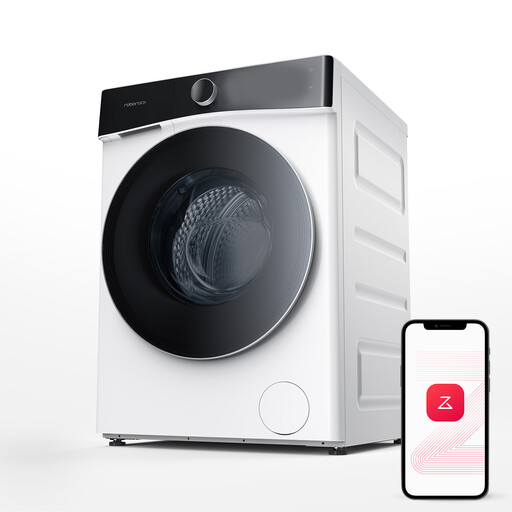 Image unavailable
Roborock Zeo Lite Zeo-Cycle, 10 kg/6 kg washer-dryer, white
Worth considering if you want to wash and dry with one appliance: the listed capacity is 10 kg for washing and 6 kg for drying.
The model name mentions Zeo-Cycle, app control and LintClear. Check the installation dimensions, as well as the length and energy use of the wash-and-dry cycle.
View on Joybuy
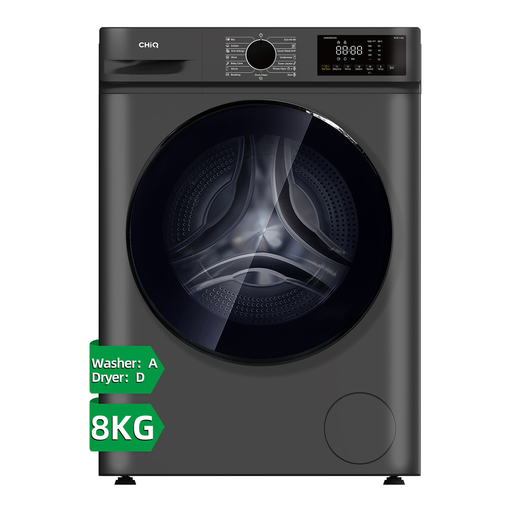 Image unavailable
CHiQ JW85882HG, 8 kg/5 kg washer-dryer, dark grey
This model combines washing and drying in one appliance. Allow for a drying load of up to the listed 5 kg, which is less than its 8 kg washing capacity.
The title mentions a 1,400 rpm spin speed and steam washing. Check the exact dimensions and door clearance before choosing a spot for it, then look at the wash-and-dry cycle details.
View on Joybuy
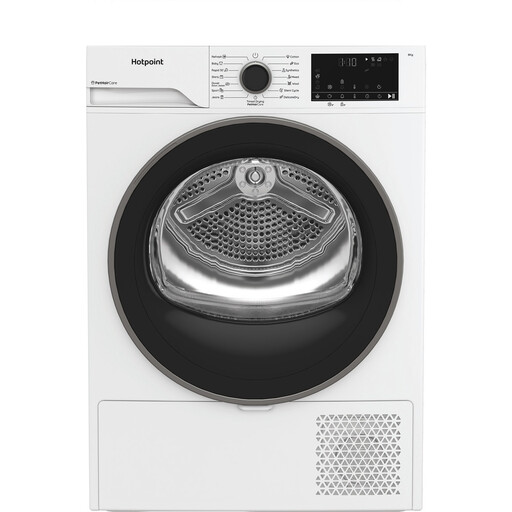 Image unavailable
Hotpoint CHD84MWBSEE, 8 kg heat pump tumble dryer, white
Worth considering if you have space for a separate tumble dryer and want to dry loads of up to the listed capacity of 8 kg.
The title lists a C energy rating. Check the model’s dimensions and clearance requirements against your room, then compare the length and energy use of the programme you’re interested in.
View on Joybuy
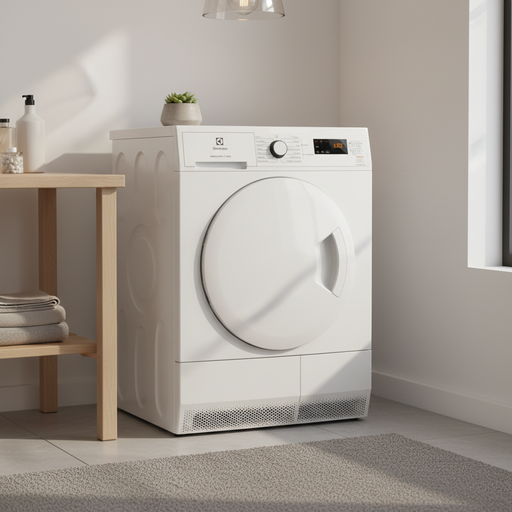 Image unavailable
Electrolux EDH1018CD GentleCare, 8 kg condenser tumble dryer, white
This separate tumble dryer is designed for households with space for an appliance and a listed capacity of 8 kg.
The title mentions propane refrigerant and OptiSense. Check the space needed for installation, as well as the length and energy use of the programmes you’re considering.
View on Joybuy
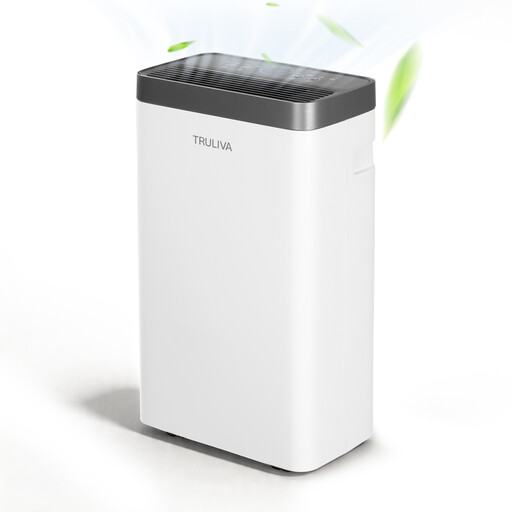 Image unavailable
TRULIVA AP10-2012EE, dehumidifier with laundry mode
Worth considering alongside a clothes airer if humidity in the room is a concern. Laundry mode doesn’t replace a tumble dryer or ventilation.
The title mentions a 24-hour timer and continuous drainage. Check the space needed around the appliance, its noise level and operating conditions before deciding where to put it.
View on Joybuy
Frequently asked questions
Does a dehumidifier replace ventilation when drying laundry?
No. A dehumidifier can be used alongside a clothes airer, but it doesn’t replace fresh-air ventilation. For air-drying laundry, ADEME recommends a large, well-ventilated room or one with mechanical extract ventilation.
What should I compare on a tumble dryer’s product page?
Compare the model’s capacity, energy use, eco programme length, noise and condensation efficiency. The European Commission says that tumble dryers newly placed on the EU market have used an A to G energy label since 1 July 2025.
Can a washer-dryer dry the whole load it has just washed?
Not necessarily: its drying capacity may be lower than its washing capacity. For example, LG lists 8.5 kg for washing and 5 kg for drying on the F852SV50WRS. Check both capacities and the full cycle length for the model you’re considering.
How can I compare the energy use of two dehumidifiers?
Compare the models’ specifications under their stated operating conditions rather than looking for an A to G energy rating. The European Commission says there is no harmonised EU energy label for dehumidifiers. Also consider noise and drainage options, depending on where the appliance will be used.


