If you often dry laundry indoors, first compare your washing machine’s spin performance. Then choose between an airer and a tumble dryer based on the space you have, how often you do laundry and whether you can vent the appliance outside. An airer needs to be in a room where the air is regularly refreshed. Without a dedicated external vent, a condenser tumble dryer – particularly a heat pump model – avoids the need for an exhaust hose, but you’ll need to check cycle times and maintenance requirements. A dehumidifier can complement an airer, but it doesn’t replace airing the room or ventilation, as the recommendations from ADEME and France Rénov’ point out.
Who are these options for?
Households that often use an indoor airer
If you dry a large proportion of your laundry at home, the room’s humidity and air circulation matter just as much as the space taken up by the airer. ADEME highlights that air-drying laundry releases moisture indoors.
Households that do several loads in a row
If you need your laundry ready again quickly, compare the capacity and duration of programmes suited to your loads with the tumble dryer’s electricity use and maintenance requirements.
People without a dedicated external vent
If you live in a flat where an exhaust hose can’t be used, look at condenser and heat pump tumble dryers. Also check the appliance’s dimensions, access to the machine and how it collects water.
Which criteria should you compare?
Spin cycle, then airer
Consider this if: you can hang laundry in a room where the air is properly refreshed.
Bear in mind: the laundry stays in the room while it dries and adds moisture to the air, as ADEME points out.
Tumble dryer
Consider this if: frequent loads make an airer impractical. Without a suitable external vent, compare condenser models, including heat pump dryers.
Bear in mind: electricity use, handling the collected water and the maintenance required for your chosen model. Heat pump cycles can take longer, according to Beko France.
Dehumidifier as an extra
Consider this if: you’re keeping your airer and want to manage humidity in the room where your laundry dries.
Bear in mind: it’s an extra appliance to run and maintain, and it doesn’t refresh the air in your home.
| Concern |
What to check |
Consumers concerned |
| Indoor humidity |
Whether you can air the room and how well the ventilation works; how the chosen appliance collects water. |
When laundry dries in a room that’s already poorly ventilated, I want to avoid adding lasting moisture. Around 36% of consumers would make this their priority. |
| Laundry turnaround |
Programme times for comparable loads and drying capacity. |
If I’m doing several loads in a row, I need to get dry laundry back without leaving multiple loads waiting on the airer. This would be the priority for around 29% of consumers. |
| Space and installation |
Dimensions, including room for access; whether a vented tumble dryer needs an external outlet. |
In a small home without a dedicated vent, I want to choose an appliance I can actually install. Around 21% of consumers would put this constraint first. |
| Electricity and maintenance |
The model’s energy use and instructions for cleaning the filters and condenser, where applicable. |
If I dry laundry with an appliance regularly, I want to factor in the electricity it uses and the repeated maintenance tasks, even if a programme takes longer. Around 14% of consumers would make this their top criterion. |
What should you avoid?
-
Assuming a plug socket is all you need for a vented tumble dryer
According to UFC-Que Choisir, this type of appliance must expel moist air outside. So having space in the room doesn’t necessarily mean you can install one.
Before choosing a model, measure the space and check that your planned external outlet meets the requirements in the user manual. If there’s no suitable way to vent it, consider a condenser tumble dryer instead.
-
Confusing dehumidifying with refreshing the air
A dehumidifier reduces moisture in the room, but it doesn’t do the job of ventilation. ADEME recommends keeping air inlets and extraction vents clear.
If needed, use it alongside your airer and make sure your home’s ventilation and airflow are working properly.
-
Choosing a tumble dryer based only on the stated cycle time
Programmes don’t necessarily use the same load sizes or fabrics. UFC-Que Choisir also says that heat pump models use less electricity than conventional condenser or vented models, while Beko France notes that their programmes can take longer.
Compare programmes and capacities on a like-for-like basis, then check the energy-use information for the specific model.
-
Forgetting to clean the filters
Bosch Home Appliances says that clogged filters can reduce the efficiency of a heat pump tumble dryer. An automatic lint collection feature doesn’t mean that all maintenance is taken care of.
Check the user manual for the model you’re considering to find out which parts need cleaning and how often.
Brands to consider based on your priorities
Bosch
A brand to consider if lint and condenser maintenance are important factors in choosing a heat pump tumble dryer.
- Bosch Home Appliances says its AutoClean technology collects lint and requires the reservoir to be emptied every 20 cycles.
- Check the exact model number: this maintenance system isn’t available on every Bosch tumble dryer.
Miele
A brand worth comparing for heat pump tumble dryers and the features available on different models.
- Miele France offers T1 heat pump tumble dryers with an 8 kg capacity, among other models.
- Capacity and features vary by model, so compare the specifications of the one you’re considering with your usual loads.
Beko
A useful brand to explore when comparing vented, conventional condenser and heat pump tumble dryers.
- Beko France describes all three technologies and notes that heat pump programmes are generally longer.
- Check the connection requirements, dimensions and programmes for the specific model you choose. Don’t assume that features of one technology apply to the whole range.
Joybuy appliances for drying laundry and managing humidity
These appliances suit two different needs: drying laundry in a tumble dryer, or using a dehumidifier alongside an airer. To choose between them, first check the space you have, how you’ll handle collected water and how well the room’s air is refreshed.
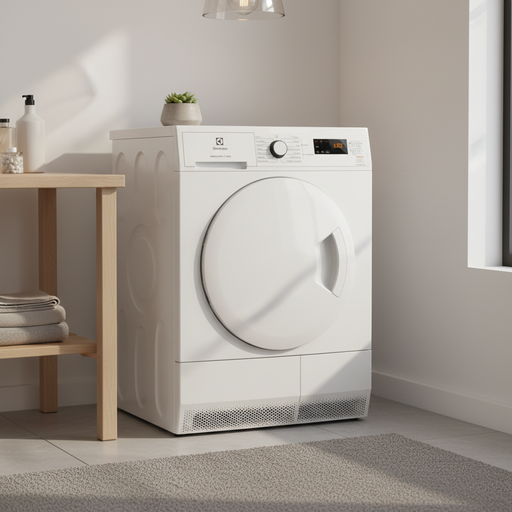 Image unavailable
Electrolux EDH1018CD GentleCare, 8 kg condenser tumble dryer
Worth considering if you’re looking for a condenser tumble dryer with a stated capacity of up to 8 kg. The product description mentions R290 refrigerant and OptiSense. Check the user manual for the programmes, dimensions and how collected water is handled before deciding where to install it.
View on Joybuy
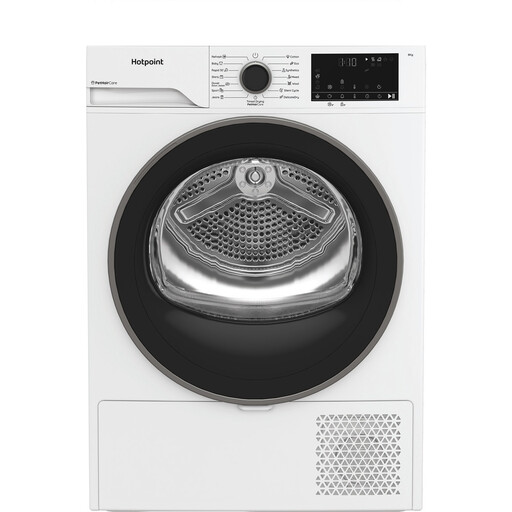 Image unavailable
Hotpoint CHD84MWBSEE, 8 kg heat pump tumble dryer
Worth comparing if you do laundry regularly and are considering a heat pump tumble dryer. The product description lists an 8 kg capacity and energy rating C. Check the dimensions, programme times and options for draining water to make sure they suit your installation.
View on Joybuy
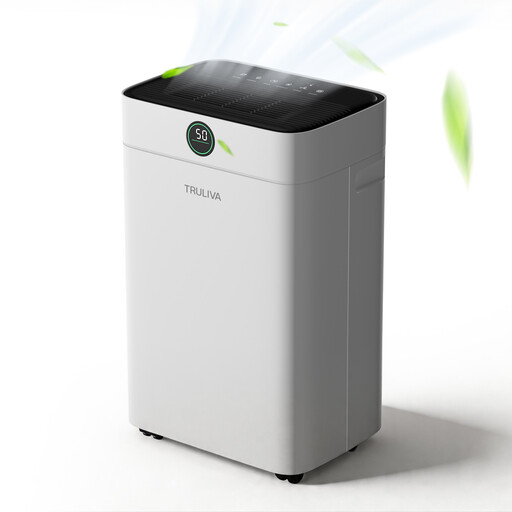 Image unavailable
TRULIVA dehumidifier, 25 L/day, with laundry function
Consider it as an extra alongside an airer, not as a replacement for airing the room. The product description lists a 2.8 L tank, a continuous drainage hose and R290 refrigerant. Its stated maximum extraction rate of 25 L/day is based on conditions of 95 °F and 90% relative humidity, so it doesn’t indicate the results you’ll get in your room.
View on Joybuy
 Image unavailable
TRULIVA AP10-2012EE dehumidifier with laundry function
Worth comparing if your laundry stays on an airer in a room where you want to manage humidity. The product description states an approximate coverage area of 32 m², a 24-hour timer and continuous drainage. Check that these suit your room, as well as the noise level and energy use for your needs. The appliance doesn’t refresh the air.
View on Joybuy
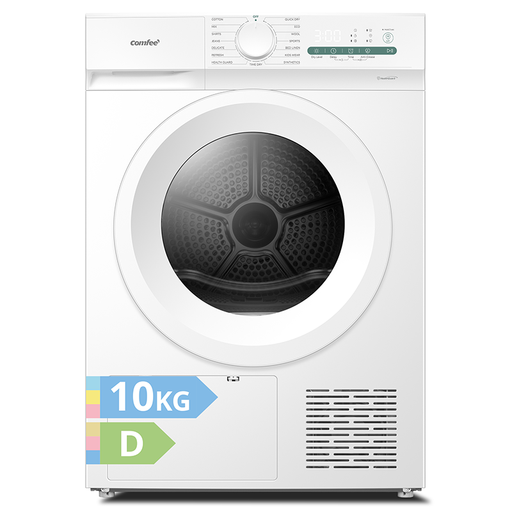 Image unavailable
Comfee' CD10EHP05W-HR, 10 kg heat pump tumble dryer
Worth considering if you’re looking for an electric tumble dryer with a stated capacity of 10 kg. The product description lists energy rating D and a quick programme, but doesn’t state how long it takes with a full load. Check the programme conditions, dimensions and water-handling requirements in the user manual.
View on Joybuy
Frequently asked questions
Can a dehumidifier replace airing the room when laundry is drying indoors?
No. It can complement air-drying by removing moisture from the room, but it doesn’t refresh the air. ADEME recommends keeping air inlets and extraction vents clear. If humidity persists, also check that your ventilation is working properly.
Can you install a vented tumble dryer without an external outlet?
No, not without a suitable way to vent the appliance outside. UFC-Que Choisir explains that this type of tumble dryer needs a usable opening or exhaust hose. If your home doesn’t have one, compare condenser models rather than assuming a plug socket is enough.
Do you need to empty the tank on a condenser tumble dryer?
Yes, if the water is collected in a tank and the appliance isn’t connected to a drain. UFC-Que Choisir describes both ways of collecting water. Check the user manual for your chosen model to see whether it can be connected to a drain and what accessories you’ll need.
What maintenance does a heat pump tumble dryer need?
Follow the maintenance instructions in the user manual for your model, including removing lint and cleaning the filters if it has them. Bosch Home Appliances says that clogged filters can reduce efficiency. Even if your model has automatic lint collection, check which parts still need to be cleaned by hand.


