If you only dry laundry occasionally in a large, well-ventilated room or one with an extractor fan, an airer may be enough. For regular washing, consider a heat-pump tumble dryer if you have the space. A washer-dryer is mainly useful when space is limited, while a dehumidifier can complement an airer but won’t make up for inadequate ventilation. Then compare the space required, drying capacity, water management, noise and energy consumption of the model you’re considering.
Who are these solutions for?
Households that often use an airer
If you regularly dry laundry indoors, first think about where to put the airer. ADEME recommends using a large, well-ventilated room or one with an extractor fan. France Rénov’ points out that ventilation removes the moisture produced inside your home.
People living in small flats
If there isn’t room for two machines in your home, a washer-dryer can combine both functions. However, check its depth, door clearance and drying capacity, which is different from its washing capacity. UFC-Que Choisir highlights this difference in capacity.
Households with frequent or large loads of washing
If you do several loads in a row, a separate tumble dryer means you won’t have to leave an airer up all the time, provided you have enough space for it. Compare the capacity in kg, programme duration and water-drainage requirements of the model you choose.
What matters for your home?
Your choice depends first on where you dry your laundry and how much space you have, then on the size of your loads. According to ADEME, drying laundry indoors releases a lot of moisture. Moving the airer will only help if the new room is genuinely suitable.
Airer in a well-ventilated room
Worth considering: for drying without a rush in a large, well-ventilated room or one with an extractor fan.
Limitation: laundry releases moisture into the air; an airer won’t solve inadequate ventilation.
Dehumidifier with an airer
Worth considering: if you want to keep using an airer and have room for an additional appliance.
Limitation: you’ll need to manage the collected water and electricity use; the appliance doesn’t replace air circulation.
Heat-pump tumble dryer
Worth considering: for regular loads if you can install a separate appliance.
Limitation: it takes up permanent space, and you’ll need to check cycle times and how water is collected or drained.
Washer-dryer
Worth considering: if you can’t install a washing machine and tumble dryer separately.
Limitation: according to UFC-Que Choisir, drying capacity is lower than washing capacity, so you may need to split a full load of washing.
| Criteria |
What to check |
Relevant to |
| Humidity and ventilation |
Room size and whether it can genuinely be ventilated or have air extracted; for a dehumidifier, how collected water is managed. |
I want to keep using my airer without allowing laundry moisture to build up in a poorly ventilated room. This would be the top priority for around 37% of consumers. |
| Available space |
Full dimensions, access routes and door clearance; for a combined appliance, washing and drying capacities in kg. |
In a small flat, I need to be able to use the appliance without blocking access or installing two machines. Around 27% of consumers would make saving space their top priority. |
| Load size and drying time |
Maximum drying capacity and the duration of the programme suitable for that load. |
I do several loads in a row and need to know when my laundry will be dry, without having to split loads too often. For around 27% of consumers, this need would come before the others. |
| Energy and maintenance |
Energy consumption and duration based on comparable figures; access to filters and how often the tank needs emptying. |
I’m happy to wait longer for my laundry to dry if everyday use means less electricity or fewer tasks. Around 9% of consumers would put these considerations first. |
Mistakes to avoid before you buy
-
Relying on a dehumidifier to replace ventilation
France Rénov’ points out that ventilation removes the moisture produced inside your home. A dehumidifier can help when drying laundry on an airer, but it doesn’t circulate fresh air.
If humidity persists even when you’re not doing laundry, or your ventilation isn’t working, get the issue looked at separately rather than treating it as a simple choice of appliance.
Also allow time to empty the tank and factor in the electricity used while the appliance is running.
-
Confusing washing capacity with drying capacity
A washer-dryer may take more laundry for washing than for drying. This means you may not be able to put a full load straight through to the drying cycle.
Compare the two capacities in kg for the model you’re considering, and check whether removing some of the laundry would fit your usual routine.
Splitting a load may mean running a second cycle and spending longer on your laundry.
-
Measuring only the machine’s width
An alcove may be wide enough but still unusable if you haven’t allowed for the depth, connections or door clearance.
Measure the space and access routes, then compare them with the dimensions and clearance requirements for the specific model.
-
Forgetting where the collected water will go
Depending on the appliance, condensed water is collected in a tank or can be directed to a compatible drain. This determines what you’ll need to do day to day.
Check whether the tank is easy to access or what connections are required, as set out in the instructions, especially if a hose is supplied.
Brands to consider by model
Bosch
Bosch heat-pump tumble dryers are worth considering if you have space for a separate appliance.
- According to Bosch, the WQG2450SFR has a 9 kg capacity, measures 842 × 598 × 613 mm and can drain water through a hose.
- The self-cleaning condenser and half-load function are features of this model. Check the dimensions, noise level and drainage requirements of any other Bosch appliance separately.
Electrolux
The brand offers both separate tumble dryers and washer-dryers. Compare the two formats based on your available space and usual load sizes.
- According to Electrolux France, the EW9W1165RB washer-dryer has a washing capacity of 10 kg and a drying capacity of 6 kg.
- These capacities aren’t interchangeable. For a separate tumble dryer, check the product information and label for the model you choose rather than assuming the same features apply across the range.
Rowenta
Rowenta dehumidifiers are worth considering alongside an indoor airer, but not as a replacement for working ventilation.
- Rowenta lists a laundry mode, a 3 L tank and a 1 m hose for continuous drainage on the Extrême Dry Compact+ DH5260F0.
- The stated capacity of 16 L/day depends on the testing conditions. Check that it’s suitable for your room’s temperature and size, as well as its noise level and possible connections.
Tumble dryers and washer-dryers on Joybuy
These models cover two of the options discussed above: installing a separate tumble dryer for regular loads, or combining washing and drying in one machine when space is limited. Check the dimensions and installation requirements before deciding between them.
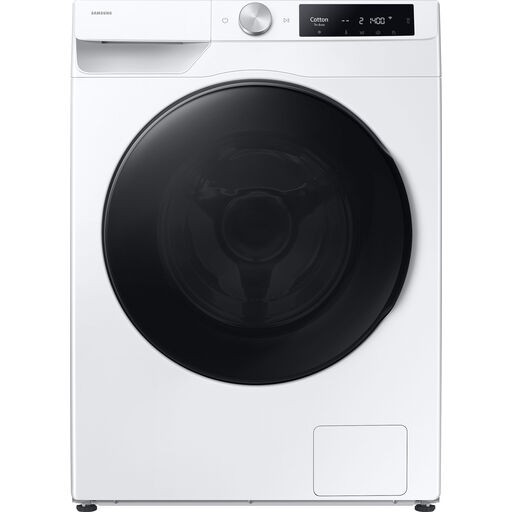 Image unavailable
Samsung WD11DG6B85BEU3, 11 kg washing and 6 kg drying capacity
Worth considering if you want to combine washing and drying in one machine. Its stated capacity is 11 kg for washing and 6 kg for drying, so you’ll need to reduce the size of a larger washed load before drying it.
View on Joybuy
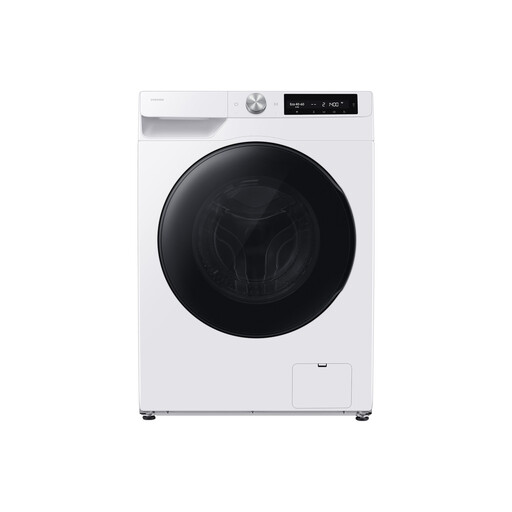 Image unavailable
Samsung WD10HG6U34BEU3, 10 kg washing and 6 kg drying capacity
Worth considering if you don’t have room for two appliances. This model has a stated washing capacity of 10 kg, a drying capacity of 6 kg and an energy rating of D. Compare cycle times and check the connections required for your space.
View on Joybuy
 Image unavailable
Hotpoint CHD84MWBSEE, 8 kg heat-pump tumble dryer
A separate appliance worth considering if you do laundry regularly and have enough space. It has a stated capacity of 8 kg and an energy rating of C. Check its dimensions and the programme time for your usual load sizes.
View on Joybuy
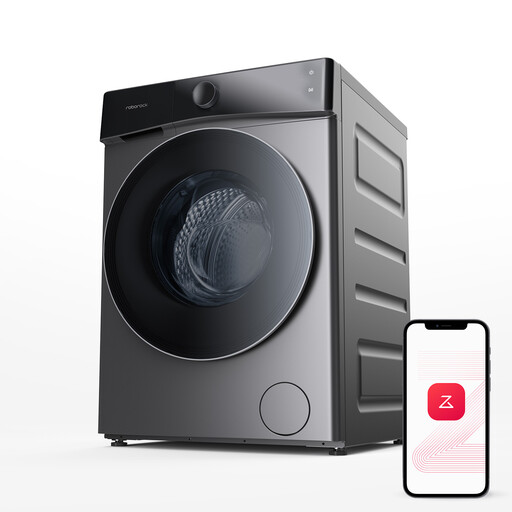 Image unavailable
Roborock Zeo Lite Gray, 10 kg washing and 6 kg drying capacity
This washer-dryer is worth considering if two separate machines won’t work in your space. It has a stated washing capacity of 10 kg and a drying capacity of 6 kg. Check the dimensions and connections, and be prepared to split any washed load over 6 kg.
View on Joybuy
 Image unavailable
Comfee CD08EHP05W-HR, 8 kg heat-pump tumble dryer
Compare it with other separate appliances if you regularly dry loads of laundry. This model has a stated capacity of 8 kg and an energy rating of D. Check the space it needs, how it handles water and the programme times for your installation.
View on Joybuy
Frequently asked questions
Is an airer enough in a poorly ventilated home?
Yes, if you can dry your laundry in a large, well-ventilated room or one with an extractor fan. This is the set-up recommended by ADEME. If that isn’t possible, simply moving the airer won’t solve the humidity problem.
Can you install a vented tumble dryer without an external vent?
No. According to the European Commission, a vented tumble dryer needs an air outlet to the outside. If your home doesn’t have one, look into the installation requirements for a condenser model with a heat pump, including how water is collected or drained.
Can a washer-dryer dry a full load of washing?
Not necessarily: its drying capacity may be lower than its washing capacity. For example, Electrolux France lists a washing capacity of 10 kg and a drying capacity of 6 kg for the EW9W1165RB. Check both figures for your model before planning to run a full load straight through.
Can a dehumidifier fix a ventilation problem?
No. It can help when drying laundry on an airer by removing moisture from the air, but it doesn’t replace the air circulation provided by ventilation. If your ventilation isn’t working, get the issue addressed separately from your choice of drying appliance.


