Renters or homeowners without room for a tumble dryer
You dry clothes on an airer in the living room, bedroom or bathroom and want to reduce clutter while managing humidity in the room more effectively.


Start by ensuring good air circulation: ADEME recommends drying laundry in a large, well-ventilated room or one fitted with a mechanical ventilation extraction vent. A heat-pump tumble dryer is suitable if you do laundry frequently and have room for a dedicated appliance. A dehumidifier with a laundry mode can complement an airer, but it cannot replace effective ventilation.
You dry clothes on an airer in the living room, bedroom or bathroom and want to reduce clutter while managing humidity in the room more effectively.
If your airer is still full between washes, a heat-pump tumble dryer can free up space more quickly, provided its dimensions, noise level and maintenance requirements suit your home.
If installing a tumble dryer is not possible, a dehumidifier sized for the drying room can help manage humidity around an airer, with either a tank to empty or continuous drainage.
Choose this if: a large, well-ventilated room or effective mechanical extraction is available, and your laundry routine allows enough time for clothes to dry.
Bear in mind: ADEME states that air-drying laundry is one of the household activities that releases the most moisture indoors. An airer can also occupy the room for an extended period.
Choose this if: you do laundry regularly, have a suitable space and want to avoid leaving a loaded airer in your living area.
Bear in mind: the dimensions, noise level, energy label and access to the filters must all be compatible with your installation and maintenance habits.
Choose this if: you need to keep using an airer because there is no room for a tumble dryer, but can dedicate a drying area to the appliance.
Bear in mind: the stated capacity depends on the testing conditions. Also check the noise level, tank, drainage and the space required around the appliance.
| Priority | What to check | Your needs |
|---|---|---|
| Reduce indoor humidity | Check the air circulation, air inlets and extraction vent. If you are keeping an airer, look for a laundry mode or humidistat, and make sure the appliance is suitably sized for the room. | I want to avoid an airer used frequently in a small home adding lasting moisture to the living space. |
| Free up space between washes | Compare the drum capacity with your usual loads, fabric programmes and humidity sensor. With a dehumidifier, check the drying mode and how the room will be arranged around the airer. | I do several loads one after another and do not want to wait too long before reusing the airer or the room. |
| Manage noise, energy use and maintenance | Check the tumble dryer’s energy label, the exact model’s noise level and the cleaning instructions for the filters or condenser. For a dehumidifier, check the tank capacity and whether continuous drainage is available. | I am looking for a practical everyday solution without frequent interruptions or forgotten maintenance. |
A dehumidifier removes water from the air, but it does not replace air exchange. ADEME recommends not blocking air inlets or extraction vents and keeping mechanical ventilation running.
Before buying, make sure air can circulate and that the extraction vents are clear. If you are unsure about the ventilation or notice mould, have the issue assessed before relying on an appliance.
Dehumidification capacities are measured under conditions that can vary considerably. De’Longhi, for example, states 30 L/24 h for the DD230P at 30 °C and 80% relative humidity. This alone does not predict extraction performance in a cooler room.
Compare the test conditions, recommended room volume, laundry mode, noise level and condensate management rather than focusing solely on the L/day figure.
According to Electrolux, a condenser clogged with fluff can increase energy consumption and damage the appliance. An automatic cleaning system does not remove the need to follow the instructions for the specific model.
Read the manual before buying, check which filters remain accessible and plan to clean them at the intervals specified by the manufacturer.
Insufficient maintenance can lead to higher energy consumption and avoidable inconvenience during use.
In a flat, the depth, required clearances and noise level can make installation difficult. The Bosch WQG24502FR, for example, measures 842 × 598 × 613 mm and has a stated noise level of 61 dB. These figures do not apply to other models.
Measure the recess, doors, access points and maintenance space, then compare the full dimensions and noise level of the exact model.
A range of heat-pump tumble dryers to consider when you want to replace an airer with a dedicated drying appliance.
A brand worth comparing for heat-pump tumble dryers and everyday maintenance requirements.
Domestic dehumidifiers designed in particular for households that continue using an airer but want to manage room humidity more effectively.
A range of dehumidifiers featuring laundry functions and, on some models, continuous pump drainage.
These Joybuy options include dehumidifiers with laundry drying functions for use with a retained airer, as well as a heat-pump tumble dryer for households able to install a dedicated appliance.
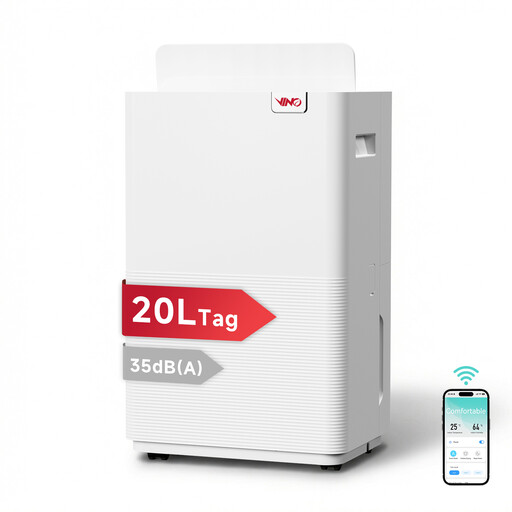 Image unavailable
Worth considering for an airer installed in a dedicated drying area, where you need to control humidity and plan for continuous drainage.
Dry mode, three modes, 2.5 L tank, drainage hose and stated coverage of up to 40 m².
The 20 L/day capacity is stated at 30 °C and 80% relative humidity. Noise is listed as 35 dB in Sleep mode and 40 dB(A) in the table. Check which mode is suitable for the room.
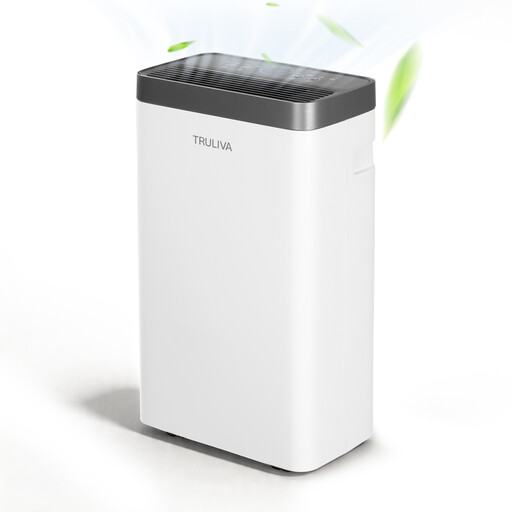 Image unavailable
This model is suitable for an airer kept in a room where a Drying mode and humidity adjustment are useful.
Stated extraction of up to 16 L/day, 24-hour timer, automatic defrosting, 1.35 L tank and supplied continuous drainage hose.
The product details state approximately 32 m² and require an upright position, a stable surface and 10 inches of clearance. Check the noise level before using it near a bedroom.
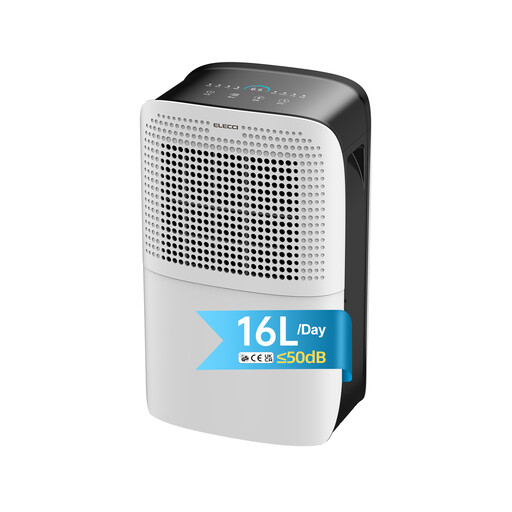 Image unavailable
An option for a medium-sized drying area where you want to keep using an airer while minimising interruptions.
Drying mode, four modes, 3.1 L tank, automatic shut-off, defrosting, castors and continuous hose drainage.
The stated coverage reaches 32 m², with 25 cm of clearance required around the appliance. The 16 L/day capacity is stated at 86 °F and 90% relative humidity. Check the noise level before buying.
 Image unavailable
Worth considering for frequent laundry loads when you can install a dedicated appliance to free up rooms occupied by an airer more quickly.
8 kg capacity, heat-pump drying, cotton, wool and delicates programmes, delayed start, Easy Cleaning 2-in-1 filter and the option to connect to direct drainage.
Energy class C and a stated noise level of 64 dB. Check the manual for the dimensions, clearances and electrical requirements before installation.
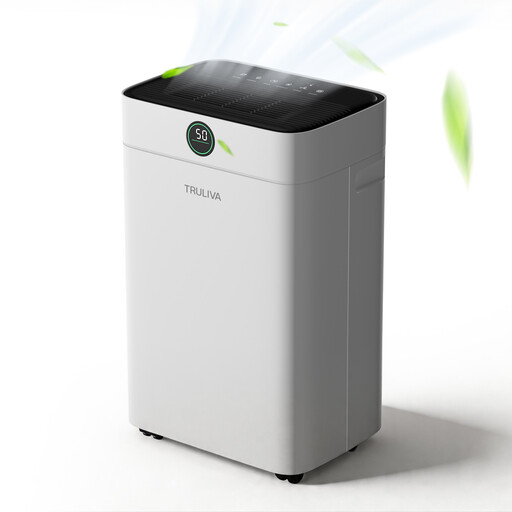 Image unavailable
This dehumidifier may suit an airer kept in a fixed area where you need a dedicated mode and continuous drainage.
Laundry Drying mode, 2.8 L tank with automatic shut-off, automatic defrosting, 3.94 ft hose and castors.
The 25 L/day capacity is stated at 95 °F and 90% relative humidity. The product details require 10 inches of clearance. Also check the recommended coverage and noise level in Laundry Drying mode.
No. ADEME recommends drying laundry in a large, well-ventilated room or one fitted with a mechanical ventilation extraction vent. A dehumidifier can remove water from the air, but it does not justify blocking an air inlet or extraction vent.
Measure the actual installation space, including the depth, connections and clearances specified in the model’s manual. Also check the capacity, noise level, condensate management and energy label. Domestic tumble dryers are among the products covered by energy-labelling requirements.
Follow the instructions for your model. Electrolux specifically recommends cleaning the fluff filter at the end of every cycle and checking the condenser at least once a month when it is accessible. A blocked condenser can increase energy consumption and damage the appliance.
Check the room volume covered according to the model’s product details, the noise level, humidity setting, tank capacity and whether continuous drainage is possible. A full tank can stop the appliance. A hose or pump is only useful if drainage can be arranged in accordance with the manual.