If you dry laundry frequently and have space for a separate appliance, start by comparing heat pump tumble dryers. They condense water without needing an outdoor exhaust hose and generally use less energy than conventional condenser models, according to UFC-Que Choisir, although their cycles are usually slower. If space is tight, a washer-dryer combines both functions, but its drying capacity may be lower than its washing capacity. With an airer, a dehumidifier tackles the room’s humidity rather than drying laundry in a drum. Whichever option you choose, check the ventilation, clearances and connections in the manual for the model you’re considering.
Who are these solutions for?
Households that do laundry frequently
You can install a separate appliance and want to compare heat pump technology, cycle times and water management. UFC-Que Choisir compares the trade-offs between energy use and speed, while Bosch describes the features of a 9 kg model.
People short on space
You can’t spare a second spot on the floor. If you’re considering a washer-dryer, check the model’s washing and drying capacities: LG lists a washing capacity of 8.5 kg and a drying capacity of 5 kg for the F852SV52IRS.
People using an airer in a damp room
You’re happy to hang out your laundry and want a solution that also tackles the ambient humidity. Rowenta describes a laundry mode, as well as a tank and drainage hose for the DH5260F0. These features alone don’t tell you how long laundry will take to dry.
What should you compare?
First decide whether you can install a separate drum appliance, need to combine washing and drying, or would rather keep using an airer.
| Concern |
What to check |
Who is it for? |
| Humidity and installation |
The model’s manual, ventilation and clearance around the appliance; the position of the tank or drainage connection. |
If my utility room is poorly ventilated, I want to know whether the appliance can run there without making the humidity worse. Around 31% of consumers prioritise installation practicality and humidity control. |
| Space |
Dimensions, access to tanks and filters, the space needed for an airer and, for a washer-dryer, its drying capacity. |
If I can’t spare a second spot, I compare a washer-dryer with the space needed to hang out my laundry. Around 25% of consumers prioritise saving space. |
| Electricity use |
Energy use for the programme in question and how often you’ll use it; compare product information based on the same energy scale. |
If I use the appliance frequently, I look at the energy use of its cycles rather than the technology alone. Around 25% of consumers prioritise running costs for electricity. |
| Time and handling |
How long the programme takes for the load, the actual drying capacity, access to filters and water management. |
If I want to spend less time waiting and handling laundry, I check whether my load can be dried in one go and how the water is drained. Around 19% of consumers prioritise cycle time and ease of use. |
Mistakes to avoid
-
Assuming that no outdoor vent means no ventilation is needed
Electrolux warns that heat and condensation can build up around a tumble dryer installed in a room that is too small or poorly ventilated.
Check the installation requirements in the model’s manual. A recommended room size from one brand isn’t a universal rule.
-
Confusing a washer-dryer’s washing capacity with its drying capacity
For the LG F852SV52IRS, LG lists a washing capacity of 8.5 kg and a drying capacity of 5 kg. A load washed above that drying capacity can’t be dried in one go.
Compare your usual load with the drying capacity and the relevant programme, not just the washing capacity.
-
Comparing an old energy rating with the current scale
The European Commission says the A to G scale for tumble dryers has applied since 1 July 2025. An old B rating isn’t directly comparable with a rating on the new scale.
Check the label and product information for the appliance you’re considering, then compare energy use for equivalent programmes.
-
Treating a dehumidifier like a drum tumble dryer
A dehumidifier removes water from the air and works alongside an airer; its extraction capacity doesn’t tell you how long laundry will take to dry in each cycle.
Allow space to hang out your laundry and check the installation requirements, tank and option to connect a drainage hose.
Brands to know when comparing
Bosch
Heat pump tumble dryers for households with space for a separate appliance.
- Bosch lists a 9 kg capacity, a self-cleaning condenser and a water drainage hose for the WQG2451SFR.
- The advertised self-cleaning feature doesn’t remove the need for other maintenance. Check the installation requirements for this model too.
LG
Washer-dryers for homes with space for just one appliance.
- For the F852SV52IRS, LG lists a body depth of 47.5 cm and capacities of 8.5 kg for washing and 5 kg for drying.
- These dimensions and capacities apply to this model; a washed load may exceed its drying capacity.
Rowenta
Dehumidifiers with a laundry mode for people who want to keep using an airer.
- For the DH5260F0, Rowenta lists a 3 L tank and a 1 m hose for continuous water drainage.
- The advertised extraction capacity of up to 16 L per day doesn’t tell you how long it will take to dry laundry in an ordinary room.
De’Longhi
Dehumidifiers with a laundry function to help dry clothes on an airer.
- For the DEP214, De’Longhi lists a 4 L tank and an extraction capacity of 14 L per 24 h at 30 °C and 80 % relative humidity.
- This extraction capacity doesn’t predict how much water will be collected in a room under typical conditions.
Whirlpool
A conventional condenser model to compare against, with information that needs to be viewed in context.
- The FFTBCM118XBFR product information lists an 8 kg capacity.
- The product information shows that it is out of stock and has an old B rating. According to the European Commission, this rating isn’t directly comparable with the A to G scale in use since 1 July 2025.
Products for these needs
This selection brings together heat pump tumble dryers, dehumidifiers to use with an airer, and a washer-dryer, so you can compare different ways to dry laundry without an outdoor exhaust hose.
 Image unavailable
Hotpoint CHD84MWBSEE, 8 kg heat pump tumble dryer
Worth comparing if you want to dry laundry in a drum using a separate appliance. It has an advertised capacity of 8 kg; product information also mentions an Easy Cleaning filter and the option to connect directly to a water drain.
View on Joybuy
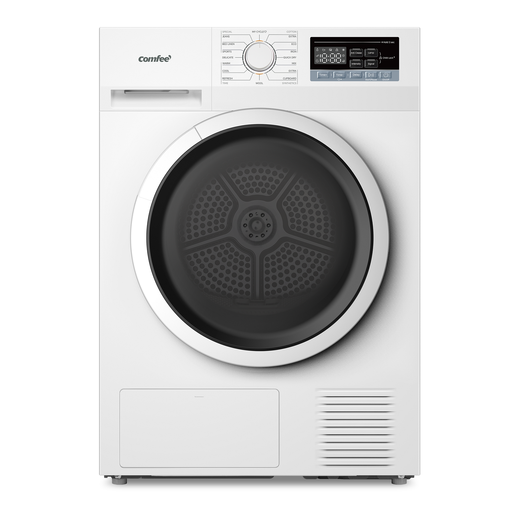 Image unavailable
Comfee CFP01EH80W-JD, 8 kg heat pump tumble dryer
Consider this if you want drum drying and direct water drainage. Listed features include an 8 kg capacity, 16 programmes, and humidity and temperature sensors. The instructions specify a ventilated room of at least 4 m² and an earthed 220–240 V socket, with no extension lead. The appliance contains flammable R290 refrigerant: don’t pierce or modify the circuit, and have it serviced by a qualified technician.
View on Joybuy
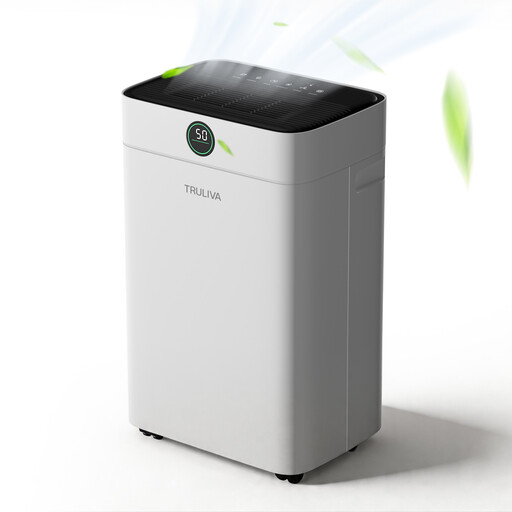 Image unavailable
Truliva, 25 L/day dehumidifier with laundry mode
Consider this if you have space to hang out your laundry and also want to tackle room humidity. Its advertised extraction capacity is up to 25 L per day; it has a 2.8 L tank and a continuous drainage hose. It helps an airer do its job rather than replacing it; laundry must not be dripping wet. Allow 10 inches of clearance around the appliance.
View on Joybuy
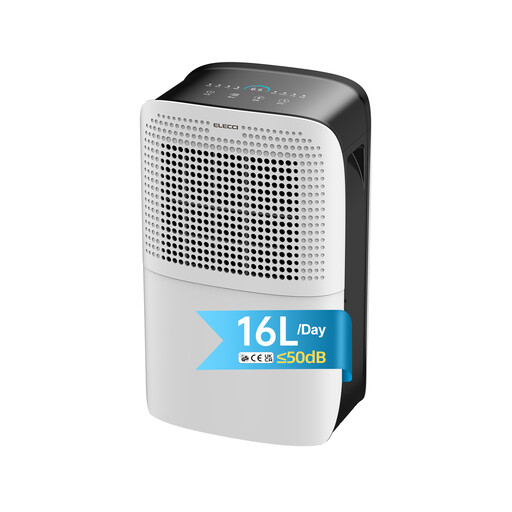 Image unavailable
ELECCI, 16 L/day dehumidifier with drainage hose
Worth comparing if you’re keeping an airer and want to manage collected water using a tank or hose. The product lists an extraction capacity of 16 L per day, a 3.1 L tank and four modes. The laundry mode helps dry clothes on an airer; it doesn’t dry them in a drum.
View on Joybuy
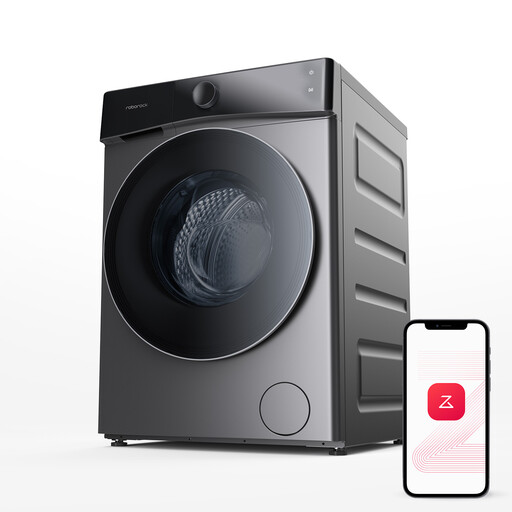 Image unavailable
Roborock Zeo Lite, 10/6 kg washer-dryer
Consider this if you want to combine washing and drying in one appliance. Its listed capacities are 10 kg for washing and 6 kg for drying, so loads over 6 kg need to be reduced before drying. The advertised wash-and-dry programme takes 8 h 35; installation requires water and drainage connections.
View on Joybuy
Frequently asked questions
Can a condenser tumble dryer be installed in a small, enclosed room without an outdoor vent?
Not having an outdoor vent doesn’t automatically make an enclosed room suitable. Electrolux advises against installing a tumble dryer in an unventilated cupboard, for example, and warns that heat and condensation can build up in a room that is too small. Check the model’s manual. Electrolux’s recommendation of 10 to 12 m² in its support information is neither a legal minimum nor a universal rule.
Does a tumble dryer need to be connected to a drain?
Not necessarily. The European Commission describes two ways to collect condensed water: in a tank or through a drain. If you want to avoid emptying the tank, check that the model can take a hose and that the connection is practical. Bosch lists a water drainage hose for the WQG2451SFR.
What should I check about the plug socket and maintenance?
For the WQG2451SFR, Bosch’s manual calls for a properly installed, earthed wall socket and a connection that complies with the rating plate. Also check the manual for your chosen model for filter maintenance and tank management: an advertised self-cleaning condenser doesn’t mean that all maintenance is eliminated.
How should I compare energy labels, and what rights apply if a product is faulty?
For tumble dryers, the European Commission says the A to G scale has applied since 1 July 2025. Compare product information using the same scale and the programme shown. In France, when an individual buys from a professional seller, the statutory legal guarantee of conformity is compulsory and can be exercised within two years of delivery. It is separate from a commercial guarantee.


