What should you compare?
Heat-pump condenser tumble dryer
Worth considering: for frequent washing, if you can install a second appliance without an external air vent.
The trade-off: you’ll need to make room for it, manage the condensed water and clean the filters.
Washer-dryer
Worth considering: if you don’t have room for two appliances and are happy to dry smaller loads.
The trade-off: drying capacity may be lower than washing capacity, and a combined cycle can take a long time, depending on the model.
Clothes airer, with a dehumidifier if needed
Worth considering: if you want to keep drying clothes on an airer in a suitably ventilated room.
The trade-off: the airer takes up space while the clothes dry, and a dehumidifier is no substitute for the ventilation recommended by Anses.
To choose the right option for a flat without outdoor drying space, start with your main constraint, then check the installation requirements and the specifications for the exact model. Choosing a spin setting suited to your fabrics can also help clothes dry, according to ADEME. But if you’re using an airer, you’ll still need to ventilate the room.
| Criterion |
What to check |
What matters to shoppers? |
| Humidity and ventilation |
If you use an airer, choose a well-ventilated room. For a condenser tumble dryer, check how the water is collected or drained. |
If I dry laundry in a living space, I want to take account of the moisture it adds to the air. Around 36% of shoppers put this concern first. |
| Available space |
Measure the space and allow for the door to open. For a washer-dryer, compare its washing and drying capacities. |
In a small home, I need to be able to open and load the appliance without blocking the way. Saving space is the top priority for around 29% of shoppers. |
| Energy use |
Compare energy use per cycle using labels based on the same scale, and for the models you’re considering. |
For regular drying, I’d rather compare real-world usage figures than rely on the technology’s name alone. Around 21% of shoppers prioritise energy use. |
| Load size and cycle time |
Compare drying capacity and the length of a programme that suits the load you expect to dry. |
When loads of washing keep coming, I need to know how much laundry can be dried in each cycle. Load size and cycle time come ahead of other criteria for around 14% of shoppers. |
Products for your setup
These products suit three possible setups in a flat: combining washing and drying in one appliance, installing a separate tumble dryer, or using a dehumidifier alongside a clothes airer. Your choice will depend on factors such as available space, the load you need to dry and how well the room is ventilated.
 Image unavailable
Samsung WD11DG6B85BEU3, 11 kg / 6 kg washer-dryer
Worth considering if you want to wash and dry with one appliance. Its stated capacity is 11 kg for washing and 6 kg for drying, so a full-capacity wash load will need to be split into smaller loads to dry completely. Check the dimensions and the connections required for your space.
View on Joybuy
 Image unavailable
Hotpoint CHD84MWBSEE, 8 kg heat-pump tumble dryer
Worth comparing if you have space for a separate tumble dryer. Its stated capacity is 8 kg. Before choosing, check the dimensions, clearance needed for installation, how the water is managed and the model’s energy-use figures.
View on Joybuy
 Image unavailable
Electrolux EDH1018CD GentleCare, 8 kg condenser tumble dryer
Worth considering if you’re looking for a separate condenser tumble dryer. Its stated capacity is 8 kg, and the product name also mentions OptiSense. Check the manual for details on water management and the space needed to open the door, then compare the figures on its energy label.
View on Joybuy
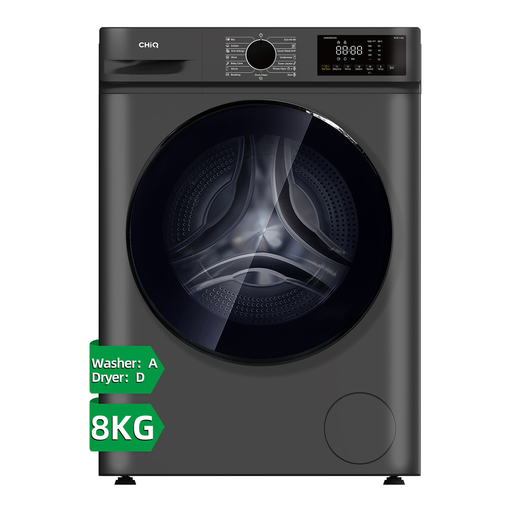 Image unavailable
CHiQ JW85882HG, 8 kg / 5 kg washer-dryer
Worth considering if there isn’t room for two separate appliances. Its stated capacities are 8 kg for washing and 5 kg for drying. The width given in the title and description doesn’t match, so check the dimensions and clearance requirements in the model documentation before deciding where to put it.
View on Joybuy
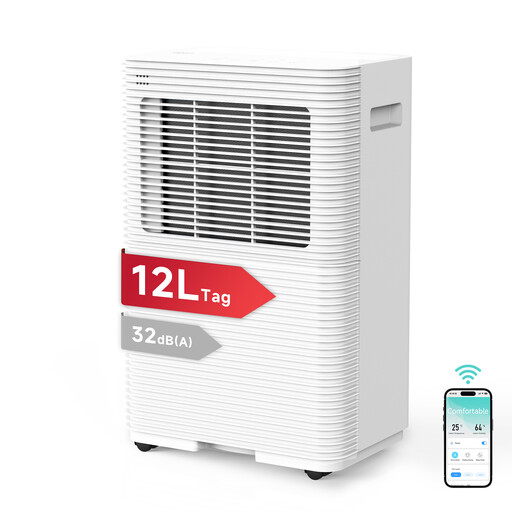 Image unavailable
VINO, 12 L dehumidifier with 1.8 L tank
Worth considering alongside a clothes airer in a well-ventilated room, not as a replacement for ventilation. The product name mentions a Dry mode and a 1.8 L tank. Check the manual for the conditions behind the stated 12 L capacity, as well as the noise level of the mode you’ll use.
View on Joybuy
Frequently asked questions
Does a condenser tumble dryer need an external vent?
No. According to the European Commission, a condenser tumble dryer collects the water removed from clothes in a tank or drains it away. A vented model, on the other hand, releases moist air outside, so check which type you’re considering.
Can an 8 kg washer-dryer dry a full 8 kg wash load?
Only if its drying capacity is also 8 kg. Check the two figures separately. For example, Electrolux lists 8 kg for washing but 5 kg for drying on the EW7IW2856BG, so a full-capacity wash load needs to be split before drying.
Can a dehumidifier replace ventilation around a clothes airer?
No. Don’t use one as a substitute for a well-ventilated room: this is the condition Anses recommends when drying clothes indoors. If you add a dehumidifier, check its operating requirements and how to empty the tank or drain the water.
What should you compare on a tumble dryer’s energy label?
Compare models on the same scale, paying particular attention to weighted energy use per cycle, capacity, eco programme duration and noise. The European Commission says that updated measures for the household tumble dryers concerned came into effect on 1 July 2025. Check which version of the label you’re looking at before comparing energy ratings.
What maintenance does a condenser tumble dryer need?
Follow the model’s manual for cleaning the filters, the condenser if it’s designed to be cleaned, and the water tank if the appliance isn’t connected to a drain. Bosch publishes care instructions for these parts, but the exact maintenance depends on the appliance you choose.


