Renters and people in smaller homes without outdoor space
When several loads of washing need to dry in a small space, the footprint of an airer or appliance, noise levels and how you manage collected water matter just as much as drying performance.


If you regularly dry laundry indoors, start by planning your washing and checking that the room where you hang it is well ventilated or has an extractor fan. This is the condition highlighted by ADEME for air-drying laundry. If the clothes airer is taking up the room for too long, a tumble dryer may help you keep up with your washing, provided you check the installation requirements and cycle times. A dehumidifier can be used alongside an airer, but it cannot make up for inadequate ventilation.
When several loads of washing need to dry in a small space, the footprint of an airer or appliance, noise levels and how you manage collected water matter just as much as drying performance.
If laundry is left on the airer between loads, it’s worth matching your washing capacity to your drying capacity and checking cycle times, without overlooking electricity consumption.
Before adding an appliance to your drying setup, check how moisture from the laundry can be removed. For this drying method, ADEME recommends a large, well-ventilated room or one fitted with a mechanical ventilation extractor.
First check the room where your laundry will dry, then consider the space available and how often you do your washing. These factors can help you choose between air-drying, a tumble dryer and a dehumidifier used alongside an airer before you compare individual models.
| What matters | What to check | Who this matters to |
|---|---|---|
| Room humidity | For air-drying, check the size of the room and how well it is ventilated, or whether it has a mechanical ventilation extractor, in line with ADEME’s advice. | I want to keep drying my laundry on an airer without letting moisture build up in a poorly ventilated room. Around 33% of consumers would make humidity control a priority. |
| Drying speed | Compare the drying capacity with your usual loads and check the programme times for the model you’re considering. | When I have back-to-back loads, I need the airer or tumble dryer to be free for the next one; around 27% of consumers would prioritise this. |
| Space and water removal | Check the dimensions and instruction manual: a vented tumble dryer needs a suitable route to the outside, while how collected water is handled depends on the condenser dryer or dehumidifier model. | In a limited space, I need to be able to install the appliance and empty or drain the water without getting in the way. Installation compatibility would be a priority for around 20% of consumers. |
| Energy use and maintenance | Read the model’s energy label and check its instructions for cleaning the filters and, where applicable, the condenser. | If I dry laundry regularly, I want to be able to manage the cycles and maintenance over time; around 20% of consumers would put these considerations ahead of other criteria. |
ADEME highlights the moisture released by laundry drying indoors and recommends using a well-ventilated room or one with an extractor. Removing water from the air with a portable appliance doesn’t prove that your home has adequate ventilation.
Check the existing ventilation and extraction before choosing an appliance. If you suspect a damp problem in the building, have it looked into separately.
According to Que Choisir, a vented tumble dryer needs an opening to the outside or access to a suitable duct. A condenser dryer collects water in a different way, so the two types of installation aren’t interchangeable.
Identify the technology used by the model, then check its manual for the connection it needs or how to deal with the condensed water.
The energy label won’t tell you how long the programmes take or what maintenance is required. Que Choisir found that, on some appliances, a build-up of dirt could lengthen cycles and increase energy consumption.
Compare programme times and the cleaning instructions for the specific model too. Don’t assume that a system described as self-cleaning means no maintenance is needed.
A stated extraction rate in litres per day depends on the model’s test conditions. On its own, it can’t predict how long laundry will take to dry in your room.
Check the conditions behind the stated figure, whether the appliance is suitable for your room, its noise level and how it can be emptied or drained.
Bosch’s French range includes heat pump tumble dryers, including 8 kg models.
The T1 range includes heat pump tumble dryers; Miele’s product details for the TEA525WP state a capacity of 8 kg.
In France, LG offers condenser and heat pump tumble dryers in a range of formats, depending on the model.
Rowenta offers dehumidifiers that can be used alongside laundry drying on an airer, rather than as a replacement for a tumble dryer.
These models include dedicated tumble dryers, a washer-dryer that combines both functions, and a dehumidifier to use alongside an airer. For the latter, a well-ventilated room or one with an extractor remains essential.
 Image unavailable
For regular washing when there’s room in your home for a separate drying appliance.
Stated capacity of 8 kg; the product name indicates energy class C. Check the dimensions, cycle times and drainage requirements before planning its installation.
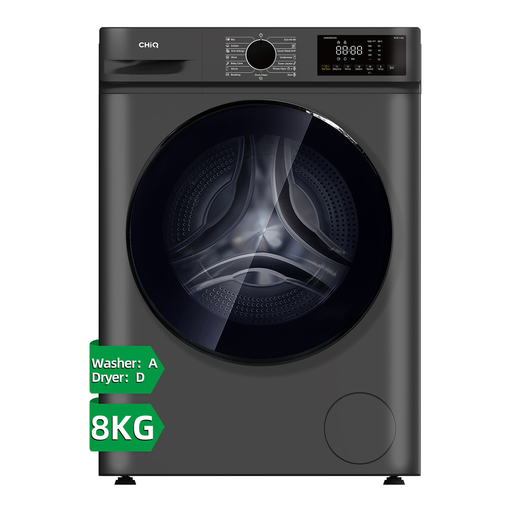 Image unavailable
Worth considering if you want to combine washing and drying in one appliance because there isn’t space for two machines.
The stated capacity is 8 kg for washing but 5 kg for drying, so a full wash load may not be a full drying load. Check the exact dimensions before deciding where to put it.
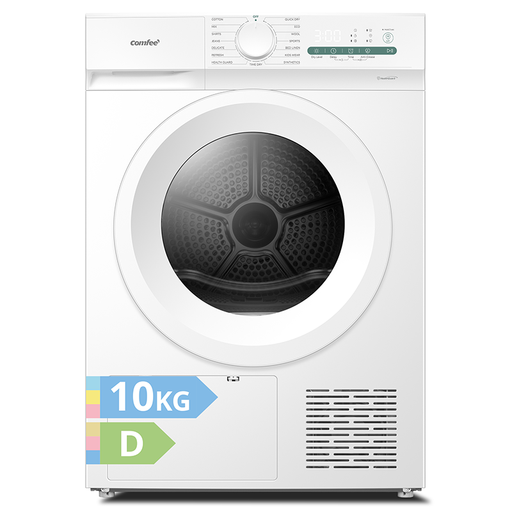 Image unavailable
Consider this model if your usual loads call for a stated drying capacity of 10 kg.
The product name indicates energy class D. Before choosing it, compare this with the model’s energy label and check the cycle times, dimensions, drainage and maintenance requirements.
 Image unavailable
A dedicated drying option if the stated 8 kg capacity suits your usual loads.
The product name indicates energy class D. Check the model’s energy label and manual for cycle times, installation, water management and maintenance requirements.
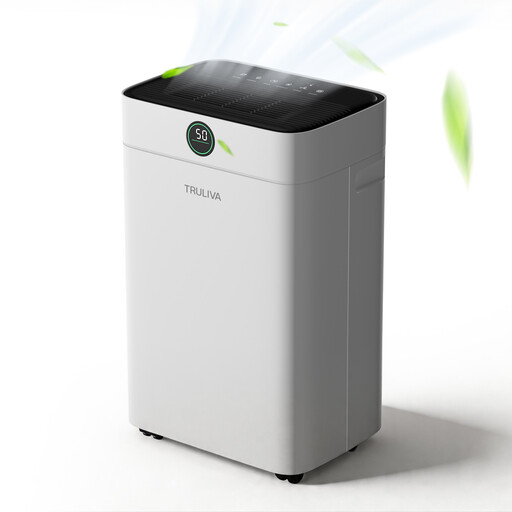 Image unavailable
Consider it as an addition to an airer in a suitable room, not as a replacement for ventilation or extraction.
The product name states an extraction rate of 25 L per day, depending on test conditions, along with a 2.8 L tank and a continuous drainage hose. Check whether it’s suitable for your room, its noise level and whether you can connect the hose where you plan to place it.
No. Removing moisture with a dehumidifier doesn’t mean it can replace ventilation in your home. ADEME explains that mechanical ventilation continuously removes moisture and recommends drying laundry in a large, well-ventilated room or one fitted with a mechanical ventilation extractor.
A vented tumble dryer is an option if the installation has an opening to the outside or access to a suitable duct. Que Choisir points out that this requirement differs from that of condenser models; either way, check the instructions for your chosen appliance.
A similar capacity is a useful guide if you want to dry the loads you usually wash. Miele recommends matching capacities where possible. However, check the load allowed for each tumble dryer programme, and remember that washer-dryers have separate washing and drying capacities.
Follow the instructions for the fluff filter and, depending on the model, the microfilter or condenser. Que Choisir found that dirt build-up could lengthen cycles and increase energy consumption on some appliances. Check what still needs cleaning, even if the appliance has an automatic cleaning feature.