How do the solutions compare?
When drying laundry indoors, first distinguish between wanting to clear the airer and wanting to manage the moisture around it. The ADEME notes that air-drying laundry releases a lot of moisture into indoor air, so it’s important to consider room ventilation whichever solution you choose.
| Priority |
What to check before buying |
Who this matters to |
| Moisture around the airer |
For a dehumidifier, check the stated room size, the test conditions for its capacity in L/day, and how the tank or drainage is managed. |
I’m keeping my airer, but want to stop moisture from the laundry lingering in the room; around 36% of consumers make this their top priority. |
| Frequent loads to dry |
Choose a tumble dryer capacity that suits your usual loads and compare its programmes and cycle times. |
When one load follows another, I want to free up the airer and have dry laundry without waiting for it to dry in the room. This is the top priority for around 29% of consumers. |
| Electricity consumption |
Compare the energy label, energy consumption and eco programme duration for capacities suited to your loads. |
If I regularly dry laundry in a drum, I want to know how much electricity each cycle uses; around 21% of consumers prioritise this. |
| Installation and water drainage |
Measure the space, check ventilation and confirm whether water needs to be emptied from a tank or can be drained through a compatible connection. |
In a room without an external vent or with limited space, my first priority is finding an appliance I can install and maintain. Around 14% of consumers prioritise this constraint. |
Joybuy products for drying laundry or managing moisture
These models cover two distinct uses: using a dehumidifier alongside an airer, or drying loads in a heat-pump tumble dryer. First choose the option that meets your needs, then check the installation requirements for the specific model.
 Image unavailable
TRULIVA dehumidifier, 25 L/day, 2.8 L tank
Worth considering if you’re keeping an airer in a room and want to manage moisture there.
The product name lists a laundry mode, a stated capacity of 25 L/day, a 2.8 L tank and a continuous drainage hose. Compare the capacity with the conditions under which it’s measured, and check how much space the appliance needs around it.
View on Joybuy
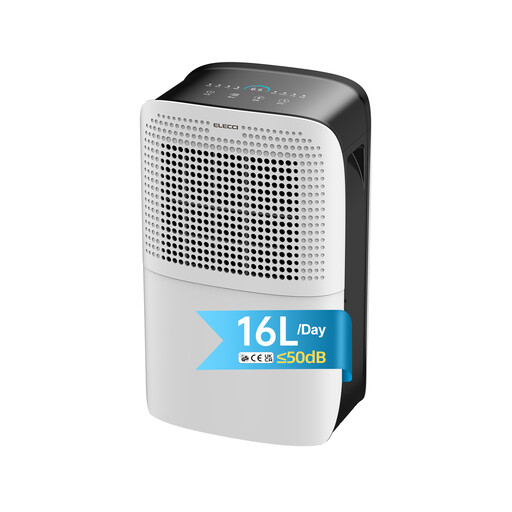 Image unavailable
ELECCI dehumidifier, 16 L/day, 3.1 L tank
Worth considering for laundry on an airer if you’d like to choose between using the tank and continuous drainage.
The product name lists 16 L/day, a 3.1 L tank, a drainage hose and four modes. It also states a room size of 32 m²; check the conditions used to measure the capacity and the space the appliance needs around it.
View on Joybuy
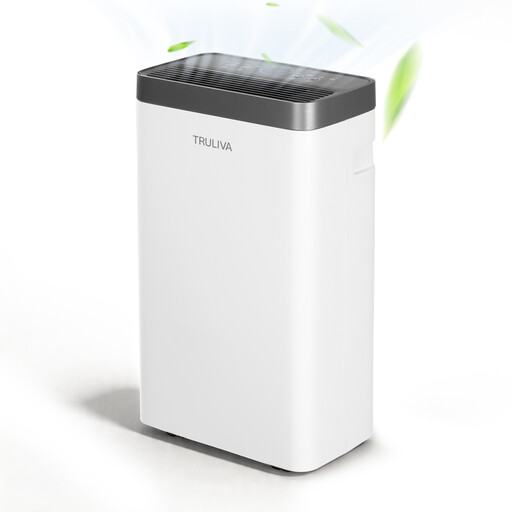 Image unavailable
TRULIVA AP10-2012EE dehumidifier with laundry mode
Worth considering if you dry laundry on an airer and want a dehumidifier with continuous drainage.
The product name lists a laundry mode, a 24-hour timer and continuous drainage, as well as a floor area of approximately 32 m². Check that the stated area suits your room and make sure you have enough space to install the appliance.
View on Joybuy
 Image unavailable
Hotpoint CHD84MWBSEE 8 kg heat-pump tumble dryer
Worth comparing if you want to dry loads in a drum rather than leave them on an indoor airer.
The product name lists an 8 kg capacity and a C energy rating. Before buying, check that the capacity suits your loads and look at the eco programme duration and energy consumption; also check the space available and how water is drained.
View on Joybuy
 Image unavailable
Comfee CD08EHP05W-HR 8 kg heat-pump tumble dryer
Worth considering if you want to dry in a drum the loads you’d otherwise leave on an airer.
The product name lists an 8 kg capacity, a D energy rating and an LED display. Compare the eco programme duration and energy consumption, then check the dimensions and how condensed water is handled in your home.
View on Joybuy
Frequently asked questions
Can a dehumidifier replace airing the room or mechanical ventilation?
No. A dehumidifier removes water from the air in a room, but doesn’t provide fresh air circulation. The ADEME says mechanical ventilation continuously removes moisture and pollutants; check that it’s working properly even if you use an appliance while drying laundry.
Which tumble dryer should I choose if there’s no outlet to the outside?
A standard condenser or heat-pump model doesn’t need an outlet to the outside, unlike a vented tumble dryer, according to UFC-Que Choisir. However, check the available space, room ventilation and how the condensed water will be collected or drained.
How should I compare two dehumidifiers’ L/day capacities?
Only compare them after taking the test conditions and the intended room into account. For example, De'Longhi states a capacity of 30 L/24 h for the DD230P at 30 °C and 80% relative humidity; this doesn’t mean it will collect the same amount at a different temperature or humidity level.
What should I look for on the energy label of a new tumble dryer?
For the relevant drum tumble dryers sold in the European Union, use the revised A to G label that has applied since 1 July 2025, as noted by the European Commission Representation in France. Also compare capacity, energy consumption and eco programme duration; don’t treat the old ratings and the new scale as equivalent.
What maintenance should I expect?
Follow the instructions for your chosen model when cleaning filters and collecting water. Bosch recommends cleaning the fluff filter in its tumble dryers after every use; if your appliance has a tank, also check how often it needs emptying and the requirements for any continuous drainage option.


