What criteria set the options apart?
Your choice depends first on what’s causing the damp and whether you can keep using an airer. The four options then suit different needs when it comes to space, capacity and water management.
A better-organised airer
Consider this if: you have a sufficiently large, well-ventilated room, or one with an extractor, where you can dry your laundry.
Drawback: as ADEME points out, your laundry will still add moisture to the room.
Dehumidifier
Consider this if: you still need an airer and the damp is mainly caused by your laundry.
Drawback: you’ll need to empty the tank or use a compatible drain. The appliance won’t address the cause of damp patches on your walls.
Tumble dryer
Consider this if: you want to remove the airer from the room and have enough space for a tumble dryer.
Drawback: depending on its configuration, a condenser dryer collects water in a tank or drains it away, as explained by the European Commission.
Washer-dryer
Consider this if: you need one appliance to wash and dry your laundry.
Drawback: its drying capacity may be lower than its washing capacity, so check both figures.
| What matters to you |
What to check |
Who this matters to |
| Cause of the damp |
Damp patches on walls or dampness when you haven’t been doing laundry; condition of the ventilation. |
If I see damp patches even when there’s no laundry on the airer, I want to understand the cause before buying an appliance. Around 31% of consumers put finding the cause first. |
| Laundry on an airer |
Laundry mode and humidity setting; dehumidifier tank or drainage option. |
I still need to dry my laundry indoors and want to better manage the moisture it releases. This is the priority for around 31% of consumers. |
| Machine drying |
Capacity in kg, energy consumption shown on the label, noise and condensate management. |
I’d rather free up the room by removing the airer, as long as the tumble dryer suits my laundry loads and home. Around 23% of consumers put this need first. |
| Available space |
Dimensions and separate washing and drying capacities for a washer-dryer. |
If I can’t fit two appliances at home, I’m happy to dry a smaller load than I wash. Saving space comes first for around 15% of consumers. |
Joybuy products for your chosen solution
These models suit three different needs: removing the airer with a tumble dryer, keeping it and using a dehumidifier, or combining washing and drying in one appliance. Start by choosing the option that suits your situation, then compare the practical considerations for each model.
 Image unavailable
Hotpoint CHD84MWBSEE, 8 kg heat pump tumble dryer
For removing the airer from the room if you have space to install a tumble dryer.
Stated capacity of 8 kg, stated noise level of 64 dB and the option to connect directly to a drain. Check the dimensions, programme duration and energy consumption information on the model’s label.
View on Joybuy
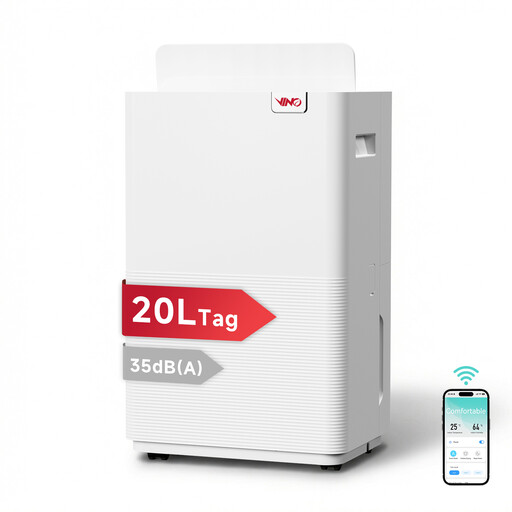 Image unavailable
VINO, 20 L/day Wi-Fi dehumidifier
For households that keep an indoor airer and want to manage the moisture released by their laundry.
Laundry mode, a 2.5 L tank and continuous-drainage option are listed. The 20 L/day capacity depends on the measurement conditions. If you’ll be using it in an occupied room, ask for the noise level in laundry mode, as the model’s noise specifications differ.
View on Joybuy
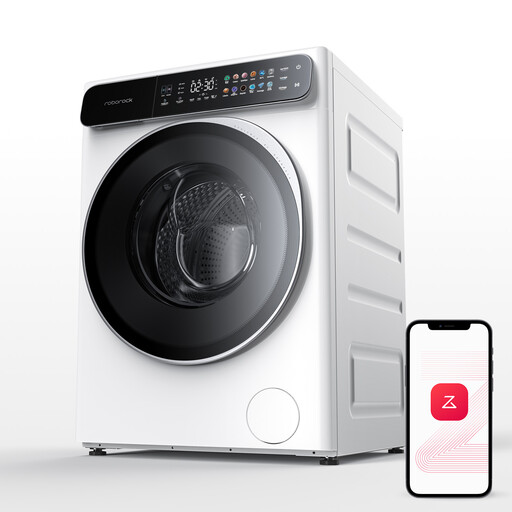 Image unavailable
Roborock Zeo One white, 10 kg / 6 kg washer-dryer
For combining washing and drying in one appliance when there isn’t room for two.
Stated capacities of 10 kg for washing and 6 kg for drying. If your laundry loads exceed the drying capacity, expect to split them. Also check the dimensions and the duration of a complete cycle.
View on Joybuy
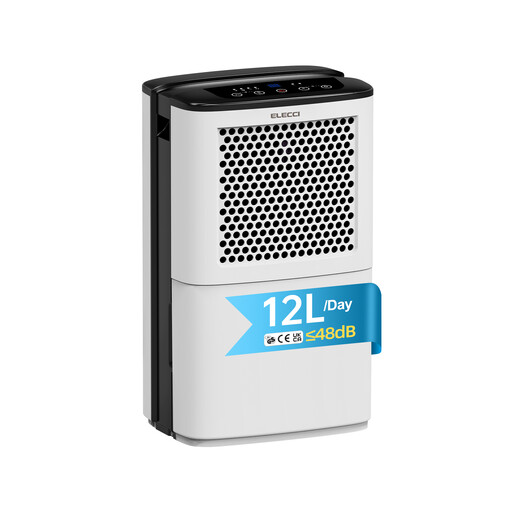 Image unavailable
ELECCI, 12 L/day dehumidifier with hose
For keeping an airer while using a laundry mode and the option of continuous drainage.
Extraction capacity stated as up to 12 L/day under the conditions specified for the model. Confirm the tank capacity before buying, as the title and description give different figures. Also check the noise level in laundry mode and the dimensions.
View on Joybuy
 Image unavailable
Comfee CD08EHP05W-HR, 8 kg heat pump tumble dryer
For drying laundry in a dedicated appliance rather than on an indoor airer.
Stated capacity of 8 kg and energy rating D for this model. Before installing it, check its dimensions, noise level, programme duration and energy consumption, as well as how it handles condensate.
View on Joybuy
Frequently asked questions
When should you choose a dehumidifier rather than a tumble dryer?
A dehumidifier is for when you want to keep using an airer while managing the moisture it adds to the room. A tumble dryer is for when you no longer want to dry laundry there. In either case, damp patches on walls should be investigated separately.
What signs suggest there may be another cause of damp?
Damp patches on walls, particularly if the damp seems to persist when you haven’t been doing laundry, are a reason to investigate the cause before buying an appliance. France Rénov’ recommends having damp patches on walls assessed.
Do you need a water drain?
No, not if the model collects water in a tank that you can empty. To avoid emptying it by hand, check that continuous drainage is supported, that the hose is suitable for the model and that the connection follows the instructions.
Which capacity matters for a washer-dryer?
If you want to dry a load without removing any laundry after washing, check the capacity for a continuous wash-and-dry cycle. For example, Bosch lists a 5 kg capacity for this use on the WNA13400FF, compared with 8 kg for washing alone.
What should you compare on a tumble dryer’s energy label?
Compare energy consumption, capacity, noise, programme duration and condensation efficiency for the models you’re considering. The European Commission says the A to G energy label applies to relevant household tumble dryers placed on the EU market since 1 July 2025. Check the label and product information for the specific model.


