If your priority is to stop having an airer in your living room, first consider a tumble dryer with a capacity and installation setup to suit your home. A suitable spin cycle leaves less water in your laundry, while a dehumidifier helps manage the room’s humidity. In both cases, laundry still needs to dry, and you’ll need to ventilate the room if you’re drying it indoors on an airer.
Who are these options for?
Households looking to free up their living space
If you regularly dry loads of laundry indoors and your airer is left up for long periods, a dedicated tumble dryer is worth considering. You’ll need a suitable spot for it, though, with enough room for its dimensions and installation requirements.
People who plan to keep using an airer
If you’re happy with your airer but concerned about humidity in the room, look at your washing machine’s spin efficiency and the requirements for using a dehumidifier. The ADEME notes that air-drying laundry indoors releases a lot of moisture, so you’ll still need to ventilate the room.
People living in homes where space is limited
Before adding an appliance, check where it can be installed and used. You’ll also need access to the controls, room to open the door and a way to empty the tank. If you’re thinking of stacking a tumble dryer on top of a washing machine, check that they’re compatible and follow the installation instructions.
What should you consider before choosing?
Start by asking yourself whether the airer needs to go, or whether it can stay in a suitable room. Capacity, available space, humidity and energy consumption will help you decide which appliance is right for you.
Tumble dryer
Worth considering: if you want to dry regular loads without leaving an airer in your living room.
Be prepared for: an additional appliance, electricity use and the need for a space that meets its installation requirements.
Washing machine spin cycle
Worth considering: if you’re keeping your airer and want laundry to come out with less water in it.
Be prepared for: spinning doesn’t finish the drying process. Laundry still needs to dry on an airer or in a tumble dryer.
Dehumidifier
Worth considering: if you’ll keep drying laundry on an airer and managing humidity in the room is your priority.
Be prepared for: still needing an airer and ventilation. You’ll also need to empty the collected water or drain it, depending on the setup.
| Consideration | What to check | What matters to consumers |
|---|
| Space taken up by the airer |
For a tumble dryer, compare its drying capacity with your usual loads and check how condensed water is collected. |
When the airer takes up space in my living room for long periods, I’m looking for an appliance that can dry my loads instead; around 36% of consumers would make getting rid of it their priority. |
| Room humidity |
If you’re still drying laundry on an airer, check the room’s ventilation or extraction. For a dehumidifier, check which room size it covers and how the tank is managed. |
I can keep the airer, but I want to manage humidity better while the laundry dries; this would be the top concern for around 29% of consumers. |
| Space for an appliance |
Measure the space and allow for the clearances specified in the instructions. If stacking appliances, confirm that both appliances and the stacking kit are compatible. |
In a small home, I need to be able to install and use the appliance without blocking the way; around 21% of consumers would put this constraint first. |
| Energy use |
Check the washing machine’s spin-drying efficiency class or, for a tumble dryer, its stated energy consumption on the applicable label. Compare figures calculated on the same basis. |
I want to take electricity use into account while continuing to dry laundry indoors; this would be the main concern for around 14% of consumers. |
Which mistakes should you avoid?
-
Assuming a dehumidifier replaces an airer
A dehumidifier reduces moisture in the air, but it won’t free up the space taken by laundry drying on an airer. The water tank also needs to be accessible so you can empty it.
Choose this option only if you can keep a space for drying. Check the recommended room size and how the model can be drained.
Depending on the setup, you’ll need to empty the tank regularly or arrange continuous drainage.
-
Choosing a tumble dryer before measuring the space
A dryer with too small a capacity may mean splitting loads. Even without an external vent, a condenser dryer needs a way to collect or drain the water and must remain accessible for maintenance.
Compare its drying capacity with your laundry loads, then check the dimensions, clearances and access to the tank or drain in the instructions.
-
Stacking two appliances without checking they’re compatible
Stacking frees up floor space, but the appliances must be installed securely. UFC-Que Choisir states that both appliances should be front-loading and a similar size.
Check the instructions and use a suitable stacking kit. Place the tumble dryer on top of the washing machine, on a flat, sturdy floor.
Brands to compare
Bosch
Bosch’s heat pump tumble dryer range may suit households looking to replace an airer with a dedicated appliance.
- Bosch describes its ActiveAir technology as a system that heats air in a closed circuit.
- When choosing a specific model, check its capacity, dimensions, noise level and how it handles condensate.
Electrolux
Electrolux tumble dryers are worth considering if you want to dry loads without keeping an airer.
- Electrolux lists a capacity of 8 kg and energy consumption of 73 kWh per 100 cycles for the EW9HI783FC model.
- These specifications apply to the EW9HI783FC only, not to other models from the brand.
Rowenta
Rowenta dehumidifiers with a laundry mode are aimed at people who keep an airer and want to manage the room’s humidity.
- Rowenta lists a 3 L tank and a 1 m hose for continuous drainage on the DH5260F0.
- The room and setup need to allow for the water to be collected or drained. A dehumidifier doesn’t remove the need to ventilate.
De'Longhi
The Tasciugo range is designed to reduce and control humidity in a room where laundry can stay on an airer.
- De'Longhi offers dehumidifiers with a range of rated capacities.
- Choose a model based on the room size and the conditions specified for it. Rated capacity alone won’t determine how long laundry takes to dry.
Joybuy products for each option
These appliances represent three ways to approach indoor drying: get rid of the airer with a tumble dryer, keep it and use a dehumidifier, or consider the spin cycle of a washing machine. Compare each model only with the option you’re considering.
 Image unavailable
Hotpoint CHD84MWBSEE, 8 kg heat pump tumble dryer
Worth considering if you want to dry loads without leaving an airer in your living room.
Listed with an 8 kg capacity and C energy rating. Check the instructions for the dimensions and clearances required in your chosen spot, as well as the model’s energy consumption on its label.
View on Joybuy
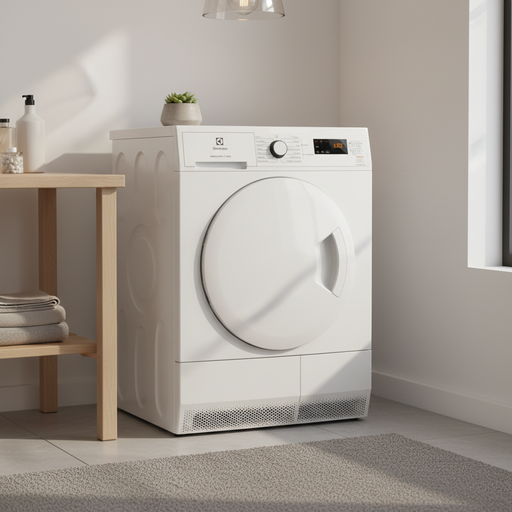 Image unavailable
Electrolux EDH1018CD GentleCare, 8 kg condenser tumble dryer
Worth considering if you want to dry laundry in a dedicated appliance rather than on an airer.
The product name lists an 8 kg capacity. Before choosing where to put it, check the clearances specified in the instructions and how the condensed water will be collected.
View on Joybuy
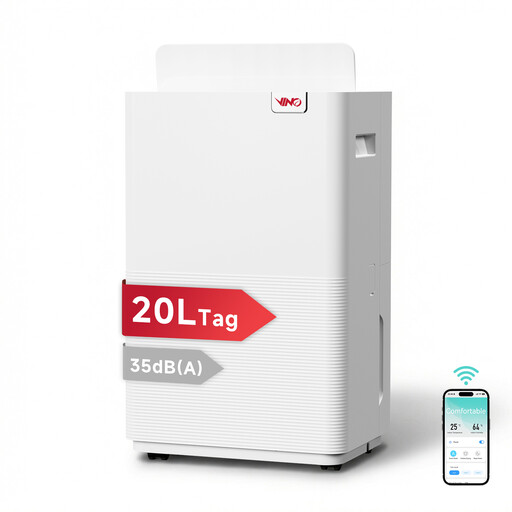 Image unavailable
VINO 20L, WiFi dehumidifier with a 2.5 L tank
For a room where laundry will still be drying on an airer and managing humidity is a priority.
The product name lists a 2.5 L tank and Auto, Dry and Sleep modes. Check how much space the appliance needs around it and whether continuous drainage is possible if that’s what you’re planning to use. Laundry still needs to be hung up, and the room must still be ventilated.
View on Joybuy
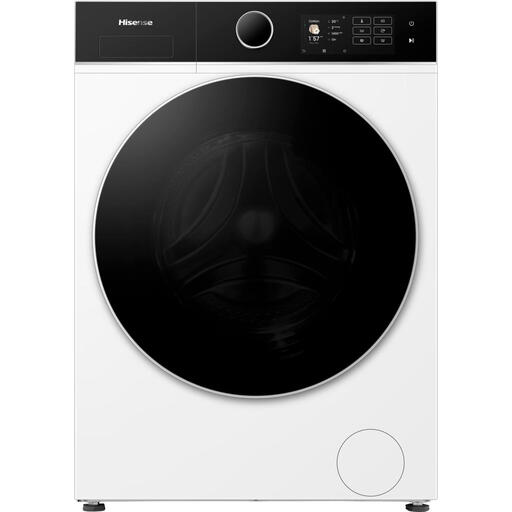 Image unavailable
Hisense WF5I8043BWF, 8 kg washing machine, 1,400 rpm
Worth considering if you’re keeping your airer and want a washing machine with a spin cycle to suit your needs.
The product name lists an 8 kg washing capacity and a spin speed of up to 1,400 rpm. Check its spin-drying efficiency class too: spin speed alone doesn’t tell you how much water will be left in your laundry. Spinning doesn’t replace drying.
View on Joybuy
 Image unavailable
TRULIVA 25L/Day, dehumidifier with laundry mode and a 2.8 L tank
For managing humidity in a room where you’ll continue to use an airer.
The product name lists a 2.8 L tank and a continuous drainage hose. Its stated capacity of 25 L/day is based on conditions of 95 °F and 90% relative humidity, so don’t take this as an indication of drying time in your home. Also check how much space the appliance needs around it.
View on Joybuy
Frequently asked questions
Does a dehumidifier replace ventilation when drying laundry?
No. It reduces moisture in the air, but it doesn’t bring fresh air into the room. For air-drying laundry, the ADEME recommends using a large, well-ventilated room or one with suitable extraction.
What should you check before installing a tumble dryer in a small home?
Check its dimensions, door opening, drying capacity, required clearances and access to the condensed water. If you’re considering stacking, UFC-Que Choisir recommends confirming that both appliances are front-loading and a similar size, and placing the tumble dryer on top of the washing machine.
Can an efficient spin cycle mean you don’t need a tumble dryer?
It could work for you if you’re happy to finish drying your laundry on an airer, but a spin cycle won’t dry it completely on its own. The ADEME advises checking the spin-drying efficiency class when laundry will be dried indoors afterwards. You’ll also need a suitable room for drying.


