If you can air-dry your laundry, start by choosing a washing machine with a spin cycle and capacity suited to your loads. If there’s no room for two appliances, consider a washer-dryer and check its drying capacity, which is often lower than its washing capacity. If you regularly need to dry large loads, a separate tumble dryer lets you carry on washing while another load dries, provided you have space to install it.
Who are these options for?
Homes with very limited space
If you can only fit one appliance, check its overall depth, door clearance and how much laundry it can actually dry. A washer-dryer takes up just one space, but its drying capacity may limit how much you can wash and dry in one go.
Homes that often dry full loads
If you need to get through several loads in a row, compare the tumble dryer's capacity with your usual loads, and check how much room you have for a second appliance. The difference between washing and drying capacity is particularly important with a washer-dryer, as UFC-Que Choisir points out.
Homes where laundry can be air-dried indoors
If you can still use an airer, look at spin efficiency and choose a washing capacity that suits your loads. ADEME recommends considering the spin cycle when laundry needs to dry indoors.
Which criteria should you prioritise?
Start by choosing an option that suits your available space and the amount of laundry you need to dry after each wash. Then compare the figures for the cycle you’ll actually use, as well as the installation requirements for the model you’re considering.
Washing machine and airer
Consider this if: you can air-dry your laundry and want to reduce how much moisture it retains after the spin cycle.
Bear in mind: your laundry will still need to dry on an airer before you can put it away.
Washer-dryer
Consider this if: you only have room for one appliance and want to wash and dry your laundry in the same machine.
Bear in mind: according to UFC-Que Choisir, washer-dryers have a lower drying capacity than washing capacity, so you may need to split a full load.
Separate tumble dryer
Consider this if: you often dry large loads and want to keep washing while another load is drying.
Bear in mind: you’ll need space for a second appliance and should follow the instructions for maintenance and handling collected water.
| Criteria |
What to check |
Who is it for? |
| Space and a single appliance |
Overall dimensions, door clearance, and separate washing and drying capacities. |
If I only have room for one appliance, I want to wash and then dry my laundry without needing a second machine, while knowing how much can stay in the drum. Around 40% of consumers would make this their top priority. |
| Drying capacity |
Drying capacity in kg and the duration of the cycle you expect to use for your usual loads. |
When I have several loads to get through, I want to dry them without stopping the washing to wait for a cycle to finish. This would be the top priority for around 30% of consumers. |
| Spin cycle before air-drying |
Spin efficiency class and washing capacity suited to your usual loads. |
I can air-dry my laundry, but want to reduce how much moisture it retains after washing without running extra cycles. Around 30% of consumers would prioritise this option. |
Mistakes to avoid before you buy
-
Confusing washing capacity with drying capacity
A washer-dryer might, for example, offer a 9 kg washing capacity and a 6 kg drying capacity. So a load that fills the machine to its washing limit may not be able to dry in one go.
Before choosing an appliance, compare its drying capacity with the weight of your usual loads.
-
Comparing washing figures alone
Figures for washing alone don’t tell you everything about a washer-dryer’s full cycle. The European Commission provides separate information for each cycle shown on the energy label.
If you plan to use the dryer regularly, compare the water and energy use, and cycle duration, for the complete wash-and-dry cycle.
-
Measuring the width but not checking access
The depth, door clearance or access to a top-loading machine could prevent you from using the appliance in the space you have chosen.
Also measure delivery access routes and check the clearances required in the instructions for the exact model.
-
Drawing conclusions from a single review
A review on the Darty customer service community describes satisfactory drying when the appliance isn’t overloaded. However, it doesn’t tell you how other models or fabrics will perform.
Use reviews to identify things to check, then look at the capacity, programmes and care instructions for the model you’re considering.
Brands to consider by appliance type
AEG
The range includes the Series 9000 LWR98B166X heat-pump washer-dryer.
- AEG lists a 10 kg washing capacity and a 6 kg drying capacity for this model.
- A load washed at the maximum capacity will therefore exceed the stated drying capacity.
Bosch
The WQG24502FR separate heat-pump tumble dryer is worth considering if you have room for a second appliance.
- Bosch lists a capacity of 8 kg for this model.
- Before choosing this type, check the space required and the care instructions in the manual.
Siemens
The iQ500 WN44A109FF washer-dryer combines washing and drying in a single appliance.
- Siemens lists a 9 kg washing capacity and a 6 kg capacity for a full wash-and-dry cycle.
- To dry a load in one go, you’ll need to stay within the stated 6 kg limit.
LG
The brand’s range includes the F964R35WR washer-dryer, for homes looking for an all-in-one appliance.
- LG lists a 9 kg washing capacity and a 6 kg drying capacity for this model.
- Compare these capacities with your actual loads, rather than relying on the size of your household alone.
Electrolux
The EDHF5841EC is a separate condenser tumble dryer with a heat pump.
- Electrolux lists a drying capacity of 8 kg. The brand also offers a drainage kit for some condenser tumble dryers.
- Check the manual for the model you buy to confirm the required maintenance and whether water can be collected in a tank or drained away.
Appliances to compare on Joybuy
These appliances cover three ways to organise indoor laundry drying: a washing machine to use with an airer, a washer-dryer or a separate tumble dryer. Compare their capacities with your loads and check the installation requirements for your chosen model.
 Image unavailable
Hotpoint CHD84MWBSEE, 8 kg heat-pump tumble dryer
For drying laundry in a separate appliance when you have space to set one up.
Stated capacity of 8 kg; energy class C shown in the product title. Check the model’s dimensions and installation instructions before buying.
View on Joybuy
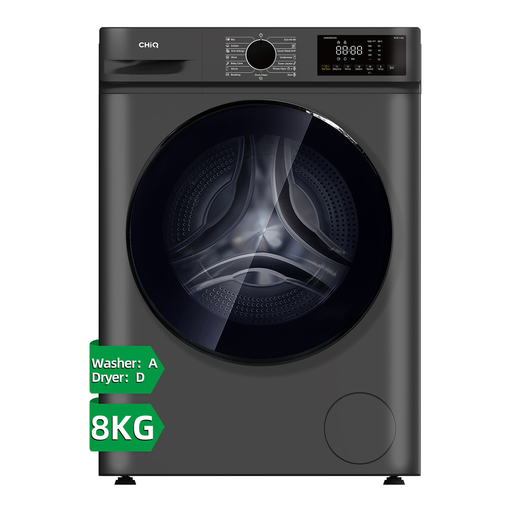 Image unavailable
CHiQ JW85882HG, 8/5 kg washer-dryer
For combining washing and drying in one appliance, if a drying capacity of 5 kg suits your loads.
Stated capacities of 8 kg for washing and 5 kg for drying; maximum spin speed listed as 1 400 rpm. The listed dimensions don’t match, so confirm the exact measurements in the manual before planning where to put it.
View on Joybuy
 Image unavailable
Comfee' CD10EHP05W-HR, 10 kg heat-pump tumble dryer
Worth considering if you want to dry large loads in an appliance separate from your washing machine.
Stated capacity of 10 kg and energy class D shown in the product title. Compare this capacity with your usual loads, and check the dimensions and connections specified in the manual.
View on Joybuy
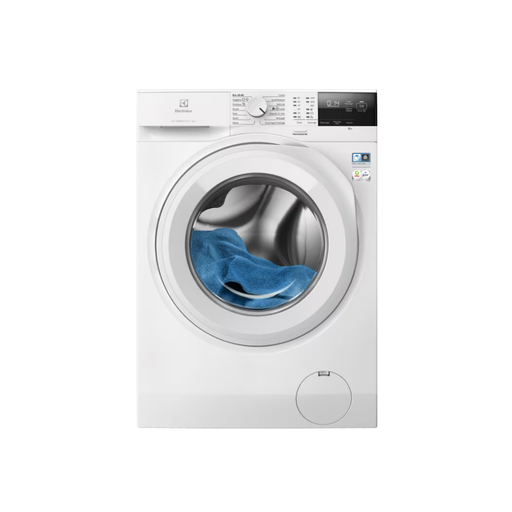 Image unavailable
Electrolux EW6FI4805AW, 8 kg washing machine
For washing your laundry before air-drying it indoors, without a mechanical drying function.
Stated capacity of 8 kg and maximum spin speed of 1 400 rpm. To assess how much moisture is left after spinning, also check the spin efficiency class and the programme you plan to use.
View on Joybuy
 Image unavailable
Candy TCA464TM4-S ProWash 500, 6 kg top-loading washing machine
For washing laundry before air-drying it indoors, if a top-loading machine suits your space.
Stated capacity of 6 kg, maximum spin speed of 1 400 rpm and Class B shown in the product title. Make sure you have enough room to open the machine and load your laundry.
View on Joybuy
Frequently asked questions
Why check a washer-dryer’s drying capacity?
Because a load the appliance can wash may not be able to dry in one go. UFC-Que Choisir points out that washer-dryers have a lower drying capacity than washing capacity. Compare both figures with the amount you want to dry after each wash.
Does a condenser tumble dryer need an external vent?
Not necessarily. For the EDHF5841EC model, Electrolux describes a water tank and offers a drainage kit for some condenser appliances. Check the manual for your chosen tumble dryer to find out which connections it supports and what the installation requirements are.
Which energy label details should you compare?
Compare the figures for the cycle you plan to use. The European Commission lists details including energy class, energy and water consumption, cycle duration and noise. For a washer-dryer, don’t confuse the figures for washing alone with those for a complete wash-and-dry cycle.
What maintenance does a condenser or heat-pump tumble dryer need?
Follow the manual for your model to check how often maintenance is needed and what to do. Electrolux mentions cleaning the filter and, depending on the model, the condenser. If water is collected in a tank rather than drained away, you’ll also need to empty it.


