If you use a clothes airer, choosing the right spin cycle reduces the amount of water left in your laundry, while a dehumidifier removes moisture from the air as your clothes dry. If you need dry laundry at the end of a cycle, a tumble dryer may be a better option. Your choice also depends on the space available, how much laundry you do, noise levels and installation requirements. According to ADEME, air-drying indoors remains a significant source of moisture in the home.
Who are these options for?
Anyone who dries all their laundry indoors
If you already use a clothes airer, compare how well your washing machine spins clothes before you hang them up, and whether you can remove moisture from the room as they dry. Your laundry will still need to dry after washing.
Households that do several loads of washing
A tumble dryer can help you get dry laundry at the end of a cycle. Check that its capacity suits your usual loads and that you have a suitable space for it.
People in smaller homes with limited space for drying
A dehumidifier can be used alongside a clothes airer without taking up the space a tumble dryer would need. However, you’ll need to position it so air can circulate and make arrangements to deal with the collected water.
What should you look for?
Washing machine and spin cycle
Consider this: if you’re keeping your clothes airer and want to reduce the amount of water left in your laundry after washing.
Bear in mind: you’ll still need to hang your laundry out, and it will continue to release moisture into the room. For faster indoor drying, ADEME recommends choosing a washing machine with an A spin-drying efficiency rating.
Tumble dryer
Consider this: if your priority is getting dry laundry at the end of a cycle, especially when you have several loads to do.
Bear in mind: the appliance needs its own space and uses electricity. According to UFC-Que Choisir, a vented model needs an opening to the outside or an air-vent hose.
Dehumidifier
Consider this: if you’re keeping your clothes airer and want to remove moisture from the room’s air.
Bear in mind: it doesn’t dry laundry in a drum. You’ll still need to ensure air can circulate and decide how to collect or drain the water.
| What you need | What to check | Who this suits |
|---|
| Getting laundry completely dry |
Compare the tumble dryer’s capacity with your usual loads, then check its dimensions and energy label. |
When I have several loads to do, I want to put my laundry away as soon as a cycle finishes. Around 40 % of consumers would prioritise getting their laundry completely dry. |
| Reducing the water left in laundry after washing |
Check the spin-drying efficiency rating and the spin speeds available on the programmes you actually use. |
I’m keeping my clothes airer, but I want to hang up laundry that’s been spun more thoroughly. This would be the main priority for around 30 % of consumers. |
| Managing moisture while laundry dries |
Consider where to position the dehumidifier, how air will circulate, and how you’ll empty its tank or connect a drain hose. |
My laundry stays on the clothes airer, and I’m most concerned about moisture in the room while it dries. Around 30 % of consumers would prioritise managing moisture. |
Mistakes to avoid
-
Choosing a washing machine based on rpm alone
The maximum spin speed doesn’t tell you everything about spin-drying performance, noise levels or the speeds available for the fabrics you wash. ADEME recommends checking the spin-drying efficiency rating if you need your laundry to dry quickly indoors.
Compare the rating, the programmes you plan to use and the model’s noise level during the spin cycle.
-
Assuming a dehumidifier’s litres-per-day rating guarantees the same results at home
An extraction capacity is quoted for specific temperature and humidity conditions. On its own, it won’t tell you how long your laundry will take to dry in your room.
Check the conditions used for the rating, as well as the tank, the full-tank shut-off and the drainage options.
-
Buying a tumble dryer without measuring the space or comparing load sizes
If its capacity is smaller than your washing machine’s, you may need to split a load across several drying cycles. The appliance also needs to fit in the space you’ve chosen, with enough room to access and use it.
Measure the space and check the capacity of the exact model before deciding where to put it.
-
Expecting a dehumidifier to solve every damp problem in your home
It removes moisture from the air while your laundry stays on the airer, but it needs enough air to circulate. It won’t replace investigating an ongoing ventilation or mould problem.
Use it to support indoor air-drying. If the problem persists between laundry loads, arrange a suitable assessment of your home.
Brands to compare
Bosch
Bosch offers heat pump tumble dryers. The specifications below apply to the WQG24502FR, not the entire range.
- Bosch lists an 8 kg capacity and a self-cleaning condenser for the WQG24502FR.
- Check whether the published dimensions of 842 × 598 × 613 mm and the stated noise level of 61 dB(A) suit your space.
Electrolux
The EW2F6812AW washing machine is an example of an appliance for households that continue to dry their laundry indoors.
- Electrolux lists an 8 kg capacity and a maximum spin speed of 1 400 tr/min for this model.
- This speed doesn’t guarantee a particular drying time. Check the spin-drying efficiency rating too, along with the programmes suited to your fabrics.
De’Longhi
De’Longhi offers domestic dehumidifiers designed to remove moisture from the air while your laundry dries on an airer.
- The brand lists a humidistat and a continuous drainage option for the DD230P.
- The stated capacity of 30 L/24 h for this model is based on 30 °C and 80 % relative humidity. It doesn’t predict how much water will be collected in every home.
Appliances to consider on Joybuy
These appliances offer three ways to approach indoor drying: get dry laundry from a tumble dryer, keep using a clothes airer while managing moisture in the room, or choose a washing machine to spin your laundry before hanging it up.
 Image unavailable
Hotpoint CHD84MWBSEE, 8 kg heat pump tumble dryer, class C
Consider this if you want to dry your laundry in a drum rather than leave it on the airer.
Stated capacity: 8 kg. Compare this with your usual loads, measure the space available and check the energy label to see how it suits your needs.
View on Joybuy
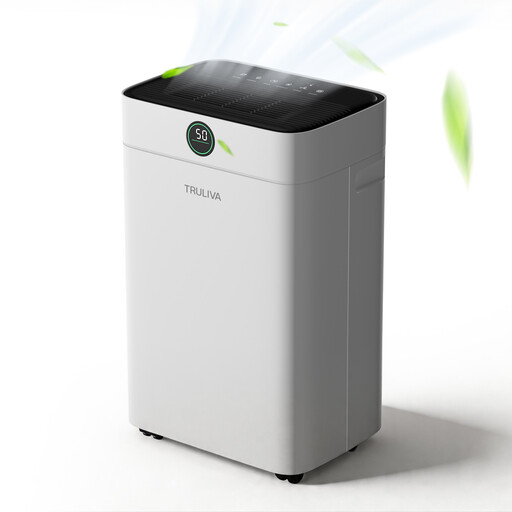 Image unavailable
TRULIVA dehumidifier, 25 L/day, with 2,8 L tank and drainage hose
Consider this if you’re keeping your laundry on an airer and want to remove moisture from the room’s air.
The 25 L/day capacity is a stated figure, not a guaranteed amount for your home. Make sure air can circulate around your laundry, and check where you can position the appliance and its hose.
View on Joybuy
 Image unavailable
Comfee CD08EHP05W-HR, 8 kg heat pump tumble dryer, class D
Consider this if you need to dry a load in a drum.
The stated capacity is 8 kg. Check how much space you’ll need and compare its energy label with those of the other models you’re considering.
View on Joybuy
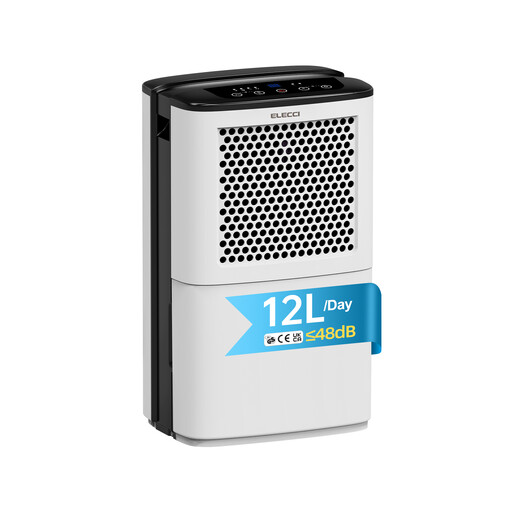 Image unavailable
ELECCI dehumidifier, 12 L/day, with 3,8 L tank and drainage hose
Consider this to support air-drying on a clothes airer if managing moisture in the room is your priority.
The stated capacity of 12 L/day won’t determine how long drying takes in your home. Check that you have enough space and can use the drainage hose.
View on Joybuy
 Image unavailable
Haier X Series 11 HW100-BD14397PGU1, 10 kg washing machine, 1 400 tr/min
Consider this if you’re keeping your clothes airer and want to look at spin performance before hanging out your laundry.
The stated capacity is 10 kg and the maximum spin speed is 1 400 tr/min. This speed doesn’t guarantee fast drying. Check the spin-drying efficiency rating and the speed available on the programmes you usually use.
View on Joybuy
Frequently asked questions
What should I look for in a washing machine if I dry my laundry indoors?
Check the spin-drying efficiency rating, then look at the settings available on the programmes you use. ADEME recommends choosing an A rating for spin-drying if you need your laundry to dry quickly indoors. The maximum spin speed shown isn’t enough on its own to judge the result.
Can a dehumidifier replace a clothes airer?
No, your laundry still needs to be hung up or laid out to dry. A dehumidifier removes moisture from the air. Make sure air can also circulate around your laundry and the appliance.
What does a dehumidifier’s litres-per-day capacity mean?
It’s an extraction capacity stated for specific test conditions, not a guaranteed amount of water collected in every room. For example, De’Longhi lists 30 L/24 h for the DD230P at 30 °C and 80 % relative humidity. Keep these conditions in mind when comparing appliances.
Does a vented tumble dryer need an outlet to the outside?
Yes. According to UFC-Que Choisir, a vented tumble dryer needs an opening to the outside or access to an air-vent hose. Check the installation instructions for your chosen model before setting aside space for it.


