If you’re sticking with an airer, first check your washing machine’s spin efficiency and choose a well-ventilated spot, as recommended by ADEME. If you want to regularly get dry loads without using an airer, compare a separate tumble dryer, which needs space, with a washer-dryer, whose drying capacity is generally lower than its washing capacity, according to UFC-Que Choisir. A dehumidifier can complement air-drying, but it doesn’t dry laundry in a drum.
Who is this choice for?
Households that do laundry frequently
You want to regularly get dry loads and may have space for a separate appliance. Capacity, cycle times and maintenance matter more than simply saving space. UFC-Que Choisir and manufacturers’ product specifications provide useful points of comparison.
People with space for just one appliance
You want to wash and dry without making room for a second large appliance. A washer-dryer’s actual drying capacity determines whether your usual laundry load can stay in the drum, as UFC-Que Choisir and model specifications such as AEG’s remind us.
People who use an indoor airer
You want to keep air-drying your laundry while considering the spin cycle, available space and ventilation, perhaps with a dehumidifier as an extra. ADEME recommends a well-ventilated space for indoor air-drying; De’Longhi’s product specifications give an example of the features to check in a supplementary appliance.
Criteria to compare when drying laundry indoors
First decide whether you’ll keep using an airer or want to get your laundry dry in a drum. If you choose drum drying, compare the space needed for a separate appliance with the drying capacity of a washer-dryer.
| What matters to you |
What to check before buying |
Who it matters most to |
| Getting dry loads of laundry |
Compare the drying capacity with your usual laundry loads, then check the cycle time and energy consumption specified for the model. |
If I do laundry often and want to free up my airer, I prioritise how much laundry can be dried in the drum. Around 36 % of consumers put the amount of dry laundry they can get first. |
| Saving space |
For a washer-dryer, compare the washing and drying capacities in kg separately, along with the dimensions and the full cycle time. |
If I only have space for one appliance, I check that my load will fit in the washer-dryer for drying without having to remove some of the laundry. Around 29 % of consumers prioritise a solution suited to limited space. |
| Keeping an airer |
Check the spin-efficiency class rather than just the maximum speed in rpm, as well as the noise level during spinning. |
If I’m going to keep air-drying my laundry, I want to reduce the amount of water left in it and set up the airer in a suitable space. Around 21 % of consumers make this their priority; ADEME specifically recommends checking the spin-efficiency class. |
| Managing humidity in the room |
For a dehumidifier, check for a laundry mode, drainage, and the temperature and humidity conditions used to determine its stated capacity. ADEME also recommends a well-ventilated space for air-drying laundry. |
If I’m keeping my airer and also want to remove moisture from the room, I consider a dehumidifier as an extra, not as a tumble dryer. Around 14 % of consumers put this first. |
Pitfalls to avoid when choosing
-
Confusing a washer-dryer’s washing and drying capacities
The appliance may be able to wash more laundry than it can dry in one go.
Compare both capacities in kg with the load you want to get dry without any further intervention.
If your load is too large for drying, you’ll need to split it or air-dry some of it, which means more time spent organising your laundry.
-
Choosing based only on rpm or an old energy rating
The maximum speed may not be reached with every load. For tumble dryers sold in France, the European Commission says the energy label has used the A to G scale since 1 July 2025; an old rating cannot be compared directly with this scale.
For air-drying, check the spin-efficiency class. For a tumble dryer, compare the current label, energy consumption and the model’s reference cycle time.
-
Expecting a dehumidifier to work like a tumble dryer
A stated moisture extraction rate in l/24 h is not the same as the amount of laundry dried per cycle, and depends on the specified test conditions.
Think of it as an extra when your laundry is still air-drying. Check the drainage, test conditions and room ventilation.
Your laundry will still be hanging up, and the appliance uses electricity while it’s running. You’ll also need to deal with the collected water.
-
Planning for two appliances without checking where they’ll go
A separate tumble dryer needs space, even if it doesn’t require an air vent to the outside.
Measure the space, the clearance needed to open the doors and access routes. If you’re planning to stack the appliances, check that a stacking solution is suitable for the models in question.
Depending on the appliances and their instructions, stacking may require an accessory or changes to the space.
Brands to consider for each option
Bosch
Worth considering if you’re comparing a washing machine with a spin cycle and a separate tumble dryer, when your laundry needs justify having two appliances.
- Bosch Electroménager France lists an 8 kg capacity and speeds of up to 1 400 rpm for the WAN2827FFR, and a 9 kg capacity, heat-pump technology and a water drain hose for the WQG14200FR.
- These specifications apply to these models and are not an independent measure of drying time. You’ll also need enough room for both appliances.
LG
Worth considering if you’re looking for a heat-pump washer-dryer and have space for just one appliance, provided your load fits within its drying capacity.
- LG France describes the F164HP2WST as an 11 kg washer and 6 kg dryer, with heat-pump technology.
- Its stated drying capacity is limited to 6 kg. Manufacturer figures for cycle time or efficiency are not independent results and may not apply to every load.
AEG
Worth considering for a washer-dryer. Check that its dimensions and capacities suit your space and usual laundry load.
- AEG France lists a 10 kg washing capacity, a 6 kg drying capacity and dimensions of 847 × 597 × 631 to 660 mm for the LWR85A166V.
- The product information gives a time of 7 h 45 for the reference wash-and-dry cycle at full load; this does not describe every programme.
De’Longhi
Worth considering only as an extra if you’ll still be air-drying your laundry indoors.
- De’Longhi France lists a laundry mode, continuous drainage and a moisture extraction rate of 10 l/24 h for the DEX210SF, measured at 30 °C and 80 % relative humidity.
- This figure does not tell you how many kg of laundry the appliance can dry or guarantee a drying time in a particular home. Laundry still needs to be hung up, and room ventilation remains important.
Joybuy products for drying laundry
The products below include washer-dryers, tumble dryers, a portable electric laundry dryer and a dehumidifier to use alongside an airer.
 No image available
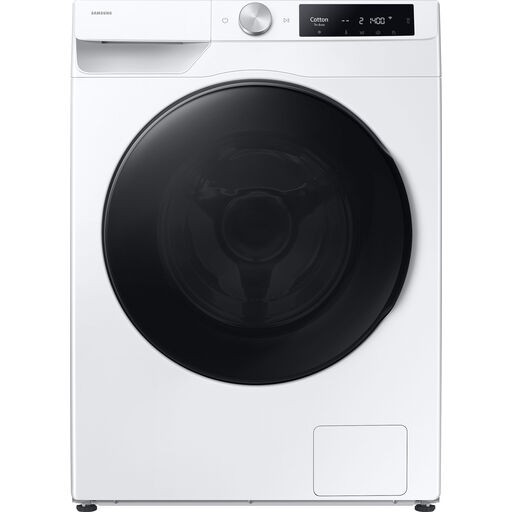
Samsung WD11DG6B85BEU3 washer-dryer
Wash and dry in one appliance, provided the load you want to dry stays within the stated 6 kg capacity.
Capacity: 11 kg for washing and 6 kg for drying. The product information lists a cycle time of 7 h 32 and water consumption of 90 l for the relevant wash-and-dry programme. This freestanding appliance needs a water supply, a drain and enough space around it.
Joybuy
 No image available
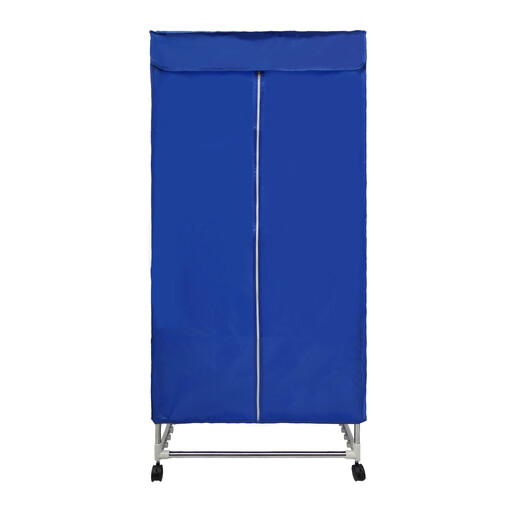
Foldable portable electric clothes dryer with timer
Worth considering if you’re looking for a portable, foldable appliance rather than a tumble dryer.
The description lists a heated rack, hot-air circulation, castors with brakes and a timer that can be set for 60, 120, 180 or 240 minutes.
Joybuy
 No image available
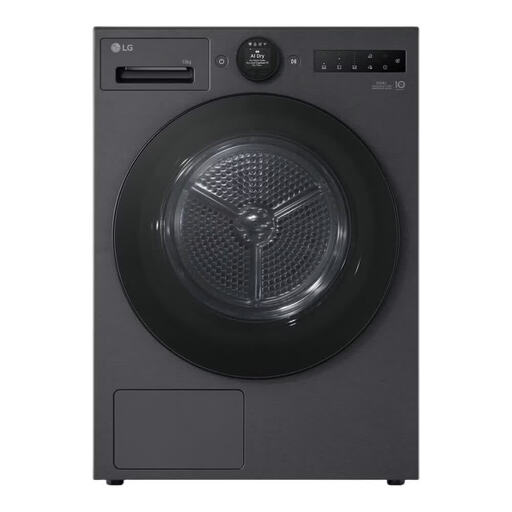
LG RT10X8B heat-pump tumble dryer, 10 kg, black, class C
For drying loads in a drum if you have a suitable space for a separate appliance.
Stated capacity: 10 kg. Listed dimensions: 600 × 850 × 660 mm. Choose a stable spot with enough clearance for ventilation and to open the door. The description recommends cleaning the fluff filter after every cycle.
Joybuy
 No image available
Hotpoint CHD84MWBSEE heat-pump tumble dryer, 8 kg, white, class C
Worth considering for drying laundry in a drum if the stated 8 kg capacity suits your loads.
The product information describes a freestanding appliance and says a drain hose can be connected to a waste outlet.
Joybuy
 No image available
TRULIVA 25 l/day dehumidifier with laundry mode
For use alongside indoor air-drying: your laundry still needs to be hung up, as this appliance does not dry clothes in a drum.
Stated capacity: 25 l per day at 95 °F and 90 % relative humidity. It has a 2.8 l tank, a full-tank alert and a hose for continuous drainage.
Joybuy
Frequently asked questions
Does a tumble dryer need an outside air vent?
It depends on the type of appliance. A vented tumble dryer needs an opening to the outside or a suitable duct, while a condenser model, including a heat-pump dryer, doesn’t need an external air outlet. Check the dimensions, installation instructions and how the condensed water is collected or drained.
Can you dry a whole wash load in a washer-dryer?
Yes, but only if the load does not exceed the stated drying capacity. For example, AEG lists a 10 kg washing capacity and a 6 kg drying capacity for the LWR85A166V; a heavier load will need to be split or partly air-dried.
What should you compare to estimate running costs?
Compare the energy consumption and cycle time shown on the label or in the model’s product information, as well as the water used by a washer-dryer on a complete cycle. In France, the European Commission says tumble-dryer labels have used the A to G scale since 1 July 2025; don’t compare this rating directly with an old A+++ rating.
What maintenance and planning should you consider if you’re keeping your airer?
For indoor air-drying, ADEME recommends a large, well-ventilated room or a room with mechanical ventilation (VMC) extraction. If you add a dehumidifier, plan to empty its tank or use continuous drainage if the model allows it, and follow the instructions for maintaining each appliance.


