Who are these solutions suitable for?
The space you have and the amount of laundry you need to dry will help you decide, but they don’t remove the need to air your home.
Households that do several loads of washing a week
If you can set aside space for drying, compare separate tumble dryers based on your usual load size, their dimensions and how they handle condensed water. ADEME points out that drying laundry indoors releases moisture. However, using a drying appliance doesn’t remove the need to keep your home properly ventilated.
People with space for just one appliance
A washer-dryer combines washing and drying in one appliance. Make sure you check its drying capacity in particular: UFC-Que Choisir notes that this is lower than its washing capacity, so you may need to take some items out of a large load before drying.
Households that still use a clothes airer
A higher spin speed leaves less water in your laundry before you hang it up, as long as the fabric care label allows it, as ADEME recommends. Depending on the room, you could also consider a dehumidifier as an additional measure, after checking that your air vents and ventilation are working properly.
What should you check before choosing?
Start by measuring the available space and estimating the size of the loads you need to dry. Then compare the drying-cycle information, not just the washing figures.
| Priority |
What to check |
What to look for |
| Humidity and ventilation |
Check how water removed from the laundry is collected or drained away. Make sure your home’s air inlets and ventilation are working; a dehumidifier is not a replacement for them. |
I want to avoid leaving several damp loads on an airer, without relying on a new appliance to fix a ventilation problem. ADEME distinguishes between continuous ventilation and the possible use of a dehumidifier. |
| Available space |
Measure the space and allow for the clearance needed to open the appliance. For a washer-dryer, compare its washing and drying capacities separately. |
There’s no room for two appliances in my home, so I’m interested in a combined model if its drying capacity suits my laundry loads. |
| Energy use |
Compare the drying-cycle information for the models you’re considering. For a washer-dryer, also check the figures for a complete wash-and-dry cycle, which are different from those for washing alone. |
I want to compare the energy use of a cycle that actually includes drying, rather than choosing a washer-dryer based only on its washing energy rating. |
| Load size and cycle time |
Match the drying capacity to your usual loads and check the duration of the relevant programme. If you use an airer, follow the spin-speed limit for each fabric. |
I don’t want a large load to mean running several extra cycles without having planned for them. UFC-Que Choisir notes that a washer-dryer’s drying capacity is lower than its washing capacity. |
A guide to some of the brands
These examples illustrate different configurations to compare. Their inclusion here doesn’t imply that they’re available on Joybuy, or that every model from each brand has the same features.
Bosch
The WQG133DBFR is an example of a separate heat pump tumble dryer featured by Bosch France.
- Bosch lists a capacity of 8 kg, dimensions of 842 × 598 × 613 mm and a noise level of 63 dB(A) for this model.
- Check whether these dimensions will fit your space and how the chosen model handles condensed water.
Miele
Miele France features the TEA525WP Active, a separate 8 kg heat pump tumble dryer.
- This model gives you an example of a separate drying appliance rather than a combined washer-dryer.
- Compare the dimensions, programmes and energy-use information for the specific model you’re considering.
Electrolux
Electrolux France features the EW9W1166RA as a heat pump washer-dryer.
- The brand lists a 10 kg washing capacity and a 6 kg drying capacity for this model, making it important to distinguish between the two.
- A load washed at the maximum capacity won’t fit in the dryer all at once. Also check the appliance’s dimensions and the figures for a complete cycle.
LG
LG France features the F164HP2WST among its heat pump washer-dryers.
- The combined format lets you consider a drying function built into a single appliance.
- LG notes that the depth can vary depending on the drum, so check the dimensions and drying capacity of the exact variant before planning its installation.
Options available on Joybuy
These options include washer-dryers for homes with space for just one appliance, separate tumble dryers if you have room, and a dehumidifier to consider as an additional measure if you still use a clothes airer. Compare each option with your laundry loads, room and home ventilation.
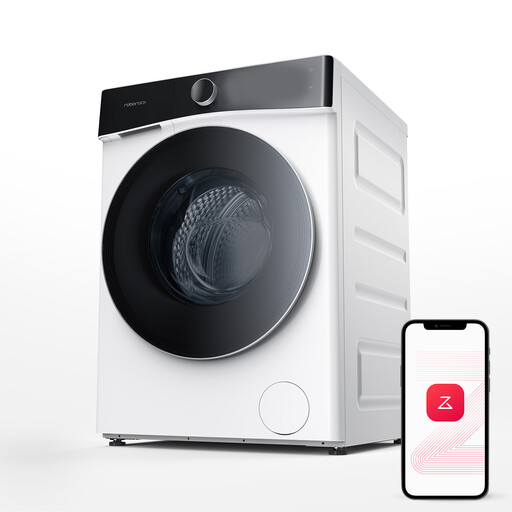 Image unavailable
Roborock Zeo Lite, 10 kg/6 kg washer-dryer
This combined appliance is designed for households that need to wash and dry with just one appliance. The listing gives a washing capacity of 10 kg and a drying capacity of 6 kg, so adjust the load before starting a drying cycle. It mentions Zeo-Cycle, app control and LintClear. Check the dimensions, as well as the duration and energy use of a complete cycle, to see if it suits your needs.
View on Joybuy
 Image unavailable
Samsung WD10HG6U34BEU3, 10 kg/6 kg washer-dryer
This washer-dryer takes up just one space for both functions. Its listed capacities are 10 kg for washing and 6 kg for drying, so you may need to split a large load before drying it. The listing mentions a D rating; check the label for the exact model to find out which cycle it applies to, along with its energy use and duration.
View on Joybuy
 Image unavailable
Hotpoint CHD84MWBSEE, 8 kg heat pump tumble dryer
Consider this separate tumble dryer if you have space for it and want to avoid hanging your laundry around the home. The listing gives a capacity of 8 kg and a C rating. Measure the available space and check the product details for the model’s cycle times, energy use and how it handles condensed water.
View on Joybuy
 Image unavailable
Comfee CD08EHP05W-HR, 8 kg heat pump tumble dryer
This separate appliance needs its own space in addition to your washing machine. The listing gives a capacity of 8 kg and a D rating. Compare the energy use per cycle on the label for the exact model, rather than relying on the letter alone. Also check the dimensions and programme times before adding it to your laundry routine.
View on Joybuy
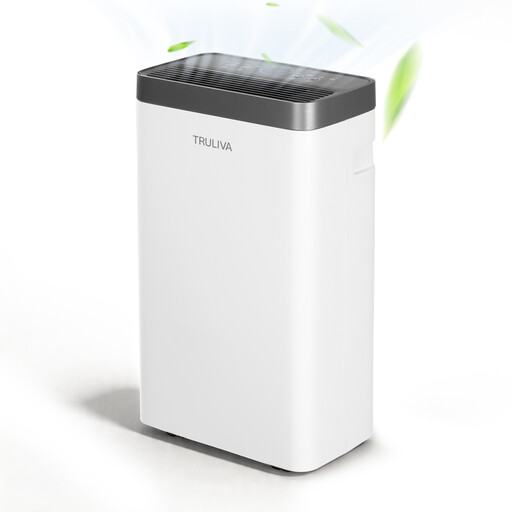 Image unavailable
TRULIVA AP10-2012EE dehumidifier
Consider this as an additional measure if you’ll continue to dry laundry on an airer, not as a replacement for ventilation. The listing says it’s suitable for use in spaces of around 32 m², and mentions a 24-hour timer and continuous drainage. The stated floor area alone isn’t enough to determine whether it’s right for your room. Before buying, check the noise level, energy use, water drainage requirements and settings of the model.
View on Joybuy
Frequently asked questions
Can a heat pump tumble dryer replace inadequate ventilation?
No. It lets you dry a load without leaving it on an airer, but ADEME points out that ventilation continuously removes moisture and pollutants from your home. Check that it’s working properly regardless of which tumble dryer you choose.
Do you need an external vent to install a tumble dryer?
It depends on the technology. UFC-Que Choisir distinguishes vented models, which need a suitable outlet for moist air, from condenser models, which don’t need an external vent. For the latter, check how the condensed water is collected or drained away.
Can a washer-dryer dry a full washing load?
Not necessarily. According to UFC-Que Choisir, a washer-dryer’s maximum drying capacity is lower than its washing capacity. Compare both figures for the model you choose and reduce the load before drying if it exceeds the stated limit.
What should you compare if you’ll use it regularly?
Compare the drying capacity, energy use per cycle, programme duration and noise level of the models you’re considering. The European EPREL database lists these details for tumble dryers. For a washer-dryer, distinguish between the figures for a complete wash-and-dry cycle and those for washing alone.
Is a dehumidifier enough if your home is poorly ventilated?
No. It can help as an additional measure when laundry is left on an airer, but it doesn’t replace fresh air circulation. If your home remains too humid, ADEME recommends checking the air vents and ventilation system first. Then check whether the dehumidifier is suitable for the room, as well as its noise level and how its water is drained away.


