People who mainly dry laundry on an airer
If you don't want to add another appliance, compare spin efficiency first, followed by noise and cycle duration. You'll also need somewhere to leave your laundry to dry.


If you mainly dry your laundry at home, start by choosing a washing machine that suits your loads and compare its spin efficiency. According to ADEME, an effective spin cycle helps laundry dry faster. A separate tumble dryer is worth considering if you do laundry frequently and have the space. A washer-dryer means you don't need to install two appliances, but its drying capacity is lower than its washing capacity and its drying cycles need careful consideration, as UFC-Que Choisir points out.
If you don't want to add another appliance, compare spin efficiency first, followed by noise and cycle duration. You'll also need somewhere to leave your laundry to dry.
A separate tumble dryer can make it easier to get through several loads if you have enough space. Choose one with a capacity suited to your usual loads, and check that it will fit in the space you have in mind.
A washer-dryer lets you wash and then dry your laundry in one appliance. However, check its drying capacity separately: according to UFC-Que Choisir, it is lower than its washing capacity.
First decide whether you can make room for an airer or a second appliance. Then compare spin efficiency, noise and the cycles that suit the way you do laundry.
Consider this if: you have space to hang your laundry and can wait for it to dry.
The trade-off: the airer stays occupied while your laundry dries, even after an effective spin cycle.
Consider this if: you regularly do several loads and have room for two appliances or a compatible stacking setup.
The trade-off: you'll need space for both appliances and will have to transfer your laundry after washing.
Consider this if: you can only install one appliance and want to wash and dry your laundry without transferring it.
The trade-off: the drying load is smaller than the washing load. UFC-Que Choisir also reports that drying takes longer than with a conventional tumble dryer.
| Factor | What to check | Who it matters to |
|---|---|---|
| Time on the airer | Spin efficiency class and spin noise level on the washing machine's label. | If I dry my laundry on an airer, I want it to come out less damp so I don't have to leave it hanging for longer than necessary. Around 33% of consumers prioritise this. |
| Available space | Dimensions and clearance required; for a washer-dryer, check the separate washing and drying capacities. | When I can only fit one appliance, I want it to handle both washing and drying without confusing the two capacities. This space-saving benefit is a priority for around 27% of consumers. |
| Everyday noise | Noise level in dB and noise class during the spin cycle. | If I can hear the spin cycle from the living areas of my home, I want to minimise the disruption when doing laundry. Keeping noise down is the top priority for around 20% of consumers. |
| Loads and consumption | Capacity suited to your usual loads and consumption figures for the cycles you use. | If my loads vary, I want to avoid running extra cycles or choosing an oversized drum. Around 20% of consumers prioritise finding the right fit. |
A full wash load may exceed the drying capacity, so you'll need to split it. UFC-Que Choisir highlights the difference between the two capacities.
Compare the washing and drying capacities in kg, then check the duration and consumption of a complete cycle.
If you dry laundry indoors, spin efficiency class and noise matter too. ADEME recommends choosing a spin efficiency class A when your aim is to dry laundry faster.
Check the spin efficiency class, noise level in dB and noise class on the model's label.
UFC-Que Choisir says that choosing the wrong capacity can lead to excessive water or electricity consumption, or mean you have to do more loads.
Choose a capacity that suits the amount of laundry you usually wash, and check the capacity of the programmes you'll use.
Access to the filter was one of the sources of dissatisfaction identified in a UFC-Que Choisir survey of French readers.
Check the model's manual to see which parts need maintenance, and make sure you'll be able to reach them once the appliance is installed.
Worth considering if you're looking for a separate heat pump tumble dryer and want to compare installation and maintenance requirements.
Worth considering if you want to compare a washer-dryer with other ways of organising your laundry washing and drying.
Worth considering when comparing separate tumble dryers, particularly if you're deciding what capacity you need.
Worth considering if you're comparing washer-dryers with different washing and drying capacities.
These appliances suit three different needs: washing laundry before hanging it up, using a separate tumble dryer, or combining washing and drying in a washer-dryer. Compare their capacities and the constraints of your available space before choosing.
 Image unavailable
For machine-drying loads that are a good match for your washing machine's capacity. This white model is listed with an 8 kg capacity and a C rating. Check its dimensions to make sure it will fit in your chosen space.
 Image unavailable
For washing laundry before drying it indoors. This freestanding white model has an 8 kg capacity and a maximum spin speed of 1400 tr/min. Compare its spin efficiency class too, as this is different from the stated spin speed.
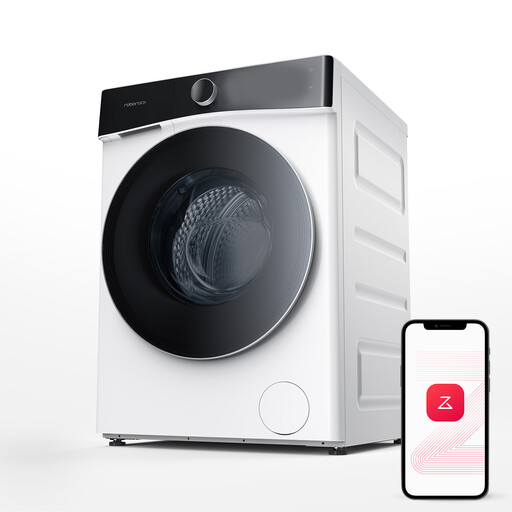 Image unavailable
For combining washing and drying in one appliance. The stated capacities are 10 kg for washing and 6 kg for drying, so you may need to reduce a full wash load before drying it. Check the duration of a complete cycle and the installation dimensions.
 Image unavailable
For washing loads that you can then hang to dry at home. The stated capacity is 9 kg and the maximum spin speed is 1600 tr/min. Check the spin efficiency class to see how well it will suit air-drying.
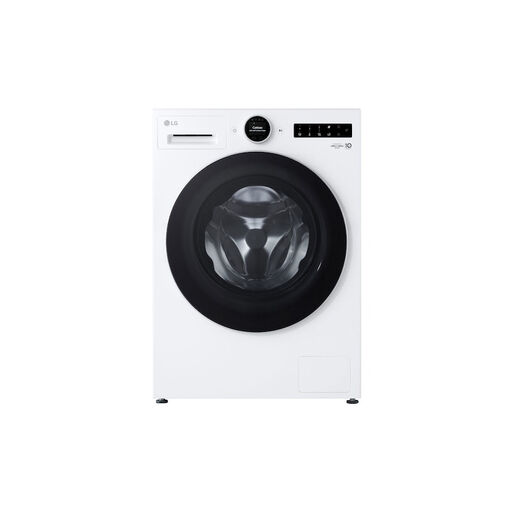 Image unavailable
For larger wash loads, if this capacity suits your usual needs. This white model is listed with an 11 kg capacity. Compare its spin efficiency and check its dimensions before planning to dry laundry indoors.
Compare the spin efficiency class and noise level during the spin cycle in particular. ADEME recommends choosing a spin efficiency class A to help laundry dry faster indoors. The label also shows energy consumption per 100 cycles, water consumption per cycle and the duration of the reference programme.
Not necessarily: its drying capacity is lower than its washing capacity, as UFC-Que Choisir points out. Compare the two figures in kg. If you want to run the cycles consecutively without taking any laundry out, limit the load to the drying capacity of the programme you choose.
For front-loading and top-loading washing machines, check the model's durability rating. According to the French Ministry of the Economy, this rating replaced the repairability rating for these categories in 2025. Don't assume that one model's rating applies to another.