To dry laundry indoors regularly, start by reducing the amount of water left in the clothes with a suitable spin cycle, and choose a properly ventilated drying area. A tumble dryer can free up the space taken up by an airer, while a dehumidifier can help manage humidity in a suitable room, without replacing ventilation or adequate airflow.
Which households is it for?
Households that regularly dry laundry on an airer in a flat
Reduce drying time without overlooking indoor humidity: first consider the spin cycle, room size and ventilation before adding another appliance. ADEME points out that air-drying laundry adds moisture to indoor air.
Households without permanent space for an airer
A heat-pump tumble dryer can help free up a room. Compare its capacity, energy consumption, programme duration, noise level and condensate drainage requirements before installing it.
Households dealing with persistent humidity while drying laundry
A dehumidifier can be considered as a supplementary solution after checking the airflow and ventilation. The stated capacity, noise level, humidity settings and drainage are practical points worth comparing.
What to check before buying
First compare the room where the laundry will dry, then the amount of water left after spinning, the space available and the appropriate consumption figures for each type of appliance.
| Priority |
What to check |
Your needs |
| Humidity and air renewal |
Room size or the presence of a mechanical ventilation extraction point; whether you can open the windows wide for a few minutes; and whether the ventilation is working before considering a dehumidifier. |
I want to avoid concentrating a full load of laundry in a small, closed room. ADEME recommends a large, well-ventilated room or one with suitable extraction for drying laundry on an airer. |
| Drying time |
Spin efficiency class on the label; spin speed interpreted according to the programme and fabric; and the actual drying capacity of a washer-dryer or tumble dryer. |
I want to put laundry away sooner without having to run more washes. ADEME recommends choosing an appliance with an A spin efficiency class when laundry needs to dry quickly indoors. |
| Energy consumption |
Energy label and kWh/100 cycles for the relevant appliances; power consumption in W and actual running time for a dehumidifier; and the stated capacity for the room size. |
I want to compare like-for-like measurements rather than a general promise of savings. With a dehumidifier, consumption depends in particular on its power rating and running time. |
| Noise, water and size |
Sound level in dB(A); available space; tank capacity; whether a drain hose can be used in accordance with the instructions; and the appliance depth. |
I do not want a drying appliance to disrupt a living space or require emptying more often than suits my daily routine. |
Mistakes to avoid
-
Treating a dehumidifier as a replacement for ventilation
An appliance can help manage humidity in a room, but it cannot fix a blocked extraction vent, a faulty mechanical ventilation system or a structural building problem.
Before buying, check the available airflow, extraction vents and ventilation operation. If there is unusual damp or established mould, choosing an appliance alone will not resolve the situation.
-
Choosing based solely on washing capacity
On a washer-dryer, the capacity available for a wash-and-dry cycle may be lower than the washing-only capacity. Bosch, for example, states 9 kg for washing and 5 kg for the wash-and-dry cycle of the WNA144V0FR.
Check the drying capacity, noise level, energy consumption and programme duration separately, then adjust the load to the drying capacity.
-
Overlooking drainage for collected water
A dehumidifier with a tank requires regular emptying. The Rowenta DH5260F0 is advertised with a 3 L tank and a continuous drainage option.
Before buying, decide whether you will be able to empty the tank manually or whether the room allows continuous drainage in accordance with the instructions.
-
Comparing consumption figures shown in different units
The relevant washing machines and tumble dryers can generally be compared using the indicators on their energy labels, while a dehumidifier’s consumption varies considerably according to how long it runs.
Compare the kWh/100 cycles shown for labelled appliances, and estimate a dehumidifier’s kWh separately from its power rating and actual running time.
Brand guide for this type of equipment
Bosch
The UK range includes washing machines, washer-dryers and heat-pump tumble dryers, making it useful for comparing several electrical appliances related to laundry drying.
- Bosch product sheets distinguish between washing and wash-and-dry capacities, as well as the features of certain tumble dryers.
- Capacities, noise levels and drainage options must be checked model by model; they are not independent test results.
Miele
The heat-pump tumble dryer range is relevant for households comparing an 8 kg appliance alongside label information and laundry-protection features.
- Miele presents the TEA525WP as an 8 kg heat-pump tumble dryer.
- Check the product sheet for the model you are considering for consumption per 100 cycles, noise level, Eco programme duration, condensation performance and repairability rating.
Rowenta
The brand’s domestic dehumidifiers can be considered as a supplementary way to manage humidity when drying laundry indoors, rather than as a solution to a ventilation problem.
- For the DH5260F0, Rowenta states a capacity of 16 L/day, a 3 L tank and the option of continuous drainage.
- The capacity and power figures stated by the manufacturer depend on the conditions of use and do not replace checking the property’s airflow.
Joybuy products for indoor drying
This Joybuy selection brings together a dehumidifier to consider as a supplementary solution for a damp room, and washing machines designed to prepare laundry for drying on an airer through effective spinning.
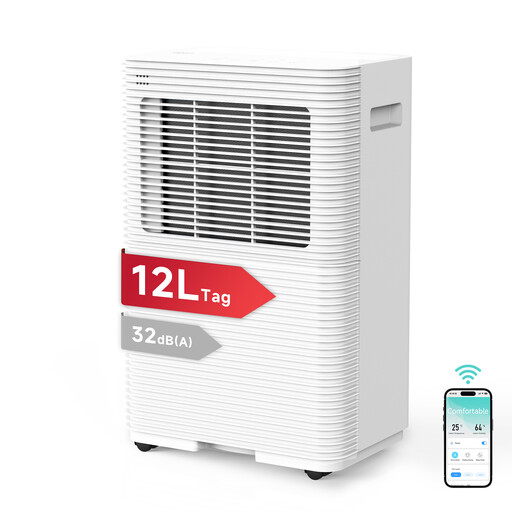 Image unavailable
VINO smart 12 L dehumidifier with WiFi
Worth considering for drying laundry on an airer in rooms of up to 24 m², as a complement to ventilation.
Stated extraction of 12 L/day, rated power of 195 W, stated noise level of 38 dB(A), 1.8 L tank and continuous drainage option. The 12 L/day capacity is stated at 30 °C and 80% relative humidity; check the target humidity setting and drainage conditions.
Joybuy
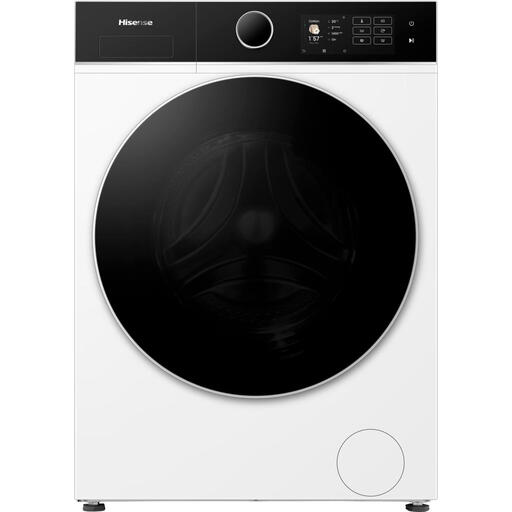 Image unavailable
Hisense WF5I8043BWF 8 kg washing machine
For regular loads dried on an airer, with a stated depth of 47 cm for smaller spaces.
Stated capacity of 8 kg, maximum spin speed of 1,400 rpm, 33 kWh/100 cycles, 38 L/cycle and 72 dB(A) during spinning. The stated spin efficiency class is B: check the full label if fast drying is a priority.
Joybuy
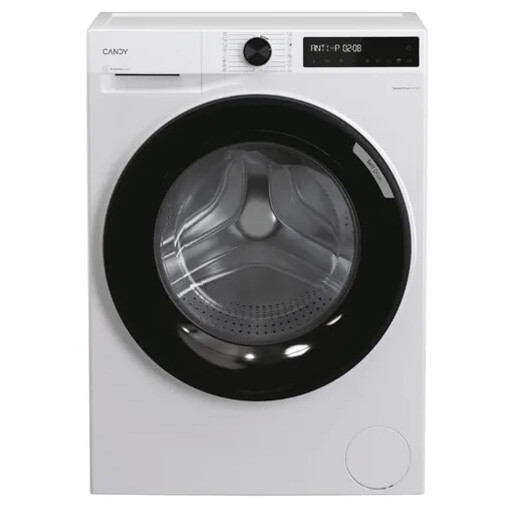 Image unavailable
Candy BR 411BL9-S 11 kg washing machine
An option for large laundry loads when you want to avoid splitting them before indoor drying.
Stated capacity of 11 kg, maximum spin speed of 1,400 rpm, 37 kWh/100 cycles, 48 L/cycle and 72 dB(A). Its stated depth of 68.1 cm and B spin efficiency class should be taken into account.
Joybuy
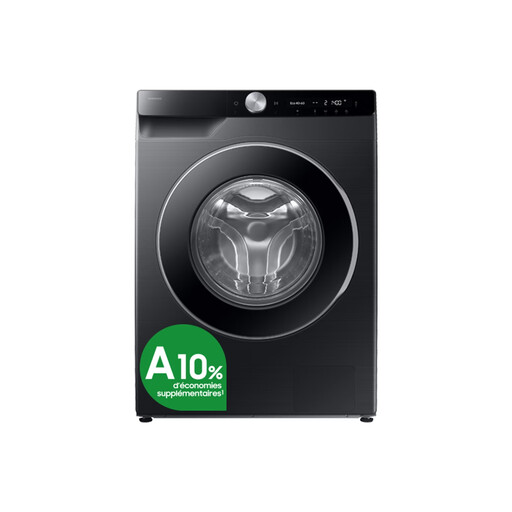 Image unavailable
Samsung WW90DG6U85LBU3 9 kg washing machine
Suitable for households with regular loads that need spinning before drying on an airer.
Stated capacity of 9 kg, maximum spin speed of 1,400 rpm, 44 kWh/100 cycles, 50 L/cycle and 72 dB(A). Check the depth with the door open at 63 cm and the full label, as the stated spin efficiency class is B.
Joybuy
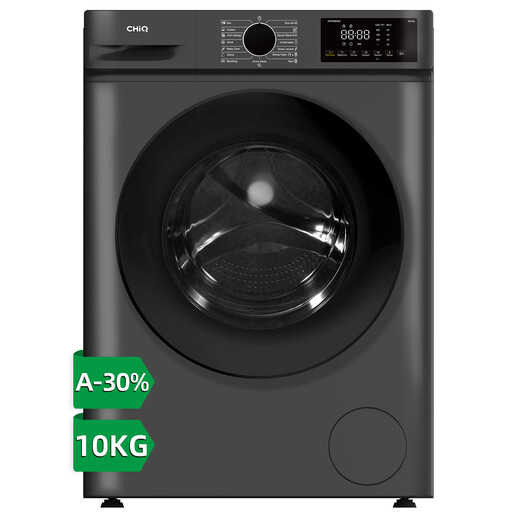 Image unavailable
CHiQ JW105883G 10 kg washing machine
Worth considering for bulky loads intended to dry on an airer, with a stated 530 mm drum.
Stated capacity of 10 kg, maximum spin speed of 1,400 rpm and 16 programmes. Check the energy label, spin noise, dimensions and connections before choosing this model.
Joybuy
Frequently asked questions
Where should you place an airer when laundry is drying indoors?
Choose a large, well-ventilated room or one with a mechanical ventilation extraction vent. ADEME recommends avoiding using airer drying as a solution to a building defect or faulty ventilation.
Should you leave a window ajar for hours?
ADEME recommends opening windows wide for 5 to 10 minutes a day instead. A window left ajar is considered less effective, while leaving it open for a very long time can cool the surfaces around the window.
Can a dehumidifier replace ventilation or a working mechanical ventilation system?
No. ADEME recommends checking the air vents and ventilation system if the property remains too humid; a dehumidifier can be used as a supplementary measure depending on the situation.
Which figures should you compare on a tumble dryer or washing machine?
For appliances covered by the energy label, compare the model’s energy class, consumption, capacity, programme duration and noise level. The European Commission states that EPREL allows you to compare the main characteristics of products carrying this label.


