People drying clothes on an airer in a small space
Without outdoor space, you need to find room for your laundry without letting moisture build up in a small, enclosed room. ADEME highlights the importance of ventilation when drying clothes indoors.


If you have a large, well-ventilated room or one with mechanical ventilation extraction, a clothes airer may be enough, as long as you don’t let moisture build up. If you do laundry frequently and need a more predictable drying time, consider a tumble dryer that suits your space. A dehumidifier can support drying on an airer, but it is no substitute for ventilation.
Without outdoor space, you need to find room for your laundry without letting moisture build up in a small, enclosed room. ADEME highlights the importance of ventilation when drying clothes indoors.
If you need your clothes ready quickly, compare a tumble dryer’s programme times and capacity, as well as its energy consumption, footprint and installation requirements.
A dehumidifier may be worth considering as an extra if drying clothes on an airer is still your main method. However, as ADEME points out, your home’s ventilation must continue to work properly.
Consider this if: you have time to spare and a large room that is well ventilated or has mechanical ventilation extraction.
Bear in mind: according to ADEME, drying clothes indoors adds a lot of moisture to the air. A small, enclosed room is not suitable for the same use.
Consider this if: you do laundry frequently, drying time matters and you have a suitable place for the appliance.
Bear in mind: it takes up permanent space and needs maintenance. Beko says heat pump models may have longer cycles.
Consider this if: you plan to keep using your airer and want to look into an extra aid for drying.
Bear in mind: the appliance collects water and uses electricity, but it does not replace effective ventilation.
| Factor | What to check | Who is this important for? |
|---|---|---|
| Moisture and ventilation | If you use an airer, check the size of the room and how well it is ventilated, or whether it has mechanical ventilation extraction. For a condenser tumble dryer, check the condensation efficiency stated on its product information sheet. | If I dry clothes indoors, I want to stop moisture from the laundry building up in the room. Around 33% of consumers prioritise moisture and ventilation. |
| Drying time | Compare the tumble dryer’s eco programme time and capacity. For a quick programme, check which fabrics and load sizes it can handle. | When I do laundry often, I need to know when my clothes will be ready; around 27% of consumers put speed first. |
| Space and energy use | Measure the space and clearances required in the instruction manual. Compare the energy use and noise levels of the appliances you are considering. | When space is limited or I’m keeping an eye on electricity use, these practicalities matter more than maximum speed. They are the top priority for around 20% of consumers. |
| Extra help for your airer | For a dehumidifier, check the conditions used to measure its extraction capacity, its noise level, and whether the tank needs emptying or a continuous drain connection is available. | I want to keep using my airer while trying an extra appliance, without relying on it to ventilate my home. Around 20% of consumers prefer this combination. |
According to ADEME, mechanical ventilation continuously removes moisture and pollutants. Using a dehumidifier near an airer will not, by itself, fix a ventilation problem.
Check that existing air inlets and extraction are working properly. If the damp persists when there is no laundry drying, look into getting the issue properly assessed.
The European Commission says that, since 1 July 2025, tumble dryers covered by the rules and sold in the European Union have carried an energy label rated from A to G. An old rating cannot be compared directly with a rating on the new scale.
For new appliances covered by the rules, compare the details on their current energy labels, including energy use, capacity and eco programme time.
UFC-Que Choisir explains that a vented model needs an opening to the outside or access to a suitable duct, unlike a condenser model.
Check the route for the exhaust before choosing this type of appliance. If there is no suitable outlet, consider a condenser model or drying clothes on an airer with effective ventilation instead.
Installing or adapting an outlet may involve work, depending on the layout of your home.
In France, safety zones around a shower or bath restrict where electrical equipment can be installed, as Promotelec explains.
Check the room layout and the model’s instructions, and ask a qualified electrician to check your proposed installation.
These ranges offer a useful comparison for tumble dryers or, in De'Longhi’s case, an extra aid for airer drying. Features vary between models.
The heat pump tumble dryer range lets you compare capacity, dimensions, water drainage and maintenance requirements by model.
It’s worth checking the brand’s heat pump tumble dryers model by model, especially for cycle times and the temperature of the room where the appliance will be installed.
The T1 and T2 ranges include heat pump tumble dryers, with capacities and features that vary by model.
The heat pump range is worth considering if energy use and cycle times are important factors in your decision.
The brand’s dehumidifiers can support drying on an airer; they are not a direct replacement for a tumble dryer.
The first three appliances are options to consider if you’re looking for a tumble dryer. The two dehumidifiers that follow are for use with an airer and effective ventilation. Compare each model with the size of your room and how often you do laundry.
 Image unavailable
Worth considering if you do laundry regularly and are looking for a condenser tumble dryer rather than a model that needs an external air outlet.
The title lists an 8 kg capacity, propane refrigerant and the OptiSense function. Check the cycle times, current energy label and the clearances specified in the instructions for your chosen space.
 Image unavailable
Worth considering if you regularly dry full loads and have a permanent space for the appliance.
The title lists an 8 kg capacity and a C rating. Before comparing its energy use with other models, check the current energy label, the eco programme time and the installation instructions.
 Image unavailable
Worth considering if you’re looking for an 8 kg tumble dryer and want to compare programmes for the fabrics you dry.
The title lists a D rating and a quick-dry function. Check the load size allowed for this cycle: its drying time should not be taken to mean it can handle a full load. Also check the current energy label, noise level and dimensions.
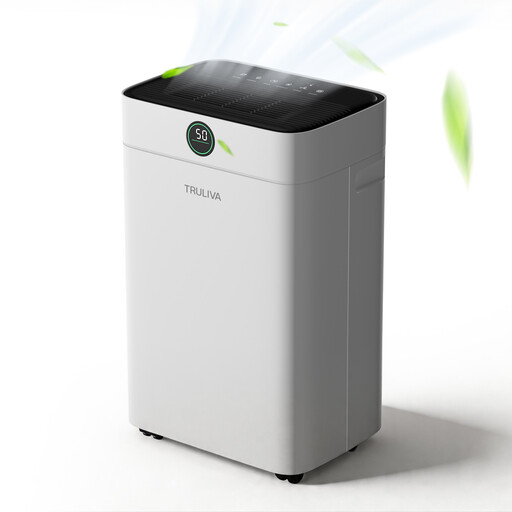 Image unavailable
Worth looking into as an extra if you’re keeping your airer in a properly ventilated room.
The title lists an output of up to 25 L/day, a 2.8 L tank and a continuous drainage hose. The stated capacity is measured at 90% relative humidity and 95 °F. Check how it will perform in your room and how noisy the mode you plan to use is.
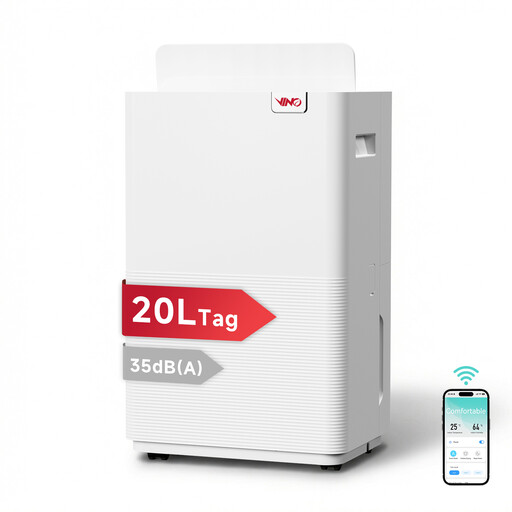 Image unavailable
Worth considering alongside an airer if you want an extra appliance and can keep the room ventilated.
The title lists a capacity of 20 L/day, a 2.5 L tank and Wi-Fi control. The stated capacity is measured at 30 °C and 80% relative humidity, so check its performance in your room’s conditions. The noise figures differ between the title and the detailed table, so check which mode they refer to.
No. The size and ventilation of the room matter. A study cited by ADEME recommends using a large, well-ventilated room or one with mechanical ventilation extraction, as drying clothes on an airer releases a lot of moisture into the air indoors.
No. According to ADEME, mechanical ventilation continuously removes moisture and pollutants. De'Longhi recommends directing a dehumidifier’s airflow towards the laundry, but this use as an extra aid does not replace effective ventilation.
Look into a condenser model, particularly a heat pump tumble dryer, and check how it collects or drains water in the instruction manual. UFC-Que Choisir distinguishes these appliances from vented tumble dryers, which need a suitable outlet to the outside.
Compare the details on the current energy labels of the models covered by the rules, rather than looking at their ratings alone. The European Commission says the A to G scale has applied since 1 July 2025 to tumble dryers covered by the rules and sold in the European Union. Also compare energy use, capacity and eco programme time.
That depends on the layout and electrical installation of the room, as well as the tumble dryer’s instructions. In France, Promotelec notes that safety zones restrict the installation of electrical equipment near a shower or bath. Ask a qualified electrician to check your plans.