Which features should you prioritise?
If you’ll mainly dry your laundry at home, first decide whether an airer will keep up with your routine. Then consider the space you have alongside the loads you actually need to dry.
Washing machine and indoor airer
Consider this if: you have room to hang your laundry and want to keep the number of appliances down. ADEME recommends checking the spin-drying efficiency class.
Bear in mind: you’ll still need to hang your laundry up, and drying time will depend on factors including the load and the space available.
Separate tumble dryer
Consider this if: you often dry full loads and have a separate space for the appliance. According to the European Commission, a condenser dryer doesn’t need an air outlet to the outside.
Bear in mind: you’ll need to plan how to collect or drain the condensed water, as well as carry out the maintenance specified in the instruction manual.
Washer-dryer
Consider this if: you only have space for one appliance and want to be able to wash and dry your laundry consecutively.
Bear in mind: according to UFC-Que Choisir, drying capacity is lower than washing capacity. You may need to split a full wash load before drying it.
| What matters to you |
What to check |
Consumers concerned |
| Drying on an airer |
Spin-drying efficiency class on the energy label; capacity suited to your usual loads. |
If I air-dry almost all my laundry, I want it to come out of the washing machine less damp. Around 33% of consumers concerned would make this their priority. |
| Frequent machine drying |
Tumble dryer capacity and dimensions; a suitable way to collect or drain condensed water. |
When I have one load after another to dry, I don’t want to rely on having space on the airer. This would be the priority for around 27% of consumers concerned. |
| One appliance space |
Installation dimensions; the washer-dryer’s separate washing and drying capacities. |
If I only have space for one appliance, I want to be able to do both jobs in the same place, even if I have to reduce the drying load. Around 20% of consumers concerned would prioritise this constraint. |
| Managing laundry loads |
Capacity suited to your actual loads; compare programme durations and energy use on a like-for-like basis. |
I want to avoid running another cycle because the load I’ve washed won’t fit in the dryer all at once, without choosing an unnecessarily large drum. For around 20% of consumers concerned, this would be their main need. |
Appliances to suit the way you dry your laundry
These models cover three different needs: spinning laundry before hanging it up, using a separate tumble dryer, or combining washing and drying in one appliance. Compare their capacities with your actual loads and check the installation dimensions before choosing.
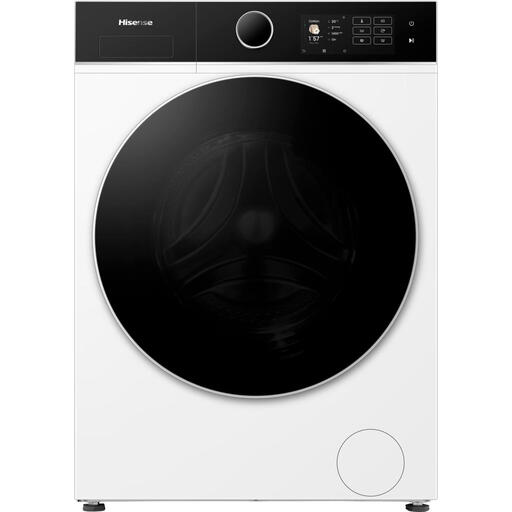 Image unavailable
Hisense WF5I8043BWF, 8 kg washing machine
For washing laundry before hanging it to dry indoors. The stated capacity is 8 kg and the maximum spin speed is 1,400 rpm. Check the spin-drying efficiency class on the energy label, as well as the dimensions required for installation.
View on Joybuy
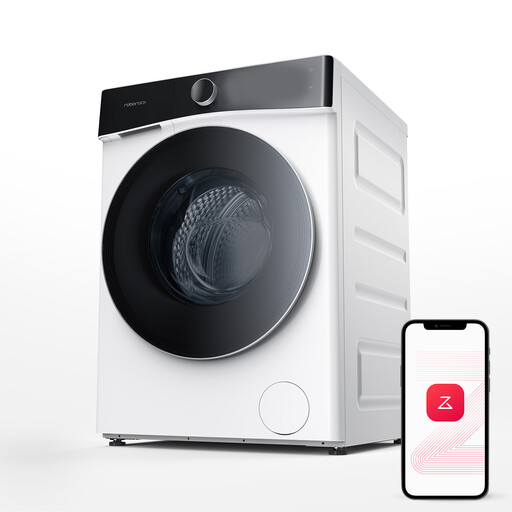 Image unavailable
Roborock Zeo Lite Zeo-Cycle, 10/6 kg washer-dryer
For combining washing and drying in one space. The stated capacities are 10 kg for washing and 6 kg for drying, so a 10 kg wash load needs to be reduced before drying. Check the dimensions and the full cycle duration for your needs.
View on Joybuy
 Image unavailable
Hotpoint CHD84MWBSEE, 8 kg heat pump tumble dryer
For drying loads in an appliance separate from your washing machine. This model has a stated capacity of 8 kg and energy rating C. Check its dimensions, how it handles condensed water and the maintenance required for your installation.
View on Joybuy
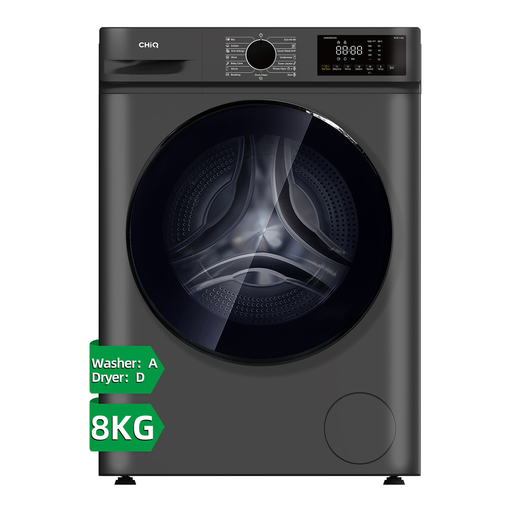 Image unavailable
CHiQ JW85882HG, 8/5 kg washer-dryer
For having both functions in one space, with a drying load that differs from the washing load. The stated capacities are 8 kg for washing and 5 kg for drying, with a maximum spin speed of 1,400 rpm. The listed width measurements differ, so confirm the dimensions in the model documentation before planning the installation.
View on Joybuy
 Image unavailable
Electrolux EW7FI259160V SteamCare SmartSelect, 9 kg washing machine
For washing loads before drying them on an airer. This model has a stated capacity of 9 kg and a maximum spin speed of 1,600 rpm, but spin speed alone doesn’t tell you its spin-drying efficiency class. Check the energy label for this, along with the depth needed for installation.
View on Joybuy
Frequently asked questions
What should I look for on a washing machine label if I dry laundry indoors?
Start with the spin-drying efficiency class: ADEME recommends class A if you need your laundry to dry quickly indoors. Then compare capacity, spin-cycle noise, energy use per 100 cycles, water use per cycle and the duration of the reference programme on a like-for-like basis.
Can you install a tumble dryer without an air outlet to the outside?
Yes. According to the European Commission, a condenser dryer doesn’t need an air outlet to the outside. Condensed water is collected in a tank or sent to a drain if the model and its connection allow. Check the dimensions and installation instructions too.
Can a 9/6 kg washer-dryer dry 9 kg after washing?
No, not in a single drying cycle: 9 kg is the washing capacity and 6 kg is the drying capacity. The Whirlpool BIWDWG961485FR, for example, is listed as 9/6 kg, so you’ll need to reduce the load before drying or dry some of the laundry another way.
What maintenance does a condenser dryer need?
Follow the instructions for your model on filters and condensed water. Bosch, for example, recommends cleaning the fluff filter after every use on the model mentioned above. Check your instruction manual for how often to carry out other maintenance and how to access the parts that need attention.


