You don’t need to buy an appliance every time you dry laundry indoors. First, work out whether you want to spend less time hanging out washing or manage moisture more effectively. If you decide to buy equipment, consider how much laundry you actually dry, where you’ll put it and the stated energy consumption. A dehumidifier is no substitute for ventilation.
Who is this choice for?
Your clothes airer is taking over the living room
You regularly dry laundry indoors and want to manage space and moisture more effectively without automatically buying an appliance. The ADEME describes air-drying laundry as a source of moisture in indoor air.
The washing is piling up
You want to spend less time hanging out washing and handling it. Drying capacity, useful programmes and maintenance may all influence your choice.
You only have room for one appliance
You’re considering a washer-dryer to combine two functions in one appliance. Check the washing and drying capacities separately.
What to look for
Start by deciding whether your priority is spending less time hanging out washing or managing moisture more effectively. The ADEME distinguishes between moisture produced by drying laundry and the role of ventilation in replacing indoor air. Then compare capacities and energy consumption for cycles that serve the same purpose.
| What matters to you |
What to check before you buy |
Who is it for? |
| Managing moisture |
Check how your home is currently ventilated, and distinguish between drying clothes and treating the air. |
When I hang laundry in a living space, I want to limit moisture without confusing dehumidification with ventilation. Around 25% of consumers prioritise managing moisture. |
| Spending less time hanging out washing |
Compare drying capacities and useful programmes, rather than relying on the washing capacity alone. |
If I want to dry more laundry without leaving it on the airer, I check the actual drying load the appliance can handle. Around 25% of consumers prioritise spending less time hanging out washing. |
| Making the most of your available space |
Measure the space and check that the door can open; check the connections and installation requirements in the model’s instructions. |
When I can only install one appliance, a washer-dryer could meet that need, provided its drying capacity suits me. Around 19% of consumers say available space is their main priority. |
| Keeping running costs under control |
Check the kWh, load and basis of measurement. For a dehumidifier, don’t confuse watts with the energy used to dry a load of laundry. |
If I want to estimate the electricity and water I’ll use, I compare figures for similar types of use. Around 19% of consumers put running costs first. |
| Keeping up with maintenance and caring for your clothes |
Check that filters and other parts are easy to clean, and that the programmes are suitable for your clothes. |
When I choose an appliance, I want its maintenance requirements and programmes to suit my laundry. Around 12% of consumers prioritise these practical considerations. |
Mistakes to avoid
-
Confusing washing capacity with drying capacity
A washer-dryer may handle a larger load for washing than for drying. The Bosch WNA144V0FR, for example, has a stated washing capacity of 9 kg and a drying capacity of 5 kg.
Plan your washing around the drying capacity or the complete cycle, rather than the washing capacity alone.
A smaller load may mean splitting the laundry and handling it more often.
-
Comparing energy figures for different types of service
A complete wash-and-dry cycle is not the same as a drying-only cycle. A power rating in watts does not, on its own, tell you how much energy an appliance will use.
Check the units, load sizes and measurement conditions before comparing product details.
An unfair comparison could give you an inaccurate estimate of the electricity and water your usage will require.
-
Assuming a dehumidifier’s extraction rate guarantees a drying time
For the DNS80, De’Longhi states an extraction rate of 7,5 L/24 h at 30 °C and 80 % relative humidity. This figure doesn’t guarantee the same result in a different room.
Check the measurement conditions, and don’t use this figure to estimate a drying time or assume that it will solve a ventilation or building problem.
How long the appliance runs and how much electricity it uses will depend on how you use it.
-
Forgetting to clean the filters and condenser
Electrolux recommends cleaning the filter after every cycle in its general advice and warns that a blocked condenser can increase energy consumption. The procedure varies by model.
Before buying, check that the parts needing maintenance are easy to access, and follow the instructions for the specific appliance.
Regular cleaning takes time; a build-up of fluff can also increase energy consumption.
Brands to compare
Electrolux
The brand’s range includes heat pump tumble dryers, such as the EDHF2812WE.
- Electrolux states that the EDHF2812WE has an 8 kg capacity, a reversible door, an E energy rating and uses 128 kWh/100 cycles.
- These figures are the manufacturer’s claims for this model, not the results of independent testing. Check which programmes are suitable for your fabrics and the maintenance instructions for the exact appliance.
Bosch
The WNA144V0FR washer-dryer is worth considering if you don’t have room to install two appliances.
- The model’s product details distinguish between a 9 kg washing capacity and a 5 kg drying capacity; its regulatory product information lists the complete-cycle figures separately.
- The lower drying capacity may mean splitting a load. A commercial motor warranty doesn’t mean that the whole appliance is covered for the same length of time.
De’Longhi
The Tasciugo AriaDry range includes the DNS80, a dehumidifier with a laundry function stated by the manufacturer.
- The DNS80 product details list an adjustable humidistat, continuous drainage and a stated extraction rate of 7,5 L/24 h at 30 °C and 80 % relative humidity.
- This extraction rate depends on the measurement conditions and doesn’t guarantee a drying time in your home. Dehumidification is no substitute for ventilation.
Joybuy products for drying laundry
This selection includes washer-dryers, washing machines with adjustable spin speeds and a condenser tumble dryer, so you can compare different ways of managing laundry dried indoors.
 Image unavailable
Samsung WD11DG6B85BEU3 washer-dryer, 11 kg/6 kg, class A
Worth considering if you want to combine washing and drying in one appliance.
Capacity: 11 kg for washing and 6 kg for drying. Class A is stated in the product name.
View on Joybuy
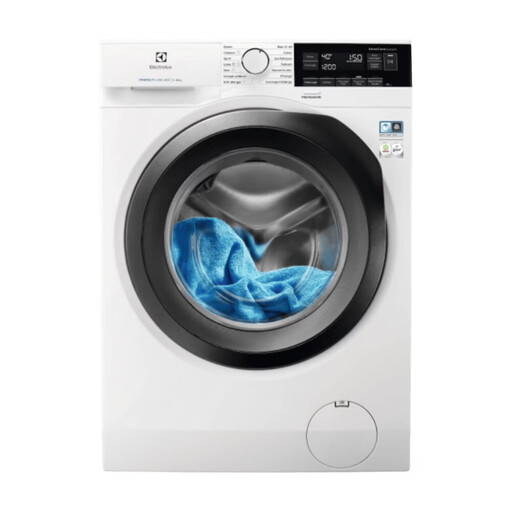 Image unavailable
Electrolux EW6F3811RC washing machine, 8 kg, 1 400 rpm, class C
Worth considering if you’ll continue to air-dry your laundry and want to look at the spin settings on your washing machine.
Washing capacity: 8 kg. Maximum stated spin speed: 1 400 rpm; the speed is adjustable. Class C is stated in the product name.
View on Joybuy
 Image unavailable
Samsung WD10HG6U34BEU3 washer-dryer, 10 kg/6 kg, class D
Worth considering if you’re looking for an appliance that combines washing and drying; the drying capacity is different from the washing capacity.
Capacity: 10 kg for washing and 6 kg for drying. The description lists 27 programmes and automatic cleaning of the lint filter. Class D is stated in the product name.
View on Joybuy
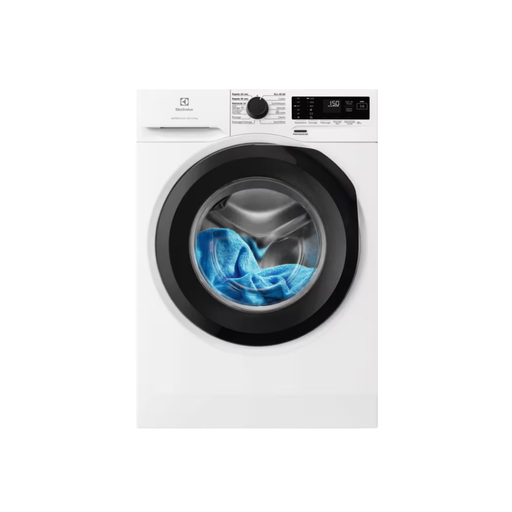 Image unavailable
Electrolux EWF1410N2 washing machine, 10 kg
Worth considering if you’ll continue to air-dry your laundry and want to compare a washing machine with an adjustable spin speed.
Washing capacity: 10 kg. The description states a maximum spin speed of 1 351 rpm and programmes for cotton, delicates, wool and sportswear.
View on Joybuy
 Image unavailable
Electrolux EDH1018CD GentleCare, 8 kg condenser tumble dryer, class E
Worth considering if you want to dry your laundry in a dedicated appliance and have a suitable space for it.
Stated capacity: 8 kg. The description lists a water collection tank, a reversible door and dimensions of 60 × 65 × 85 cm. Class E is stated in the description.
View on Joybuy
Frequently asked questions
Can you get a tumble dryer without an external vent?
Yes. A condenser tumble dryer collects the water in a tank or sends it to a drain. Follow the installation requirements in the instructions for your model.
Can a washer-dryer dry as much laundry as it can wash?
Not necessarily: its drying capacity may be lower than its washing capacity. Bosch states that the WNA144V0FR can wash 9 kg and dry 5 kg. Check both figures for the model you’re interested in.
Can a dehumidifier replace ventilation when I’m drying laundry?
No. Removing moisture from the air doesn’t replace ventilation. The ADEME describes ventilation as a way to remove moisture from the home. A dehumidifier may be considered as an extra, but don’t assume it will solve a ventilation or building problem.
How do I compare the energy consumption of a tumble dryer and a washer-dryer?
Compare figures for the same type of service, and check the load, conditions and units. A complete wash-and-dry cycle isn’t the same as a drying-only cycle. The ADEME recommends checking the energy label to help you choose an appliance.
Should I clean a tumble dryer’s filter after every use?
Electrolux recommends cleaning the filter after every cycle in its general advice. For the condenser, follow the procedure in the model’s instructions: the brand warns that a blocked condenser can increase energy consumption and damage the appliance.


