People who air their washing between loads
If you have enough room to air your laundry, first compare spin efficiency and the capacity that suits your usual loads. ADEME recommends considering spin efficiency when laundry is dried indoors.


If you can air your washing between loads, start by comparing your washing machine’s spin efficiency and capacity. ADEME links spin efficiency with drying laundry indoors, although you’ll still need to hang it out. If you regularly need to free up that space, compare a separate tumble dryer with a washer-dryer. A washer-dryer takes up just one space, but its drying capacity is generally lower than its washing capacity, according to UFC-Que Choisir.
If you have enough room to air your laundry, first compare spin efficiency and the capacity that suits your usual loads. ADEME recommends considering spin efficiency when laundry is dried indoors.
If your airer can’t accommodate successive loads, compare drying capacity, cycle times and the space available for a separate tumble dryer or a washer-dryer. UFC-Que Choisir points out that a washer-dryer’s drying capacity is generally lower than its washing capacity.
If you can only install one appliance, a washer-dryer may suit you if its drying capacity matches your loads. Check the dimensions and the clearance needed for installation.
Consider this if: you can hang out your washing and leave it to dry between loads. Compare spin efficiency and the capacity that suits your chosen programmes.
Bear in mind: spinning removes water, but it doesn’t dry laundry. You’ll still need an airer and time for your washing to dry.
Consider this if: you regularly need to dry laundry without keeping your airer occupied for long, and have space for a second appliance.
Bear in mind: it takes up space and requires some maintenance checks. Compare cycle times and energy consumption for the models and cycles you’re considering.
Consider this if: you only have space for one appliance and your load is within its stated drying capacity.
Bear in mind: washing and drying capacities often differ. Also check the duration and energy consumption of a complete cycle.
For appliances in this category, UFC-Que Choisir distinguishes between the washing and drying capacities of washer-dryers. ADEME recommends considering spin efficiency when drying laundry indoors. The percentages below reflect the priorities consumers may identify with.
| What matters to you | What to check before buying | Who prioritises it most |
|---|---|---|
| Reducing the water left in your washing | Compare the spin efficiency class and the capacity for the programmes you plan to use. | If you usually air your laundry and want it to come out of the washing machine less damp, around 31% of consumers prioritise the spin before hanging their washing out. |
| Getting through several loads | Compare washing and drying capacities separately, then check the duration of a complete cycle. | When loads follow one another and your airer isn’t enough, the amount you can actually dry matters most. Around 25% of consumers prioritise getting through their laundry. |
| Fitting in your appliances | Measure the space and check the dimensions and clearance required in the instructions. | If your home only has room for one appliance, the dimensions of a washer-dryer become crucial. Around 25% of consumers put having just one space available first. |
| Energy use and maintenance | Compare energy consumption for the same type of cycle and check the maintenance instructions. | When choosing an appliance for regular use, you may want to prioritise comparable energy consumption and the maintenance tasks involved. Around 19% of consumers make this their top buying priority. |
The maximum load for drying is generally lower than for washing. This means you may not be able to dry a full load of washing in the same cycle.
Compare both capacities and plan your loads around the programme you’ll actually use.
You may need to split a load across several cycles or run a separate drying cycle afterwards.
The stated maximum speed alone doesn’t tell you how much moisture will remain after every programme. Spinning removes water, but it can’t guarantee how long laundry will take to dry indoors.
Compare the spin efficiency class and, if available for the exact model, test results for residual moisture.
A wash-only cycle and a wash-and-dry cycle don’t represent the same usage. For tumble dryers, the energy label scale changed in July 2025, according to the European Commission.
Compare the cycle that matches your needs and check what the energy label is based on before comparing appliances.
Looking only at the energy consumption for washing can lead you to underestimate the consumption of the combined cycle you’ll use.
Bosch washing machine and tumble dryer models let you compare the two set-ups separately.
The B3D596441M illustrates the trade-off between having just one appliance space and a separate drying capacity.
The F852SV52IRS is an example of a shallower washer-dryer, but it doesn’t represent the entire range.
The EW7H5125SU is a useful point of comparison for a heat pump tumble dryer.
This selection includes washing machines for indoor air-drying, a washer-dryer with stated washing and drying capacities, and separate tumble dryers. Match each appliance to the space you have and the load you want to dry.
 Image unavailable
Worth considering if you want to combine washing and drying in one appliance.
Stated capacity: 10 kg for washing and 6 kg for drying. The drying capacity is lower than the washing capacity; also check the duration of the complete cycle for your needs.
 Image unavailable
Worth considering if you wash your laundry before hanging it out and want to compare an 8 kg capacity.
The product title states a maximum spin speed of 1,400 rpm. This is a washing machine, not a drying appliance, so you’ll still need to hang your washing out.
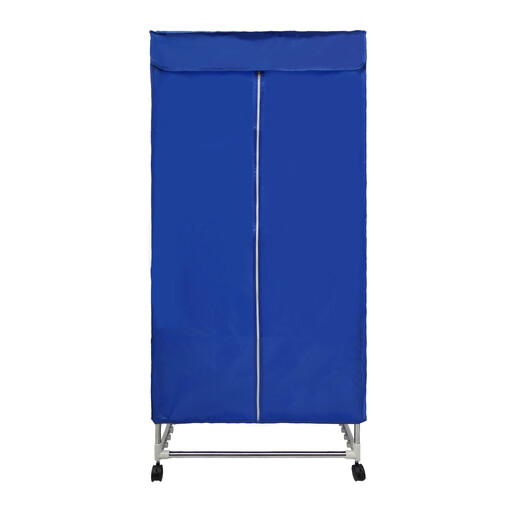 Image unavailable
Worth considering if you’re looking for a foldable drying appliance separate from your washing machine.
The title lists a foldable frame and a timer. It doesn’t replace a washing machine, so you’ll still need a separate way to wash your laundry.
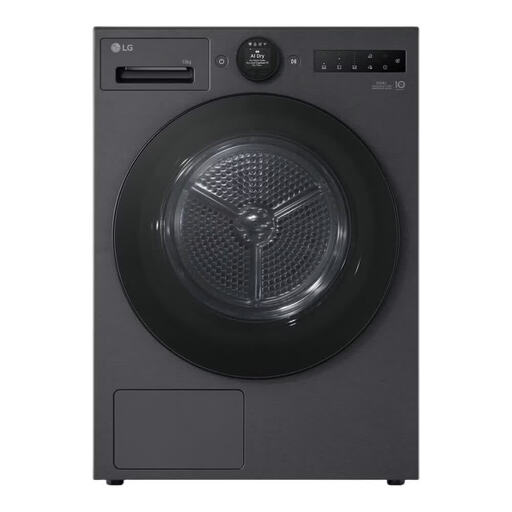 Image unavailable
Worth considering if you have a separate washing machine and are looking for a heat pump tumble dryer.
Stated capacity: 10 kg. Check the space needed for installation and the model’s maintenance instructions.
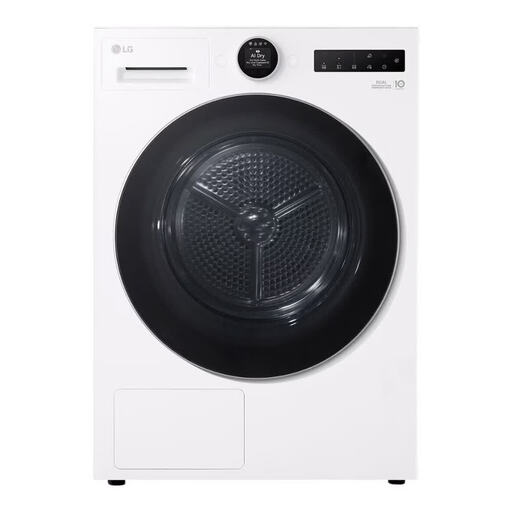 Image unavailable
Worth considering if separate drying suits the way you do your laundry and the stated capacity matches your loads.
Stated capacity: 9 kg. You’ll also need a separate appliance to wash your laundry.
Only if the load is within the drying programme’s capacity too. This is generally lower than the washing capacity, so compare both figures and check the duration of the combined cycle for the model you’re considering.
No. A condenser tumble dryer doesn’t need an external vent: the water is collected in a tank or drained away through a hose. A vented model does need an outlet to the outside, so check the installation requirements in the instructions.
Compare energy consumption for equivalent cycles and check the maintenance tasks listed in the instructions. In France, when a business sells goods to a private customer, the statutory guarantee of conformity applies to new, second-hand and refurbished goods. It is separate from an optional commercial guarantee, as explained by the Ministry of the Economy and Finance.
Washing machines and washer-dryers have used the European A to G scale since March 2021, while the new A to G label for tumble dryers has applied since July 2025, according to the European Commission. Don’t compare an old A+++ rating directly with a new one. In France, the durability index has applied to front-loading and top-loading washing machines since 8 April 2025; it doesn’t apply across all three categories.