Who are these solutions for?
How often you do the laundry, how much space you have and which room you use to dry your clothes all influence your choice, before you even consider an appliance’s features.
Households doing laundry back to back
If your airer often takes over a living space, compare the room needed for a separate tumble dryer with the space you have for drying clothes on an airer. The dryer’s capacity should also suit the size of your usual loads.
People living in smaller homes
If there’s no room for two appliances, a washer-dryer combines washing and drying in the same space. Check its two capacities separately: models shown by Miele France include configurations of 8/5 kg and 9/6 kg.
People who dry clothes on an indoor airer
If you want to keep drying your laundry this way, first check the spin cycle and the room’s ventilation or air extraction. The Q-WASH project published by ADEME highlights the moisture released into the air when clothes are dried indoors.
What should you consider before choosing?
First decide where your laundry can dry and how often you’ll need to dry it. Then compare the capacity, installation requirements and maintenance of appliances that suit your routine.
Spin cycle and airer
Consider this if: you’re happy with the drying time and have a well-ventilated room with enough space for an airer.
The trade-off: your laundry takes up space while it dries and releases moisture into the room, as highlighted by the Q-WASH project published by ADEME.
Separate tumble dryer
Consider this if: you do laundry regularly and have space for a second appliance.
The trade-off: you’ll need to allow for electricity use during drying cycles and clean the filters and, depending on the model, the condenser.
Washer-dryer
Consider this if: you can only fit one appliance or mostly dry smaller loads.
The trade-off: the washed load may exceed the drying capacity. For example, Miele France lists a model that washes 9 kg and dries 6 kg.
| What to consider |
What to check |
How it applies to me |
| Spin cycle and laundry routine |
Check the washing machine’s spin performance on its energy label, then consider how much time you have between loads. ADEME says an effective spin cycle helps laundry dry more quickly indoors. |
Do I start another load before I can take the clothes off the airer? |
| Drying room |
Check the size of the room and its ventilation or air extraction options. According to the Q-WASH project published by ADEME, drying clothes indoors releases moisture into the air. |
I want to avoid leaving damp laundry in a bedroom or living space for a long time. |
| Capacity |
For a washer-dryer, check the maximum washing and drying loads separately. For a separate tumble dryer, compare its stated capacity with your usual loads. |
Do my loads often include towels or bedding that I’d like to dry without splitting the load? |
| Installation |
Measure the available space and check the appliance manual. The European Commission says that vented tumble dryers need an outlet to the outside. Also check how the appliance you choose handles condensate. |
I only have space for one appliance, or I need to choose a tumble dryer that suits the connections available. |
| Energy label and noise |
Compare the energy labels and noise information for appliances with similar capacities and intended uses. ADEME also notes that a washing machine’s label provides information about its spin cycle and noise. |
Some cycles will run at times when noise matters particularly to me. |
| Maintenance |
Check how easy it is to access the filter and follow the instructions for the condenser. Electrolux Support advises cleaning the filter in its tumble dryers after every cycle. |
I want to be able to fit the maintenance required in the manual into my laundry routine. |
| Dehumidifying |
If you keep using an airer, first consider the room and its ventilation. You could look at a dehumidifier as an additional aid, but don’t treat it as a replacement for air extraction. |
I’d prefer to keep using an airer, but I also need to plan how to ventilate the room. |
A few brands to know
These examples highlight features to compare model by model; they don’t necessarily reflect which appliances are available in the selection below.
Bosch
Bosch France lists heat pump tumble dryers, including 8 kg models, for households considering a separate drying appliance.
- The range includes different capacities and product details to help you compare specific models.
- The features of one model don’t represent the whole range, so check the details of the model you’re considering.
Miele
Miele France lists washer-dryers, including models for homes where there isn’t room for two appliances.
- Listed configurations include 8 kg for washing and 5 kg for drying, as well as 9 kg and 6 kg, depending on the model.
- To dry a full wash load without removing any laundry, the washed load must stay within the drying capacity of the model you choose.
Electrolux
Electrolux France Support provides maintenance instructions for its tumble dryers. Check these alongside the manual for each appliance.
- It advises cleaning the filter after every cycle.
- Access to the condenser and the maintenance it requires vary by model.
Appliances for drying laundry indoors
This Joybuy selection includes separate tumble dryers and a washer-dryer. Before comparing these models, check which solution suits the space you have and the amount of laundry you need to dry.
 Image unavailable
Hotpoint CHD84MWBSEE, 8 kg heat pump tumble dryer
A separate tumble dryer to consider if you have a dedicated space and regularly need to dry laundry.
Stated capacity: 8 kg. Stated energy rating: C. Check its dimensions and installation instructions to make sure it suits your space.
View on Joybuy
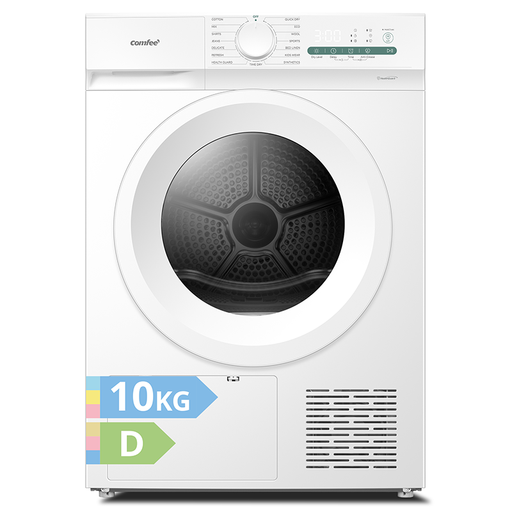 Image unavailable
Comfee CD10EHP05W-HR, 10 kg heat pump tumble dryer
Its stated 10 kg capacity is worth comparing with your usual loads if you dry large amounts of laundry.
Stated energy rating: D. The product name mentions a UV function, Refresh and an LED display; don’t assume the UV function has a health benefit.
View on Joybuy
 Image unavailable
Comfee CD08EHP05W-HR, 8 kg heat pump tumble dryer
Compare this separate 8 kg model with the size of your laundry loads and the space you have for drying.
Stated energy rating: D. The product name mentions a UV function, Refresh and an LED display; the UV function alone isn’t enough to conclude that it offers a health benefit.
View on Joybuy
 Image unavailable
Electrolux EDH1018CD GentleCare, 8 kg condenser tumble dryer
Worth considering if you’re looking for a separate tumble dryer and need to think about how condensate will be managed in its location.
Stated capacity: 8 kg. The product name mentions OptiSense and propane refrigerant; check the manual for installation and maintenance requirements.
View on Joybuy
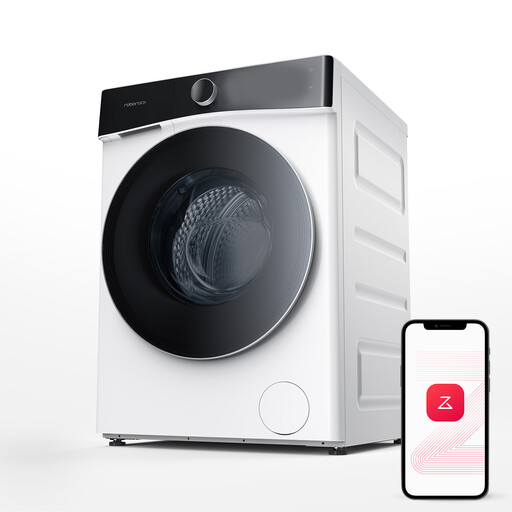 Image unavailable
Roborock Zeo Lite, 10/6 kg washer-dryer
This washer-dryer takes up just one space, but its stated drying capacity of 6 kg is lower than its 10 kg washing capacity.
The product name mentions Zeo-Cycle, app control and LintClear. Check the required connections and maintenance instructions before choosing where to install it.
View on Joybuy
Frequently asked questions
Can you install a vented tumble dryer without an outlet to the outside?
No. According to the European Commission, this type of tumble dryer must vent air outside. If you don’t have a suitable outlet, compare condenser and heat pump models, then check how the model you choose collects or drains water.
What should you compare on a tumble dryer’s energy label?
First compare appliances with similar capacities and intended uses, then look at their energy ratings, consumption information and noise levels. For models sold in France, the National Consumer Institute describes the current energy label as a scale from A to G. Don’t directly compare an old A+++ rating with this scale.
Can a washer-dryer dry the whole load it has washed?
Not always: its drying capacity may be lower than its washing capacity. For example, Miele France lists a model with a 9 kg washing capacity and a 6 kg drying capacity. Check both limits in the product details for the model you’re interested in.
What maintenance does a tumble dryer need?
Follow the manual for your model, especially for the filter and, if applicable, the condenser. Electrolux Support advises cleaning the filter after every cycle; access and other maintenance requirements depend on the appliance.
Does a dehumidifier replace ventilation when drying laundry on an airer?
No. Think of it as a possible addition, not a substitute for ventilation or air extraction. The Q-WASH project published by ADEME highlights the moisture released when drying clothes indoors, so check the room and its ventilation first.


