Households that often dry large loads
If you do several loads of washing in a row, it’s worth considering the tumble dryer’s capacity, the space needed for installation, noise levels and electricity consumption together.


If you regularly need to dry full loads without having a clothes airer take up space in your flat, start by considering a heat pump tumble dryer, provided you can install and maintain it in line with the instructions. If you prefer to keep using a clothes airer, a dehumidifier can help manage the room’s humidity, but it isn’t a substitute for suitable ventilation. For less frequent washing, air-drying is still an option if the room is large enough and well ventilated, or has an extractor fan, as recommended by ADEME.
If you do several loads of washing in a row, it’s worth considering the tumble dryer’s capacity, the space needed for installation, noise levels and electricity consumption together.
For clothes dried flat or on hangers, a dehumidifier can provide extra support while they dry on the airer. However, ADEME recommends taking the room’s ventilation or extraction into account.
A portable appliance, clothes airer and stacked tumble dryer all come with different requirements. Measure your space and, if stacking appliances, check that both models and the stacking kit are compatible, as Bosch advises.
In a flat without a dedicated utility room, first check where your laundry can dry and how moisture will be removed. Then decide whether you do enough washing to justify tumble drying, and check that each appliance will fit your available space and suit your maintenance routine.
| Consideration | What to check | Who it matters to |
|---|---|---|
| Humidity while laundry dries on an airer | Check the room’s ventilation or extraction. For a dehumidifier, compare the stated room coverage with your room size and consider how you’ll empty the tank or set up continuous drainage. | I want to keep using a clothes airer, but my main concern is the moisture released into the room by drying laundry; around 33% of consumers would make this their priority. |
| How long it takes to dry a load | For a tumble dryer, compare its capacity with your usual loads and check which programmes are suitable for your fabrics. | When I have several loads of washing in a row, I want to put the laundry away or use it again without waiting several days; around 27% of consumers would put this need first. |
| Space and installation | Measure the space, access routes and clearances specified in the instructions. If stacking the appliances, check that the models and stacking kit are compatible. | If floor space is limited, I need to know where I can install or store the solution before choosing one; around 20% of consumers would prioritise this. |
| Energy use and maintenance | For comparable tumble dryers, check the kWh per cycle listed on their product information sheets. Also check the instructions for filters, the condenser and water collection. | If I use the appliance often, I want to be able to manage its energy use and maintenance; this would be the priority for around 20% of consumers. |
A dehumidifier removes water from the air in a room, while ventilation also removes pollutants and brings in fresh air, as ADEME explains. The two functions aren’t interchangeable.
Before choosing an appliance, consider the ventilation or extraction available while your laundry dries on an airer, then check the room size and how you’ll empty the tank.
You’ll still need a clothes airer, and the tank may need emptying regularly if continuous drainage isn’t set up.
Two appliances that appear to fit in the same space aren’t necessarily compatible for stacking. Bosch advises checking the models and stacking kit.
Also measure the depth, access routes and clearances, and follow the instructions for the exact models.
You may need to buy a compatible stacking kit as well as the two appliances.
The amount of water extracted depends on the conditions under which it was measured. For example, De’Longhi states 10 L/24 h for the DEP210 at 30 °C and 80% relative humidity; this figure doesn’t predict how it will perform in every flat.
Compare the stated conditions with those in your room, and check the room size, tank and drainage options.
The range includes heat pump tumble dryers, with capacities and features that vary by model.
Some heat pump tumble dryers in the range offer programmes designed for specific fabrics.
Some dehumidifiers in the range can support laundry drying on a clothes airer.
The DEP210 is a dehumidifier to consider if you’ll continue drying laundry on an airer.
These products offer two ways to equip your flat: use a dehumidifier to support drying on a clothes airer, or dry loads in a heat pump tumble dryer. Check the space available and the usage requirements for the model you’re interested in.
 Image unavailable
Worth considering if you’re keeping your clothes airer and want to remove moisture from the room while your laundry dries.
The stated capacity is 25 L/day; the product name indicates a 2.8 L tank and a continuous drainage hose. Compare the conditions used to measure the capacity with those in your room, and make sure the room is suitably ventilated.
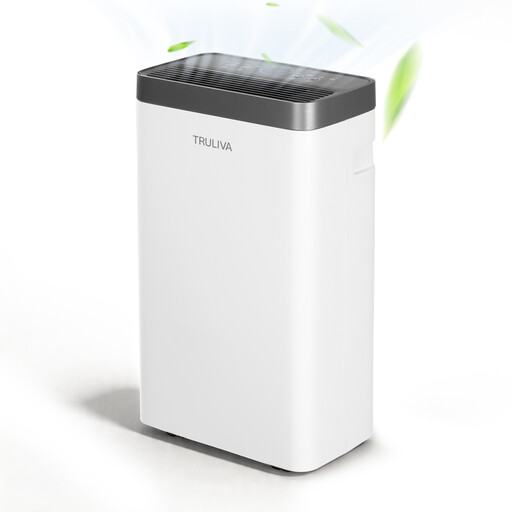 Image unavailable
Another option if you want to keep drying laundry on an airer while using a dehumidifier in the room.
The product name indicates coverage of approximately 32 m² and continuous drainage. Check that the room size and drainage options are suitable; the appliance doesn’t replace ventilation.
 Image unavailable
Worth considering if you regularly dry loads in a drum rather than on a clothes airer.
The product name indicates an 8 kg capacity and energy rating C. Measure the space and check the instructions for clearances, maintenance and water management.
 Image unavailable
Compare it with other tumble dryers if a stated capacity of 8 kg suits your usual loads.
The product name indicates energy rating D and rapid drying. Check the instructions to see which fabrics and loads are suitable for this programme, along with the dimensions and maintenance requirements.
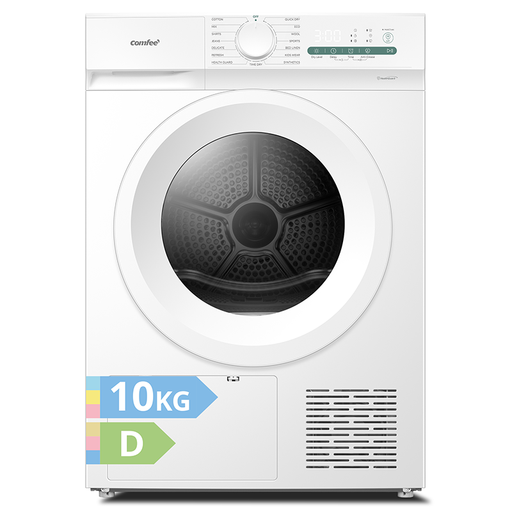 Image unavailable
Worth considering for tumble drying, provided you confirm that its capacity suits your loads.
The model is listed with energy rating D. Confirm its rated capacity before buying: the stated capacities of 10 kg and 8 kg differ. Also check the dimensions and the requirements for the rapid programme.
No. It can remove moisture from the room, but it doesn’t refresh the air like suitable ventilation does. For drying laundry indoors, ADEME recommends using a large, well-ventilated room or one with an extractor fan.
For new tumble dryers placed on the EU market since 1 July 2025, the European Commission states that heat pump technology is required. A conventional condenser dryer you already own or buy second-hand is a different case; check the model number and product information sheet before comparing its energy use.
No. Compatibility depends on both models and the stacking kit. Bosch advises checking the model numbers in the instructions; also measure the space and required clearances before buying.
Follow the maintenance instructions for your model, particularly for the fluff filters and water collection. Bosch says that regularly removing fluff helps maintain energy efficiency and drying performance; a self-cleaning condenser doesn’t remove the need for other recommended maintenance.