If you still dry your laundry on an airer, start by looking at your washing machine’s spin efficiency: it affects how much water is left in your clothes. A washer-dryer combines both functions when you only have room for one appliance, but its drying capacity is lower than its washing capacity. If you regularly dry full loads, consider a separate tumble dryer if you have a suitable space, either on the floor or stacked with a compatible appliance.
Who are these options for?
Households with room for just one appliance
You want to wash and dry your laundry without adding a second appliance on the floor. A washer-dryer meets this need, provided you’re happy to dry a smaller load than the one you washed, as UFC-Que Choisir points out.
Households that often dry full loads
You want to be able to use the washing machine while another load is drying. A separate tumble dryer requires extra space, or you’ll need to check that both appliances and the stacking kit are compatible.
People who keep an indoor clothes airer
You don’t necessarily want to add a drying appliance. Spin efficiency then becomes an important factor when choosing a washing machine: ADEME recommends choosing class A to make indoor drying easier.
How do you compare the appliances?
Your choice depends first on how you dry your laundry and how much space you have. A suitable spin cycle gets clothes ready for the airer, a washer-dryer takes up just one space, while a separate tumble dryer lets you run both appliances independently.
Washing machine and airer
Consider this if: you plan to keep drying clothes on an airer and choose a washing machine with a spin cycle suited to this use.
The trade-off: spinning removes water, but it doesn’t replace drying your laundry.
Washer-dryer
Consider this if: you only have space for one appliance and want to combine washing and drying.
The trade-off: the drying load is smaller than the washing load; UFC-Que Choisir also highlights the length of drying programmes.
Separate tumble dryer
Consider this if: you dry clothes frequently and want to be able to start another wash while a load is drying.
The trade-off: you’ll need room for a second appliance, even if they can be stacked.
| Factor |
What to check |
Who it matters to |
| Available space |
Measure the depth and door clearance; compare the washing and drying capacities of a two-in-one appliance. |
When there’s room for only one appliance, combining washing and drying matters more than processing a whole load in one go. Around 33% of consumers would rank this space saving as their top priority. |
| Frequent loads |
Compare the tumble dryer’s capacity with your usual loads and check the space required or whether the appliances can be stacked. |
If you do laundry regularly, being able to dry one load while starting another makes it easier to stay organised. This flexibility would be the top priority for around 42% of consumers. |
| Air-drying on a clothes airer |
Check the washing machine’s spin efficiency class and choose a capacity suited to the laundry you usually wash. |
If I always dry clothes indoors, I mainly want them to come out of the washing machine less wet, without installing a tumble dryer. This would be the main need for roughly 25% of consumers. |
Mistakes to avoid
-
Looking only at a washer-dryer’s washing capacity
A load that fits in the drum for washing may exceed the maximum drying capacity. UFC-Que Choisir highlights this difference between the two functions.
Compare the stated capacities in kg separately and, if necessary, plan to remove some of the laundry before starting the drying cycle.
-
Choosing a vented tumble dryer without an external outlet
According to Whirlpool’s description, this type of appliance directs hot air outside. A power socket in the room doesn’t replace an external vent.
Without a suitable external duct, consider a condenser or heat pump tumble dryer, and follow the installation requirements in the manual for your chosen model.
-
Assuming any two appliances can be stacked
Compatibility isn’t determined by width alone: it also depends on the model numbers and the dimensions supported by the kit.
Check the model numbers of both appliances and the kit’s compatibility list before planning a stacked installation.
You may need a compatible stacking kit.
-
Comparing an old A+++ rating with the current label
The European Commission states that, since 1 July 2025, the label for the tumble dryers concerned has used a scale from A to G.
When comparing new appliances, check their current labels and the product information for the exact model rather than comparing letters directly across the two scales.
Brands to consider
Bosch
A brand to consider if you’re looking for a separate heat pump tumble dryer.
- Bosch describes its ActiveAir technology as a closed-circuit drying system.
- Compare the label, capacity, dimensions and manual for the specific model; a feature of the ActiveAir range doesn’t apply to every Bosch appliance.
Electrolux
A brand to consider for a washer-dryer or appliances that can be stacked with a compatible kit.
- The Electrolux EW8W3816BI integrated washer-dryer is listed with an 8 kg washing capacity and a 4 kg drying capacity. These separate figures are useful when working out the size of your loads.
- The Electrolux E1WYHSK2 kit is listed for certain front-loading Electrolux appliances with a depth of 52 to 67 cm; check the model numbers before stacking.
Whirlpool
A brand whose guidance can help you distinguish between tumble dryer venting types.
- According to Whirlpool, a condenser tumble dryer collects condensed water without needing an external duct, unlike a vented model.
- Check the appliance manual for guidance on water management and the clearance needed for installation.
Appliances for these needs
These models suit either choosing a washer-dryer to combine two functions, or choosing a washing machine when you plan to continue drying clothes on an airer. Before choosing a two-in-one appliance, compare its drying capacity with the size of your usual loads.
 Image unavailable
Samsung WD11DG6B85BEU3, 11/6 kg washer-dryer
Combines washing and drying in a single appliance. Its stated capacity is 11 kg for washing and 6 kg for drying, so a full washing load will need to be reduced before drying.
Check the dimensions, door clearance and combined-cycle information to make sure the appliance suits your space and needs.
View on Joybuy
 Image unavailable
Samsung WD10HG6U34BEU3, 10/6 kg washer-dryer
Combines both functions in a single appliance. Its stated capacities are 10 kg for washing and 6 kg for drying; adjust the load when running both cycles one after the other.
Check the label and product information for the exact model to compare the duration and energy consumption of the combined cycle, then make sure you have enough space for installation.
View on Joybuy
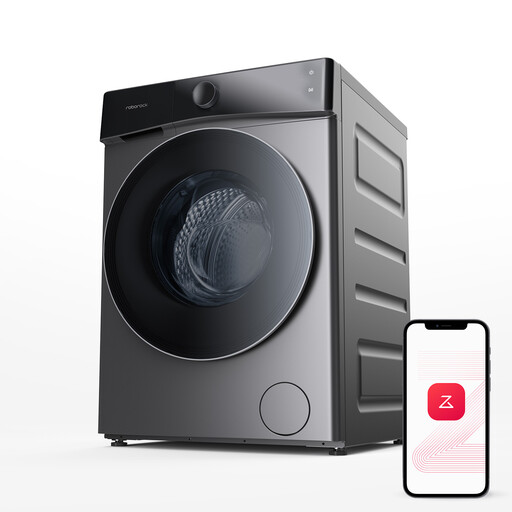 Image unavailable
Roborock Zeo Lite Gray, 10/6 kg washer-dryer
Worth considering if you want to wash and dry with a single appliance. The stated capacities are 10 kg for washing and 6 kg for drying; make sure any load you plan to dry stays within the latter limit.
Check the dimensions, combined-cycle duration and energy consumption figures for the exact model before deciding where to install it.
View on Joybuy
 Image unavailable
Hisense WF5I8043BWF, 8 kg washing machine, 1,400 rpm
For washing laundry before drying it on an airer, without adding a mechanical drying function. The product title lists an 8 kg capacity and a spin speed of 1,400 rpm.
Don’t infer the spin efficiency class from the speed alone: check the label for the exact model. ADEME recommends choosing class A when drying clothes indoors.
View on Joybuy
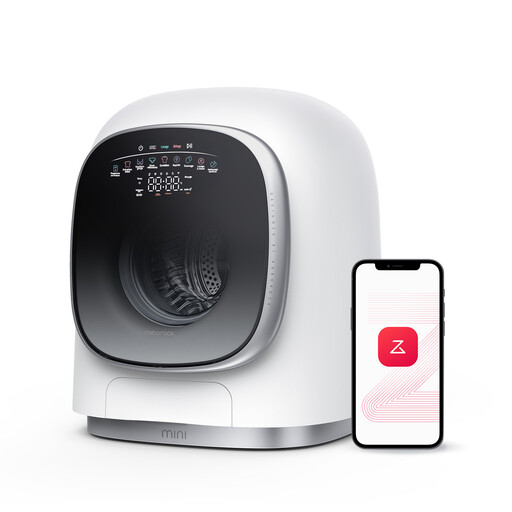 Image unavailable
Roborock Marshmallow Zeo Mini White, 1/0.5 kg washer-dryer
Only worth considering for very small loads: the stated capacities are 1 kg for washing and 0.5 kg for drying, well below the size of a typical laundry load.
Check the dimensions, cycle times and energy consumption figures for the exact model to decide whether it’s right for your home.
View on Joybuy
Frequently asked questions
Can a washer-dryer dry the entire load it has just washed?
Not always: its drying capacity is usually lower than its washing capacity. Check both figures in kg before planning to run the cycles one after the other. For example, the Electrolux EW8W3816BI is listed with an 8 kg washing capacity and a 4 kg drying capacity.
Does a tumble dryer in a flat need an external outlet?
It depends on how it works: a vented model directs air outside, while a condenser model doesn’t need an external duct, according to Whirlpool. In either case, follow the manual for your specific model when it comes to installation, clearance and water management.
Can you put any tumble dryer on top of a washing machine?
No: check that a stacking kit is listed as compatible with both model numbers. The Electrolux E1WYHSK2 kit is for front-loading Electrolux appliances with a depth of 52 to 67 cm; this range doesn’t automatically apply to other kits or brands.
How do you compare the labels on two new tumble dryers?
Compare the labels and product information for the specific models using the A to G scale that has applied to the tumble dryers concerned since 1 July 2025, as indicated by the European Commission. The technology name alone isn’t enough to compare their energy consumption figures.


