Households that often dry several loads
If you can fit a dedicated appliance, compare its drying capacity, energy consumption figures and installation requirements. You can then keep using the washing machine while the tumble dryer is running.


If you often dry large loads and have a well-ventilated space, a dedicated tumble dryer lets you keep using the washing machine while the laundry dries. If you only have space for one appliance, a washer-dryer means you won’t need to transfer your laundry, but its drying capacity is lower than its washing capacity. A portable dehumidifier can complement a clothes airer: you’ll still need to hang out the laundry, ventilate the room and collect or drain the water.
How often you do laundry and how much space you have will help you decide, but good ventilation matters whichever method you choose.
If you can fit a dedicated appliance, compare its drying capacity, energy consumption figures and installation requirements. You can then keep using the washing machine while the tumble dryer is running.
A washer-dryer combines both functions, so there’s no need to transfer the laundry. However, plan your loads around its drying capacity, which is generally lower than its washing capacity, as UFC-Que Choisir points out.
A dehumidifier with a laundry mode can help when drying clothes on an airer. You’ll still need to ventilate the room and decide how to collect or drain the extracted water.
First decide whether you have room for a separate appliance, then check the amount of laundry it can actually dry and any requirements for the room.
Worth considering if: you regularly dry large loads and want to keep the washing machine free.
You’ll need: a separate space with enough ventilation, in line with the model’s instructions.
Worth considering if: you only have space for one appliance and want to wash and dry without moving the laundry.
You’ll need: to account for the fact that, according to UFC-Que Choisir, drying capacity is lower than washing capacity. You may need to split a large load.
Worth considering if: you already use a clothes airer and want a portable appliance to help with drying.
You’ll need: to hang out the laundry, ventilate the room and empty the tank or arrange continuous drainage.
| Criteria | What to check | What you need |
|---|---|---|
| Ventilation | Check how well the room is actually ventilated, then look at the clearances and installation requirements in the instructions. Anses recommends drying laundry in a well-ventilated room when it can’t be dried outside; Electrolux also recommends a ventilated room for the tumble dryer covered by its installation advice. | I need to be able to dry laundry without putting it in a closed room where moisture can build up. |
| Space and load size | Measure the space, allowing for the required clearances. Compare drying capacity in kg, which is separate from washing capacity on a combined machine. | If I only have space for one appliance, I want to know how much laundry it can actually dry after washing. |
| Cycle planning | Check the duration of a cycle suitable for your load. With a washer-dryer, see whether the washed load can be dried without splitting it; with a dehumidifier, allow for the airer and plan how to manage the tank. | When I have several loads to do, I need to know how long each appliance will be in use. |
| Energy and water use | Compare the stated consumption figures for equivalent cycles. For a washer-dryer, distinguish between the Eco wash programme and the full wash-and-dry cycle, and check the water-use figures for the latter too. | I want to compare how much the appliances use without assuming that a more compact option will necessarily use less. |
| Spin efficiency | Check the washing machine’s spin efficiency and follow the care instructions for your fabrics. ADEME recommends considering spin efficiency to help laundry dry faster, both indoors and in a tumble dryer. | If I dry my laundry indoors, I want to reduce the amount of water that needs to be removed after washing. |
A washer-dryer may be able to wash more laundry than it can dry in one go. UFC-Que Choisir highlights the difference between the two capacities.
Compare both figures for the model you’re considering and plan your loads around its drying capacity. Also check the figures for the full wash-and-dry cycle, which differ from those for an Eco wash.
Moisture can condense on windows or walls if the installation conditions and ventilation aren’t suitable. Electrolux recommends a sufficiently spacious, well-ventilated room.
Before buying, check the instructions for your chosen model against the space you have in mind, including ventilation, clearances and operating temperature range.
The laundry still needs to be hung on an airer, and the extracted water must be collected. A laundry mode doesn’t remove the need for these steps or for ventilating the room.
Check the recommended room size, the tank capacity and whether you can connect continuous drainage where you plan to use the appliance.
Laundry that hasn’t been spun as effectively contains more water that needs to be removed. ADEME recommends considering spin efficiency when drying laundry indoors or in a tumble dryer.
Check the washing machine’s spin efficiency rating and choose a spin speed that’s suitable for the care instructions on your fabrics.
These examples cover three types of appliance; the features of one model won’t necessarily apply to the brand’s entire range.
The brand offers heat-pump tumble dryers, among other appliances. Their product specifications let you check capacity and installation requirements.
The Beko B3D58544UW washer-dryer is a good example of the trade-off between having one appliance and having two separate capacities.
Rowenta’s portable DH5260F0 dehumidifier has a laundry mode and is designed to be used alongside a clothes airer.
This selection includes washer-dryers for a single space, dedicated tumble dryers and a dehumidifier to use with a clothes airer. Check each appliance against the requirements of your room rather than treating these three options as interchangeable.
 Image unavailable
This model combines washing and drying in one appliance. Its stated capacity is 11 kg for washing and 6 kg for drying, so plan loads around the latter figure and check the installation requirements in the instructions.
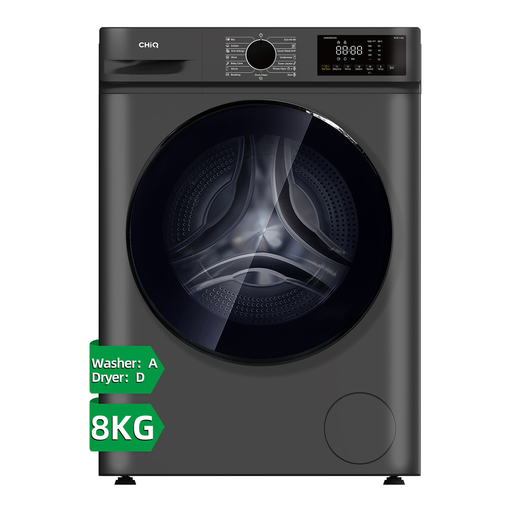 Image unavailable
Both functions are combined in one appliance, with a stated capacity of 8 kg for washing and 5 kg for drying. Before setting aside space for it, confirm the model’s exact dimensions. Also check the duration and energy and water use of the wash-and-dry cycle.
 Image unavailable
Its stated 8 kg capacity is for drying in a dedicated appliance. The model features OptiSense. Compare its energy consumption figures using the same cycle basis as other models, and check the ventilation and clearance requirements in the instructions.
 Image unavailable
This dedicated tumble dryer has a stated capacity of 8 kg and an energy rating of C. To see if it’s right for your flat, compare its stated energy consumption with other models on the same basis, then check the dimensions and installation instructions.
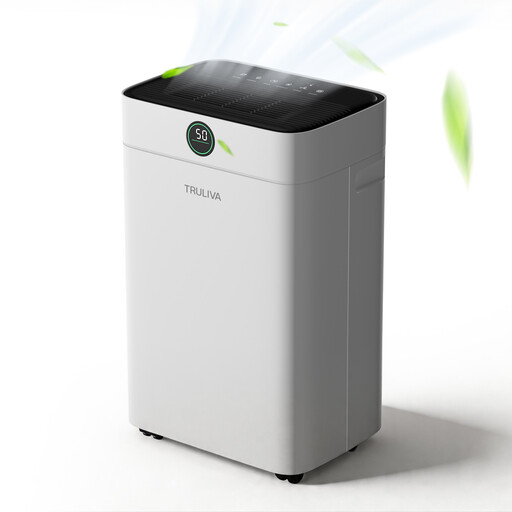 Image unavailable
This model can help when using a clothes airer; it doesn’t dry laundry in a drum. Its product title states an extraction capacity of 25 L per day, but that doesn’t guarantee the same results in your room. The 2.8 L tank and drainage hose give you two ways to manage the water. Check the recommended room size and conditions of use.
Don’t assume a room without a window is suitable: you need to check that it’s adequately ventilated. Electrolux recommends a sufficiently spacious, well-ventilated room. Check the instructions for your chosen tumble dryer and make sure there’s enough clearance before installing it.
Yes, if the washed load is larger than the model’s drying capacity. UFC-Que Choisir points out that drying capacity is lower than washing capacity. For example, the Beko B3D58544UW is listed at 8 kg for washing and 5 kg for drying.
No. In this case, you use it with laundry hung on an airer; it doesn’t tumble-dry clothes. Make sure the room is ventilated, as Anses recommends for laundry dried indoors, and check how to empty the tank or connect the model’s drainage hose.
Compare stated figures for equivalent reference cycles, including consumption in kWh per 100 cycles where this appears on the energy label. For a washer-dryer, check the figures for the Eco wash and the complete wash-and-dry cycle separately.