Homes with space for just one appliance
If washing and drying need to fit into a single floor space, compare the dimensions of a washer-dryer and its washing and drying capacities, which may differ.


If you have room for two appliances and often dry large loads, a separate tumble dryer lets you choose its capacity independently of your washing machine’s. If you only have space for one appliance, compare a washer-dryer’s drying capacity and full-cycle duration. If you dry laundry on an airer indoors, check the spin efficiency and make sure the room is well ventilated.
If washing and drying need to fit into a single floor space, compare the dimensions of a washer-dryer and its washing and drying capacities, which may differ.
If you wash load after load and can install a second appliance or a compatible stacking kit, consider the tumble dryer’s capacity and how long its cycles take.
If you plan to keep drying laundry on an airer, compare the spin efficiency class and check that the room you choose is suitable and well ventilated.
Start by measuring the space and checking the ventilation and connection options. Then compare the actual drying capacities and energy consumption figures on a like-for-like basis.
| Criteria | What to check | Who it matters most to |
|---|---|---|
| Available space | Measure the width and depth, allowing for connections, as well as the space needed to open the appliance. For a stacked setup, check that the appliances and stacking kit are compatible. | If you only have one space and need to choose between a washer-dryer and a stacked setup, the overall footprint may be the deciding factor. Consumers who make this their priority are likely to account for around 33% of the people concerned. |
| Laundry frequency and load size | Compare washing and drying capacities, as well as the full-cycle duration, with your household’s usual load. | If you do load after load, the amount you can dry without splitting the load is especially important. Consumers who prioritise laundry throughput are likely to account for around 27% of the people concerned. |
| Moisture from indoor drying | If you dry laundry indoors, choose a large, well-ventilated room or one with suitable extraction. For your washing machine, compare the spin efficiency class rather than looking only at the maximum spin speed. | If you plan to keep drying laundry indoors, ventilation and the moisture released by your laundry may influence your choice. Consumers who put this concern first are likely to account for around 20% of the people concerned. ADEME recommends using a large, well-ventilated room or one fitted with an extraction vent. |
| Running costs and maintenance | Compare the stated consumption figures for equivalent reference cycles and check the manual for filter maintenance and condensate disposal. | If you expect to use the appliance frequently, energy consumption and maintenance may affect your decision. Consumers who prioritise these running costs and practical considerations are likely to account for around 20% of the people concerned. |
A washer-dryer may have different washing and drying capacities. A load that’s suitable for washing could exceed the amount the appliance can dry.
Compare both figures for the exact model and size any combined cycle according to its drying capacity.
Vented models need a suitable air outlet to the outside. Dimensions and stacking compatibility also depend on the appliances and kit you plan to use.
Measure the space, identify the type of appliance and check the manuals for the tumble dryer, washing machine and stacking kit before choosing an installation.
Spinning removes some of the water left in laundry, but it doesn’t replace drying. Drying laundry indoors releases moisture and also depends on the conditions in the room.
Compare the spin efficiency class and make sure you have a suitable space for drying laundry indoors. ADEME recommends using a large, well-ventilated room or one fitted with an extraction vent.
The European Commission says the revised A to G energy label for tumble dryers has applied since 1 July 2025. An old rating cannot be compared directly with a new one.
Compare appliance energy consumption using the same cycle basis and take your usage frequency into account. Don’t transfer a figure from one cycle to another.
A useful benchmark for comparing separate tumble dryers and considering a stacked setup, subject to compatibility.
A useful benchmark when considering a washer-dryer if space is limited.
Another benchmark among separate heat pump tumble dryers.
An option to consider if you want to keep your washing machine and dry laundry indoors on an airer.
Another benchmark for comparing washer-dryer capacities.
This selection brings together washer-dryers and heat pump tumble dryers, so you can compare combined appliances with dedicated dryers.
 Image unavailable
Worth considering if you want to combine washing and drying in one appliance.
Washing capacity: 11 kg; drying capacity: 6 kg. The load for a combined cycle must fit within the drying capacity.
Class A stated in the product name.
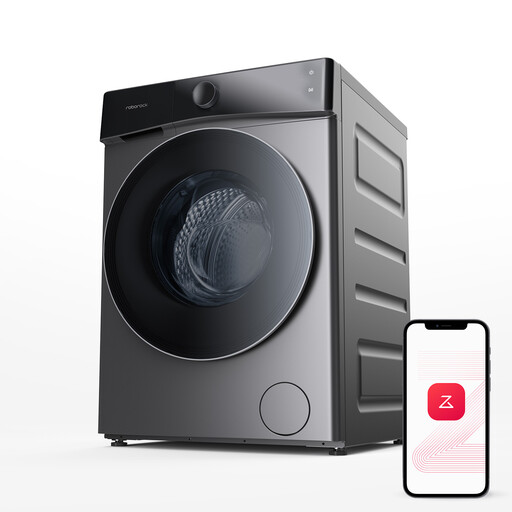 Image unavailable
Worth considering if you’re looking for an appliance that combines washing and drying in one space.
Washing capacity: 10 kg; drying capacity: 6 kg. Size combined cycles according to the drying capacity.
The product name lists 27 wash programmes and app control.
 Image unavailable
Worth considering if you want a dedicated drying appliance and have space separate from your washing machine.
Stated capacity: 8 kg; energy class C stated in the product name.
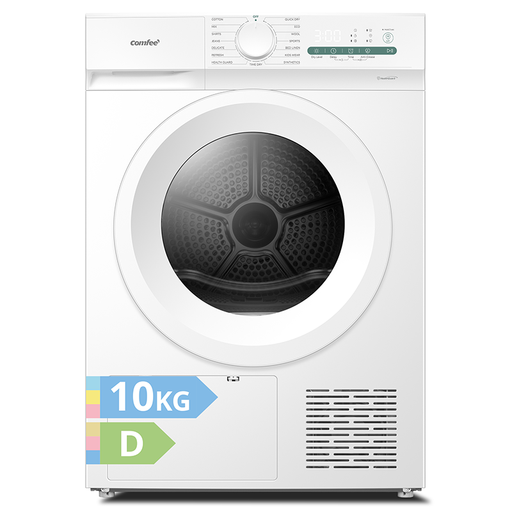 Image unavailable
Worth considering if you want a separate tumble dryer with a stated capacity of 10 kg.
Energy class D stated in the product name.
 Image unavailable
Worth considering if you’re looking for a dedicated drying appliance and the stated 8 kg capacity suits your loads.
Energy class D stated in the product name.
It depends on the type of appliance: a vented model needs a suitable air outlet to the outside, unlike a condenser model. Even so, check the room’s ventilation, the available space and the instructions in the manual.
Yes, as long as the load doesn’t exceed the model’s drying capacity. Compare both capacities: an appliance listed with a 9 kg washing capacity and a 6 kg drying capacity can’t dry 9 kg of laundry in a single combined cycle.
Choose a large, well-ventilated room or one with a mechanical ventilation extraction vent (VMC). This is the recommendation in the Q-WASH study presented by ADEME. ADEME also recommends airing your home daily, although this doesn’t guarantee fast drying in every room.
Not necessarily: condensed water can be collected in a tank. Direct drainage depends on the model and compatible kit. Bosch describes this option for some appliances, but it isn’t available on all tumble dryers.
Since 1 July 2025, the revised energy label for tumble dryers has used an A to G scale, according to the European Commission. Compare stated energy consumption on a like-for-like basis and don’t transfer an old rating directly to the new scale.