Brands to consider
These brands offer specific models to compare; their features don’t necessarily apply to their entire ranges.
Bosch
Worth considering if you’re looking for a heat pump tumble dryer and capacity and dimensions are key to your choice.
- Bosch lists a capacity of 8.0 kg and dimensions of 842 × 598 × 613 mm for the WTH8520SFR.
- These measurements are for this model. Also check the noise level, access and programme conditions for the model you choose.
Beko
Worth considering if you’re comparing the programmes and maintenance requirements of heat pump tumble dryers.
- Beko lists a double lint filter, 15 programmes and a delay end option of 0 to 24 hours for the D3H18C01W.
- The energy savings the brand associates with heat pump technology don’t remove the need to compare the energy label information for the model you choose.
Miele
Worth considering if the drying features available for different fabrics matter to you.
- Miele describes the TCA520WP 8kg Active as an 8 kg heat pump tumble dryer with DryProtect and FragranceDos features.
- Miele’s stated 20-year lifespan for this model is a claim made by the brand, not a guarantee of how long every appliance will last.
De’Longhi
Worth considering if you want to use a dehumidifier with an airer and compare drainage options.
- De’Longhi lists a laundry mode, humidistat and continuous drainage for the DEXD216RF.
- Its stated extraction rate of 16 l/24 h is based on 30 °C and 80% relative humidity; it doesn’t guarantee the same result in a different room.
Trotec
Worth considering if you’re comparing the stated room size and extraction capacity of dehumidifiers.
- Trotec states that the TTK 53 E is suitable for rooms up to 31 m² or 78 m³, with a stated extraction rate of 16 l/24 h.
- Check the conditions behind these figures, as well as the noise level, tank and drainage options for the model you’re considering.
Joybuy products by drying method
For use alongside an airer, the dehumidifiers below offer different setups to compare based on your room and how you’ll manage the water. Tumble dryers are more suited to drying clothes in a dedicated appliance. Whichever you choose, check the installation requirements first.
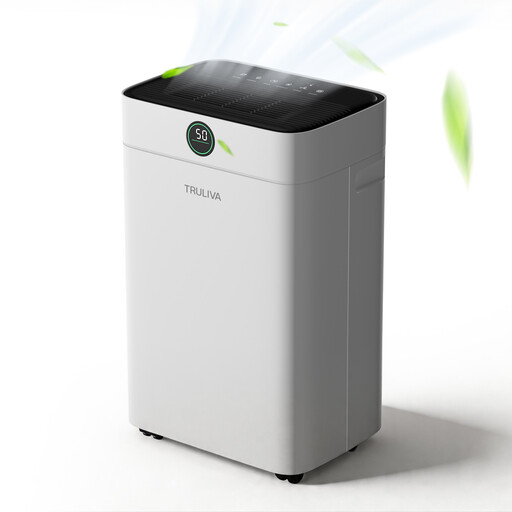 Image unavailable
TRULIVA dehumidifier, 25 L/day, 2.8 L tank
Worth considering for drying laundry on an airer, if the room and conditions are suitable.
The product name lists a 2.8 L tank, automatic defrost, R290 refrigerant and a continuous drainage hose. Compare the stated extraction capacity with its test conditions, and check the noise level and suitable room size.
View on Joybuy
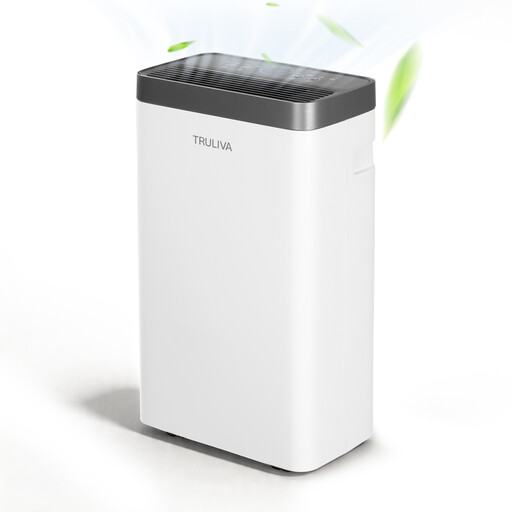 Image unavailable
TRULIVA AP10-2012EE dehumidifier, approx. 32 m²
Worth comparing for indoor clothes drying if you want a timer and the option of continuous drainage.
The product name mentions a 24-hour timer, automatic defrost and a laundry-drying function. Check that the stated area of approximately 32 m² suits your room, and also check the noise level during operation.
View on Joybuy
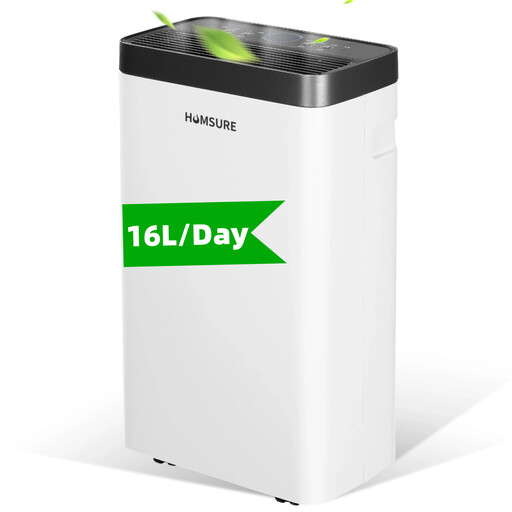 Image unavailable
HUMSURE dehumidifier, 16 L/day, 1.4 L tank
Worth considering for use with an airer in a room that’s within the appliance’s stated size range.
The product name lists a 25 m² coverage area, a 1.4 L tank, a 24-hour timer, automatic defrost and automatic shut-off. Before choosing, confirm the available modes and the conditions behind the stated extraction capacity.
View on Joybuy
 Image unavailable
Hotpoint CHD84MWBSEE heat pump tumble dryer, 8 kg
Worth considering if you’d rather dry loads in a dedicated appliance than have an airer taking up space in the room.
The product name lists an 8 kg capacity and energy rating C. Measure the available space and access route, then check the energy label and how condensate is drained away.
View on Joybuy
 Image unavailable
Comfee CD08EHP05W-HR heat pump tumble dryer, 8 kg
Worth comparing for regular loads if an 8 kg capacity suits the laundry you usually do.
The product name lists energy rating D, a refresh programme and an LED display. Check the dimensions, noise level, condensate management and energy consumption shown on the energy label.
View on Joybuy
Frequently asked questions
Can you dry laundry in any room?
No. For indoor air-drying, ADEME recommends a large, well-ventilated room or one with a mechanical ventilation extractor vent, preferably a humidity-sensitive one. In a small, poorly ventilated room, reconsider where or how you dry your laundry.
Can a dehumidifier replace a mechanical ventilation system?
No. A dehumidifier can be used alongside an airer, but it doesn’t replace ventilation in your home. ADEME recommends keeping the mechanical ventilation system running and leaving the air inlets and extractor vents clear.
How do you compare two dehumidifiers for drying laundry?
Compare their stated extraction rates only after taking the temperature and humidity conditions into account, then check the noise level, stated room size, tank and drainage. For example, De’Longhi states 16 l/24 h for the DEXD216RF at 30 °C and 80% relative humidity. This figure doesn’t predict the result in a different room.
What should you look for in a heat pump tumble dryer?
First, check that its capacity and dimensions suit your loads and the space available. For tumble dryers covered by European Union rules, check the energy label, particularly the energy consumption information, rather than relying on the words “heat pump” alone.
Does an extended warranty replace the legal guarantee in France?
No. If you’re a private individual buying an appliance from a professional seller in France, an optional commercial warranty is in addition to the legal guarantees and doesn’t replace them. The French Ministry of the Economy states that you have two years to request that the legal guarantee of conformity be applied. Check the terms of any extended warranty separately.


