Tenants drying laundry in a damp flat
If you mainly dry your laundry on an airer, damp and the space it takes up can make this a challenge. Choosing an appliance is a separate issue from airing your home and its ventilation, as ADEME highlights.


If your priority is to dry laundry without leaving it hanging around your home, consider a heat pump tumble dryer. If you need to keep using an airer and want to reduce the humidity in the room, a dehumidifier may be a better option. An airer needs a room with enough space and good ventilation, while a faster spin can also help. None of these appliances replaces airing your home or having a properly working ventilation system, as ADEME points out.
If you mainly dry your laundry on an airer, damp and the space it takes up can make this a challenge. Choosing an appliance is a separate issue from airing your home and its ventilation, as ADEME highlights.
Your main need is to dry a load of laundry straight away. Before choosing a tumble dryer, check its capacity, where it will go, its stated noise level and how the model handles condensed water.
In a compact home or where space is limited, the appliance’s dimensions are only part of the picture. Allow for the door to open, the clearances specified in the instructions and access to the tank or drain. For washing machines, installation and load distribution also affect vibration, according to Electrolux.
First decide whether you want to dry laundry directly or keep using an airer while managing the humidity in the room. A faster spin is worth considering as an additional measure, particularly if you’re already replacing your washing machine. In every case, airing your home and having a properly working ventilation system are still essential.
Consider this if: you want to dry a load without leaving it on an airer for a long time and have a suitable place for the appliance.
Bear in mind: it’s a fixed appliance that uses electricity, and you’ll need to manage condensed water according to the model you choose.
Consider this if: you’ll keep drying laundry on an airer and reducing the room’s humidity is your priority.
Bear in mind: you’ll need to empty the tank or drain the water. The stated capacity depends on the temperature and humidity conditions.
Consider this if: you can set aside a large, well-ventilated room for drying laundry, or use a room with mechanical ventilation extraction, in line with ADEME’s advice.
Bear in mind: you’ll need space while your laundry dries, and an airer doesn’t remove the moisture released into the room.
| What matters to you | What to check | Who it may suit |
|---|---|---|
| Drying laundry directly | Capacity to suit your usual loads; the tumble dryer’s dimensions, stated noise level and condensate management. | If I no longer want to leave a wet load on an airer, drying laundry directly matters more than treating the air in the room. Around 31% of consumers would prioritise this need. |
| Humidity while laundry dries | Extraction capacity in L/24 h and the conditions used to measure it; tank or continuous drainage. | I need to keep using my airer, but the room feels damp while the laundry dries. This would be the main concern for around 31% of consumers. |
| Space and noise | Dimensions and clearances specified in the instructions; the stated noise level for the mode you’ll use. | If space is limited or the appliance will be near a room in use, I’d prioritise a solution that fits and makes an acceptable amount of noise at the times I need it. Around 23% of consumers would put these constraints first. |
| Spinning before drying | Spin speeds allowed for different fabrics and programmes; washing machine stability during the spin cycle. | If I’m already replacing my washing machine, I want to remove more water from my laundry before drying it. Around 15% of consumers would prioritise this option. |
Removing water from the air in a room doesn’t bring in fresh air. ADEME distinguishes this from ventilation, which continuously removes moisture and pollutants.
Keep airing your home and make sure its ventilation is working properly. Then choose drying or dehumidifying equipment to suit your needs.
A dehumidifier’s extraction capacity depends on the temperature and humidity conditions used for the measurement. A tumble dryer’s figures describe a different function.
Compare dehumidifiers using comparable measurement conditions, and compare tumble dryers using their energy labels and product information sheets. Choose between the two types of appliance based on the problem you need to solve.
You’ll need easy access to the tank, and any continuous drainage system must be installed correctly. De’Longhi says that a raised or kinked hose can prevent continuous drainage on the dehumidifier concerned.
Read the instructions for the model you choose and check the route for any hose, as well as access to the tank and filter.
Emptying the tank by hand and cleaning the filter take time. Continuous drainage may require a compatible hose and installation.
The French National Consumer Institute links faster spinning with shorter drying times, but Electrolux points out that a washing machine may vibrate during the spin cycle if it’s not level, is overloaded or has an unbalanced load.
Check which settings are suitable for your fabrics and programmes, then make sure the machine is installed correctly and loads are distributed evenly.
Worth considering if you’re looking for a heat pump tumble dryer and want to check the installation requirements for each model.
Dehumidifiers to consider if water management and humidity settings matter while your laundry is drying.
Folding airers to consider if you have a suitable room for drying laundry but need to make the most of the space available.
Washing machines to consider if you’re already planning a replacement and a faster spin is part of your drying routine.
These models suit two different approaches: dry laundry directly with a heat pump tumble dryer, or keep using an airer and use a dehumidifier to manage the room’s air. Before ordering, check where each model will go and how its water needs to be managed.
 Image unavailable
Worth considering if you’ll keep drying laundry on an airer and want to manage the room’s humidity.
The product description lists 25 L/day, a 2.8 L tank and a continuous drainage hose. The stated extraction rate is based on 95 °F and 90% relative humidity. Check the measurement conditions before comparing it with other models.
Plan the hose route and leave enough space around the appliance. This dehumidifier doesn’t replace airing your home or having a properly working ventilation system.
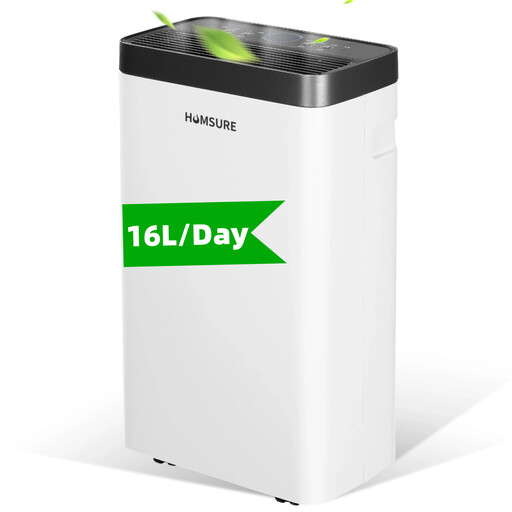 Image unavailable
An option to consider if you want to reduce the room’s humidity while your laundry dries on an airer.
The product description lists extraction of up to 16 L/day, a 24-hour timer and automatic shut-off. The extraction figure is based on 86 °F and 90% relative humidity.
If noise matters to you, check the noise level for the mode you’ll use. Before installation, also check the space required, access to the tank and drainage options. The appliance doesn’t replace ventilation.
 Image unavailable
Worth considering if you want to dry your laundry directly rather than leaving it on an airer.
The product description lists an 8 kg capacity and a C energy rating. To compare energy use, check the label and product information sheet for the exact model rather than relying on the rating alone.
Measure the space and check the instructions for clearances and condensed water management. A tumble dryer doesn’t replace a properly working ventilation system.
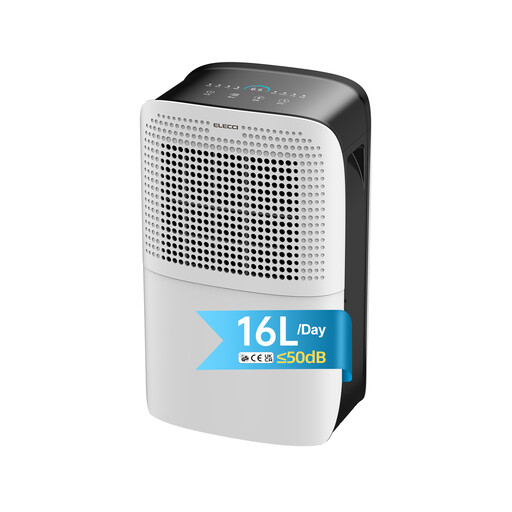 Image unavailable
Worth considering if you’ll keep using an airer and want to drain the collected water without relying solely on emptying the tank.
The product description lists 16 L/day, a 3.1 L tank, a drain hose and a 24-hour timer. Check the conditions for the stated capacity before comparing it with another dehumidifier.
Check the noise level, dimensions, hose route and access to the tank for your chosen location. Keep airing your home and using its ventilation system.
 Image unavailable
Another direct-drying option to consider if you have space for a tumble dryer.
The product description lists an 8 kg capacity and a D energy rating. Check the product information sheet and label for the model to compare its energy figures with those of other tumble dryers.
Before buying, check the dimensions, noise level, installation clearances and water management. The appliance doesn’t replace airing your home or having a properly working ventilation system.
No. A dehumidifier removes moisture from the air in a room, but it doesn’t replace fresh air. According to ADEME, mechanical ventilation continuously removes moisture and pollutants. You should also continue to air your home.
If possible, put it in a large, well-ventilated room or one with a mechanical ventilation extract vent, in line with the advice shared by ADEME. A larger airer won’t make up for inadequate ventilation.
It depends on the model and how it’s installed. A tank needs emptying, while a hose for drainage must be fitted correctly. The Bosch instructions for the WQG2450SFR tumble dryer cover water drainage. For the DD230P dehumidifier, De’Longhi notes that a raised or kinked hose can interfere with continuous drainage.
Check the L/24 h figure alongside the temperature and humidity conditions it applies to. On its own, it doesn’t tell you how much water the appliance will collect in your home. De’Longhi notes, for example, that room temperature and the condition of the filter can affect the amount of water collected.
For the household tumble dryers covered by the rules in the European Union, check the revised A to G energy label and the information sheet for the exact model. According to the European Commission Representation in France, this scale has applied since 1 July 2025. It doesn’t let you directly compare a tumble dryer’s energy use with a dehumidifier’s extraction capacity.