How do the options compare?
First, decide where your laundry can dry without taking up a room for long periods or adding to its humidity. Then compare drying capacity and the practical considerations of each appliance.
Washing machine and drying rack
Worth considering: if you have a room that’s large and well ventilated, or has an extractor, where you can hang your laundry.
The trade-off: the drying rack takes up space while the laundry dries and releases moisture into the air indoors.
Separate tumble dryer
Worth considering: if you often dry full loads and have space for a second appliance.
The trade-off: you’ll need to make room for it, transfer the laundry after washing and maintain the appliance.
Washer-dryer
Worth considering: if you can’t install two appliances and want to wash and dry without transferring laundry.
The trade-off: a full wash load may exceed the drying capacity, so you may need to split it.
| Consideration |
What to check before buying |
Who it matters to |
| Humidity and drying time |
If you use a drying rack, check the room’s ventilation or extraction and the washing machine’s spin-drying efficiency rating. ADEME recommends choosing class A to prepare laundry for indoor drying. |
If my laundry stays damp in my home for a long time, I want to reduce how long it needs to dry in the room. Around 36% of consumers would prioritise this need. |
| Available space |
Measure the space and the clearance required. For a washer-dryer, compare washing and drying capacities separately. |
If a second machine or a permanent drying rack would get in the way, I’m looking for a set-up that takes up less space. This would be the top priority for around 29% of consumers. |
| Energy use and cycle times |
Compare the energy use and cycle times shown on appliance labels and product specifications, as well as the capacity in relation to your usual loads. |
For frequent washes, I want to avoid having to run the drying cycle again because the capacity isn’t right. Around 21% of consumers would put this need first. |
| Loads and fabrics |
Check the drying capacity of the programme you plan to use and whether the available programmes are suitable for the care labels on your clothes. |
If my loads are large or include delicate fabrics, I want to know what I can dry together. Around 14% of consumers would put this need first. |
Appliances and set-ups to explore on Joybuy
These appliances show three ways to dry laundry without outdoor space: combine washing and drying in one appliance, add a dedicated tumble dryer, or pair a washing machine with a drying rack in a suitable room. For each option, check that the capacity suits your loads and the installation suits your home.
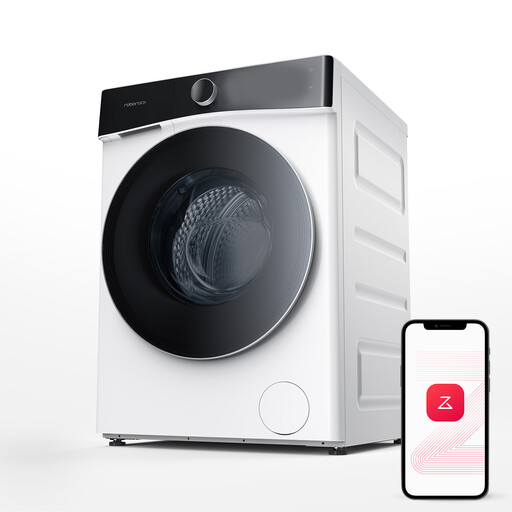 Image unavailable
Roborock Zeo Lite, 10 kg/6 kg washer-dryer
Combines washing and drying in one appliance if you don’t have room for two machines. The title lists a washing capacity of 10 kg and a drying capacity of 6 kg. To run both stages without removing any laundry, keep the load within the drying capacity.
Check the dimensions, clearances, energy use and cycle times against your installation and routine.
View on Joybuy
 Image unavailable
Hotpoint CHD84MWBSEE, 8 kg heat-pump tumble dryer
Worth considering if you have space for a separate tumble dryer and regularly dry washed laundry. The title lists an 8 kg capacity and energy rating C.
Compare the energy use shown on the energy label and check the dimensions and required clearances.
View on Joybuy
 Image unavailable
Comfee CD08EHP05W-HR, 8 kg heat-pump tumble dryer
Another dedicated appliance to consider if you want to dry laundry without keeping a drying rack up. The title lists an 8 kg capacity and energy rating D. Compare its stated energy use and programme times with those of the other models you’re considering.
Also check the dimensions and clearances before deciding where to put it.
View on Joybuy
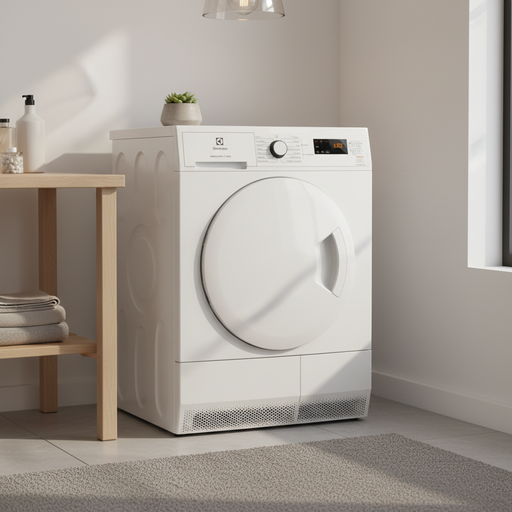 Image unavailable
Electrolux EDH1018CD GentleCare, 8 kg condenser tumble dryer
Worth comparing if you’re looking for a dedicated tumble dryer that doesn’t need to vent air outside. The title lists an 8 kg capacity and mentions OptiSense. Check the specifications for this model, its energy use and the maintenance instructions.
Make sure the space has the clearances specified in the manual.
View on Joybuy
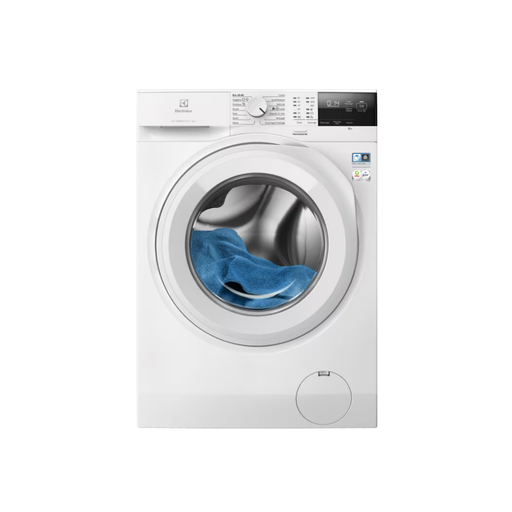 Image unavailable
Electrolux EW6FI4805AW, 8 kg washing machine, 1,400 rpm
Worth considering with a drying rack if you have a room that’s spacious and well ventilated, or has an extractor. This washing machine doesn’t dry laundry; the title lists an 8 kg washing capacity and a maximum spin speed of 1,400 rpm.
Adjust the spin speed to suit the fabrics and allow for the space your laundry will take up while it dries.
View on Joybuy
Frequently asked questions
Can you use a vented tumble dryer without an outlet to the outside?
No, not if your home doesn’t have the necessary outlet. UFC-Que Choisir explains that you need an opening to the outside or access to a ventilation duct. A condenser tumble dryer doesn’t need this connection, but you should still check its installation requirements.
Can you use a drying rack in a flat?
Yes, if you can set aside a room that’s spacious and well ventilated, or has an extractor. ADEME highlights how much moisture air-drying adds to the air. A spin cycle suited to the fabric can shorten the time the drying rack needs to stay up.
Can a washer-dryer dry a full wash load?
Not necessarily: the drying capacity may be lower than the washing capacity. Check both figures for your model. If you want a continuous cycle without handling the laundry, don’t exceed the drying capacity for the programme you’ve chosen.
What should you check before putting a washing machine in a bathroom?
Ask a professional to check that the space and electrical supply are suitable for the appliance and the room. Promotelec highlights the importance of earthing and circuit protection. If you’re unsure about the installation, seek advice from a qualified professional rather than modifying it yourself.
Is the energy label enough to choose a tumble dryer?
No. Use it to compare the energy-use figures shown, then consider the drying capacity, programme times, dimensions and maintenance requirements in relation to how you’ll use it. An energy rating alone won’t tell you whether the appliance can handle your usual loads or fit where you plan to install it.


