How do the options compare?
Separate tumble dryer
Consider it if: you can set aside space for the appliance or confirm that stacking is compatible.
Bear in mind: you’ll need room for two machines. According to UFC-Que Choisir, heat pump models use less electricity than conventional condenser models, but you should still compare the appliances you’re considering.
Washer-dryer
Consider it if: you need one space to do both your washing and drying.
Bear in mind: the drying capacity is generally lower than the washing capacity, Boulanger points out; a full wash load may need to be dried in two batches.
Indoor drying on an airer
Consider it if: you’re keeping your washing machine and have a room you can properly air or ventilate.
Bear in mind: your clothes will take up space in the room and release moisture into it. A dehumidifier can help, but it’s no substitute for ventilation.
For a small home with no balcony, start by considering the space you have, how much laundry you need to dry and whether ventilation is possible. The criteria below can help you work out what matters most for your needs.
| What matters |
What to check |
Who is this for? |
| Floor space |
Measure the space, the door opening and the clearance needed. For a stacked set-up, check that both appliances and the kit are compatible. |
In a studio flat, I want to move around without leaving an airer up, and I may only have room for one machine; around 29% of consumers put space at the top of their list. |
| Drying capacity |
Compare the drying capacity with your usual wash loads; for a washer-dryer, check the washing and drying capacities separately. |
When you do laundry regularly, having to remove clothes before drying makes things more complicated; drying the load you want in one go is the priority for around 29% of consumers. |
| Indoor humidity |
Check the room’s ventilation or extraction, and measure humidity if you regularly dry clothes there. |
If my clothes dry in the living room, I want to stop moisture lingering; this is the main concern for around 24% of consumers. |
| Day-to-day practicalities |
Compare energy consumption on a like-for-like basis, noise levels and the maintenance tasks set out in the instructions. |
With the appliance close to my living space, I need to be comfortable with its cycles and able to maintain it regularly; around 18% of consumers put these practicalities first. |
Appliances for machine-based options
These washer-dryers and heat pump tumble dryers are options if you’d rather not leave clothes on an airer for long periods. A washer-dryer suits homes with space for only one appliance; a separate tumble dryer needs a suitable space and, for a stacked set-up, compatible appliances and a stacking kit.
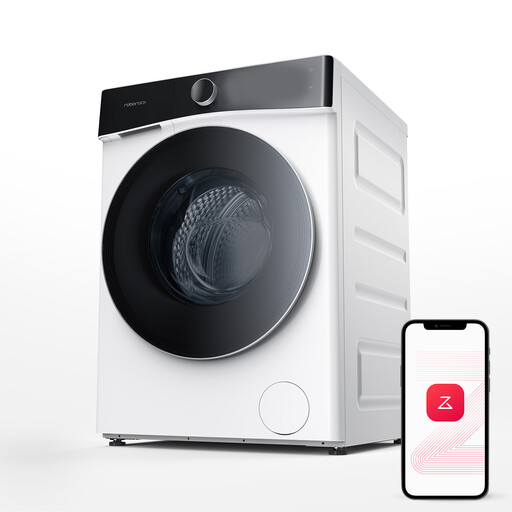 Image unavailable
Roborock Zeo Lite, 10/6 kg washer-dryer
Worth considering if you only have space for one appliance and usually dry loads that fit within its 6 kg capacity.
Its stated capacity is 10 kg for washing and 6 kg for drying, so you can’t assume a full wash load can be dried in one go.
Check the dimensions, noise level and energy consumption of the combined cycle to make sure it suits your set-up.
View on Joybuy
 Image unavailable
Hotpoint CHD84MWBSEE, 8 kg heat pump tumble dryer
Worth considering if you dry clothes regularly and can set aside space for a separate tumble dryer.
Its stated capacity is 8 kg; the product name gives its energy rating as C.
Measure the space and compare energy consumption per cycle before choosing. If you plan to stack it, make sure compatibility is confirmed.
View on Joybuy
 Image unavailable
Comfee CD08EHP05W-HR, 8 kg heat pump tumble dryer
Worth comparing if you have space for a separate appliance and want to dry loads that fit its stated capacity.
The product title gives a capacity of 8 kg and an energy rating of D.
Check the dimensions, noise level and energy consumption per cycle to see how well it would work in your home.
View on Joybuy
 Image unavailable
Comfee CD10EHP05W-HR, heat pump tumble dryer
Only consider this if you have space for a separate tumble dryer and can confirm the usable capacity of this model.
The title lists a capacity of 10 kg, while the description says 8 kg: check which capacity applies before planning your laundry loads.
Also check the dimensions, required clearances and energy consumption per cycle.
View on Joybuy
Frequently asked questions
Can I dry clothes on an airer in my studio flat?
Yes, if you can properly air the room or it has suitable extraction. ADEME recommends taking the moisture produced by laundry into account. If condensation or odours linger, measure the humidity and check the ventilation.
Does a condenser tumble dryer need a vent to the outside?
No. According to UFC-Que Choisir, conventional condenser models and heat pump models can work without an external air vent. However, you must still follow the instructions and observe the clearance and connection requirements for the model you choose.
Can a washer-dryer dry the whole load it has just washed?
Not necessarily: its drying capacity is generally lower than its washing capacity. For a model listed as 10/6 kg, compare your wash load with its 6 kg drying capacity and be prepared to remove some clothes if necessary.
What should I check before putting a machine in a bathroom?
Have the location and its electrical installation checked before choosing an appliance. Promotelec points out that sockets intended for appliances such as washing machines must comply with electrical safety zones; what’s possible will depend on the exact layout of the room.
Do I need an extended warranty for a drying appliance?
No. A commercial warranty is optional and separate from your statutory rights. In France, the Ministry of the Economy says the legal guarantee of conformity can be claimed for two years on a new or second-hand product sold by a business. Check what an extended warranty actually adds, including its duration and exclusions.


