For a small amount of washing, a wall-mounted, vertical or folding clothes airer can save space, provided you have a well-ventilated room. If managing damp is your priority, compare dehumidifiers. If you need to dry clothes in a machine, check the space required, capacity, noise and maintenance for the model you’re considering. If you’re replacing a washing machine, its spin efficiency is also worth considering.
Who are these solutions for?
People looking to keep their floor space clear
If you need to put your drying equipment away after doing the washing, a wall-mounted or folding clothes airer is worth considering. Remember to allow space for it when it’s open and, for a wall-mounted model, check that the wall is suitable for fixing it to.
Households concerned about damp from drying clothes indoors
You want to keep hanging your washing out to dry while managing the moisture released into the air. Anses recommends choosing a well-ventilated room. You could also consider a dehumidifier, taking its noise level and the need to empty or drain the collected water into account.
Households that do frequent or large loads of washing
For regular or larger loads, compare the usable drying-line length or the appliance’s drying capacity. Spin efficiency, space, noise and maintenance also matter when choosing.
How do the solutions compare?
Start by working out where your clothes can dry and how the room will be ventilated. Then compare the space needed while the equipment is in use, your usual load size and any considerations that come with electrical appliances.
| What to consider |
What to check |
Who this matters to |
| Space and storage |
Measure the space needed while the airer is in use, not just when it’s folded away. For a wall-mounted model, check the fixing and the area needed to open it. |
If space is tight, I need to be able to hang out the washing without blocking the way, then put the equipment away. Around 29% of consumers prioritise this need for space. |
| Damp and ventilation |
Find a well-ventilated room for drying clothes indoors, as recommended by Anses. If you’re considering a dehumidifier, also look at how it handles the collected water. |
When I dry clothes indoors, managing the room’s damp is my main concern. This is the top priority for around 29% of consumers. |
| Capacity and how often you do the washing |
Compare the usable drying-line length or drying load. For a washer-dryer, this differs from its washing capacity. If you’re replacing your washing machine, also check its spin efficiency class. |
When I do large loads or wash frequently, I need a solution that can handle the amount of washing I need to dry. Around 24% of consumers prioritise this capacity. |
| Noise, energy use and maintenance |
For an electrical appliance, compare the noise level and energy use stated for the specific model, then check its maintenance instructions. |
If the appliance is near my living area, its noise and maintenance tasks affect my decision. These considerations are a priority for around 18% of consumers. |
Mistakes to avoid
-
Choosing a clothes airer based only on its folded size
Once it’s open and holding washing, it could get in the way of a door or block a walkway. An airer with retractable lines may also need an opposite wall.
Measure the drying area and the space you need to move around, and check the fixings before buying.
-
Relying on a dehumidifier instead of ventilation
According to ADEME, drying clothes indoors adds moisture to the air. Anses recommends drying clothes in a well-ventilated room when it isn’t possible to dry them outside.
First, choose the room where you’ll dry your clothes. If you add a dehumidifier, compare its noise level and the options for emptying or draining the water.
-
Confusing a washer-dryer’s capacities
UFC-Que Choisir states that drying capacity is lower than washing capacity, so you may need to reduce a washed load before drying it.
Compare the two capacities separately, along with the cycle times and energy use stated for the model you choose.
Depending on the model, drying a load in several batches means extra cycles and more time using the appliance.
-
Forgetting to maintain your tumble dryer
The filter and, depending on the model, the condenser need regular maintenance. Electrolux advises cleaning the filter after every cycle on the appliances concerned.
Check the model’s instructions to find out which parts need cleaning and how often.
Brands to know
Leifheit
A brand worth looking at for wall-mounted or extendable clothes airers when storage and making use of a wall are priorities.
- The dimensions and drying-line lengths listed on product pages can help you measure up before installation.
- A stated drying-line length doesn’t replace checking the wall, the space needed to open the airer and ventilation.
De’Longhi
A brand to consider if you plan to keep drying clothes on an airer and want to compare dehumidifiers.
- Depending on the model, the range includes humidity settings, a water tank or continuous drainage.
- Compare the conditions behind the stated capacities, as well as the noise level and water management for the specific model. A dedicated function doesn’t guarantee a particular drying time.
Electrolux
A brand to look at for a heat-pump tumble dryer if your flat has room for this type of appliance.
- The product information for an 8 kg model includes its capacity and operating conditions, which can help you check whether it will suit your chosen space.
- These features don’t apply to the whole range or to compact tumble dryers. Check the installation and maintenance instructions for the model you choose.
Clothes airers and dehumidifiers on Joybuy
These models offer two ways to dry clothes in a limited space: use a folding vertical clothes airer or consider a dehumidifier in the room where you dry your washing. In both cases, check the space available and the ventilation requirements.
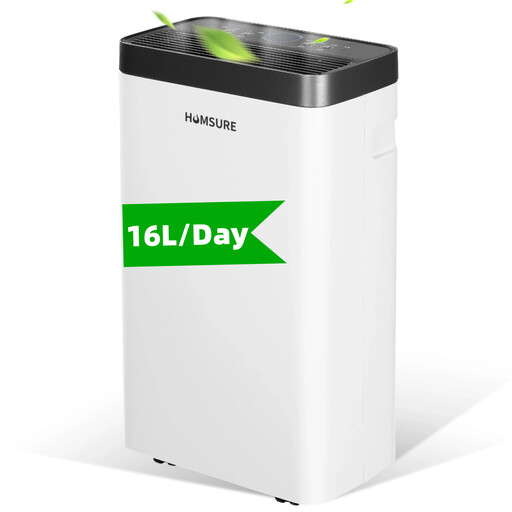 Image unavailable
HUMSURE Dehumidifier, 16 L/day, 1.4 L tank
Worth comparing if you dry clothes in a room and want to manage the collected water: a laundry-drying mode and a drain hose are listed.
The 16 L/day capacity doesn’t predict the results you’ll get at home. The product information says not to use the appliance in a small, enclosed space without ventilation. Also check the clearance it needs.
View on Joybuy
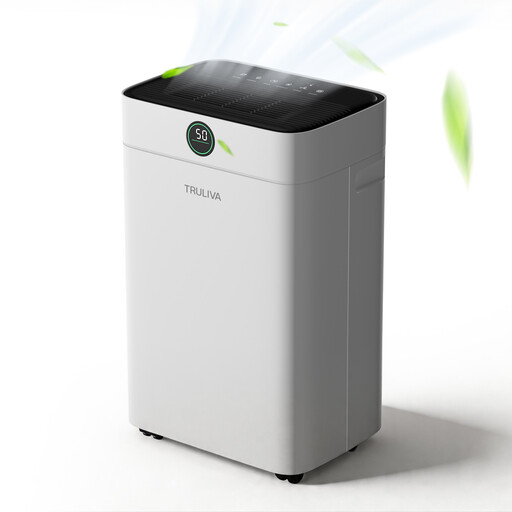 Image unavailable
TRULIVA Dehumidifier, 25 L/day, 2.8 L tank
Worth considering if you want a laundry-drying mode and the choice of a tank or continuous drainage. The model is listed with a drainage hose.
The 25 L/day figure is based on specific test conditions, not a guaranteed result in your flat. Allow for a level surface and the approximately 25 cm of clearance required during use.
View on Joybuy
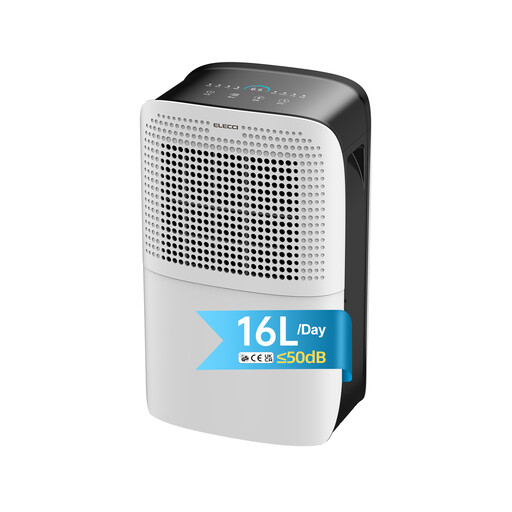 Image unavailable
ELECCI Dehumidifier, 16 L/day, 3.1 L tank
Worth comparing if you want to keep drying clothes on an airer while having a drying mode and continuous water drainage.
The stated extraction rate depends on the test conditions. Before choosing where to put it, check the model’s dimensions and noise level. Its safety information requires 25 cm of clearance around the appliance.
View on Joybuy
 Image unavailable
Comfee' MDDN-10DEN7 Dehumidifier, 10 L/24 h
Worth considering for managing damp in a room where you dry clothes, with a removable tank and continuous drainage option listed.
No dedicated laundry mode is listed. Check the suitable room size and the model’s noise level before deciding whether it’s right for your space.
View on Joybuy
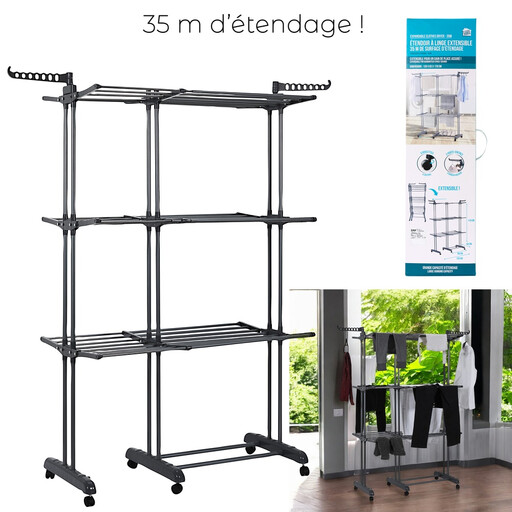 Image unavailable
Extendable three-tier clothes airer, 35 m
A folding vertical option if you’d rather hang out your washing and put the equipment away afterwards. It offers a stated 35 m of drying space, which varies depending on the configuration.
Check its dimensions when fully extended and the maximum load before choosing where to put it. As Anses recommends, indoor drying still requires a well-ventilated room.
View on Joybuy
Frequently asked questions
Do you need a dehumidifier to dry clothes in a flat?
Not necessarily. For clothes dried indoors, Anses recommends using a well-ventilated room first. You could compare dehumidifiers if managing damp is your priority, but don’t assume one will determine the drying time on its own.
What should you measure before installing a wall-mounted clothes airer?
Measure the airer when it’s open, as well as the space needed to hang your washing without blocking the way. For an extendable model, also check the distance to the opposite wall, the fixing surface and the room’s ventilation.
How do you maintain a condenser or heat-pump tumble dryer?
Follow the model’s instructions for the filter and, if applicable, the condenser. Electrolux advises cleaning the filter after every cycle on the appliances concerned. Other maintenance tasks depend on the tumble dryer’s design.
Is a washer-dryer a good choice if you’re short on space?
It may be a good choice if you want to combine washing and drying in one appliance. However, UFC-Que Choisir points out that its drying capacity is lower than its washing capacity. Compare the two load sizes, cycle times and energy use for the model before choosing.


