Households that often wash large loads
If you do several loads in a row, capacity, programme length, noise, dimensions and energy consumption matter just as much as being able to avoid leaving a clothes airer up all the time.


If you dry your clothes indoors, start by checking your washing machine’s spin cycle. ADEME recommends a good spin-drying efficiency rating when clothes need to dry quickly indoors or are going into a tumble dryer. Keep using a clothes airer if you have the space and can allow for drying times to vary. Consider a tumble dryer if you do laundry frequently and can install one, or use a dehumidifier near the airer as an extra measure. Neither option replaces airing your home or having working ventilation.
If you do several loads in a row, capacity, programme length, noise, dimensions and energy consumption matter just as much as being able to avoid leaving a clothes airer up all the time.
A clothes airer takes up floor space while your washing dries; an appliance needs a suitable place of its own. Measure the available depth and required clearance, and check the noise level if it will be near a living area.
A dehumidifier may be worth considering as an extra measure if you want to keep air-drying your clothes. Airing your home and ensuring the ventilation works properly are separate considerations, as ADEME’s guidance on air circulation explains.
When drying clothes at home, first check what a good spin cycle and your available drying space can already do. Then choose any additional equipment based on your main constraint.
| Consideration | What to check | Who this is for |
|---|---|---|
| Spin cycle and programmes | If you’re thinking of replacing your washing machine, check its spin-drying efficiency rating and choose a capacity that suits your laundry loads. Follow the care instructions for your fabrics. | I want my clothes to dry more easily on the airer without immediately adding another appliance. Around 33% of shoppers with this need would prioritise the spin cycle and how they organise their wash programmes. |
| Drying time | For a tumble dryer, compare the capacity, eco programme duration and weighted energy consumption per cycle on the energy label or in EPREL. | When I have several loads to wash, I mainly want my clothes to be dry within a more predictable time. This would be the top priority for around 27% of shoppers with this need. |
| Damp around the clothes airer | For a dehumidifier, check that the room matches the stated coverage conditions, and look at the water tank or hose drainage option. Keep airing the room. | I’d rather keep using my clothes airer, but I’m concerned about damp while my clothes dry. Nearly 20% of shoppers with this need would prioritise this consideration. |
| Space and noise | Measure the space and clearances specified in the instructions. Compare the stated noise levels and, if needed, check whether a compatible stacking kit is available. | In a small home, I need to be able to install the solution without blocking access or overlooking noise near rooms in use. This would be the top priority for around 20% of shoppers with this need. |
Removing water from the air does not refresh the air in your home. ADEME recommends continuing to air your home, especially after activities that create moisture.
If damp persists or you suspect a ventilation problem, get it looked at separately from your choice of appliance.
Two appliances with the same capacity can differ in energy consumption, noise, programme duration and dimensions.
Compare models on a like-for-like basis using their energy labels and EPREL product information sheets, published by the European Commission.
Having enough space does not mean your washing machine, tumble dryer and stacking kit can necessarily be used together. The instructions for the Electrolux EW8H4823RE tumble dryer require a stacking kit for this installation.
Check the exact model numbers of both appliances and the kit approved in their instructions before deciding where to put them.
You may need a compatible kit. If stacking is not approved, you’ll need to find another location.
A dehumidifier’s stated moisture removal rate under specific conditions may not reflect how it will work in your room or how long your clothes will take to dry.
Check the conditions behind the manufacturer’s figures, and compare each model’s dimensions, noise level and water drainage options separately.
Worth considering if you’re planning to stack a tumble dryer: start with the instructions for the model and check the stacking kit details.
A brand to consider if you want a dehumidifier as an extra measure near a clothes airer. Compare the recommended operating conditions for the model you choose.
Bosch tumble dryers can be compared model by model using the European Commission’s EPREL product information sheets.
These models offer two options: dry your clothes in a tumble dryer, or keep using your clothes airer and consider a dehumidifier as an extra measure. For each one, check that you have a suitable space, review the operating conditions and consider which specifications matter for your laundry routine.
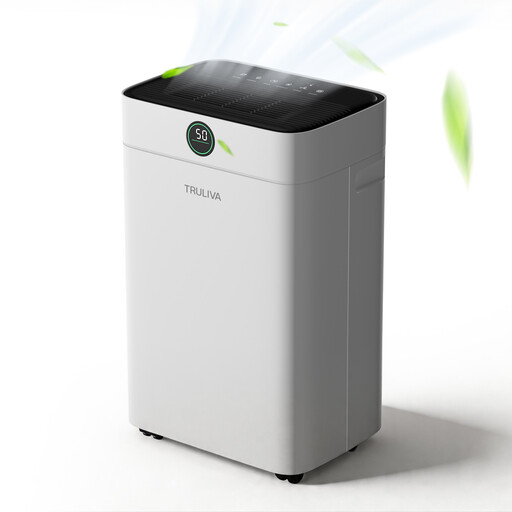 Image unavailable
A handy extra if you want to keep using a clothes airer. This model has a hose for continuous drainage. Its stated rate of 25 L/day is based on 90% relative humidity and 95 °F, so it should not be assumed to apply to your room. Check the suitable room size and energy consumption before buying, too.
 Image unavailable
For regular laundry loads you want to dry in a machine, provided you have a suitable space. This model has a C energy rating and a stated noise level of 64 dB, with the option of direct drainage. Compare its energy consumption per cycle on the label, and check the instructions for dimensions, clearances and any stacking arrangements you’re considering.
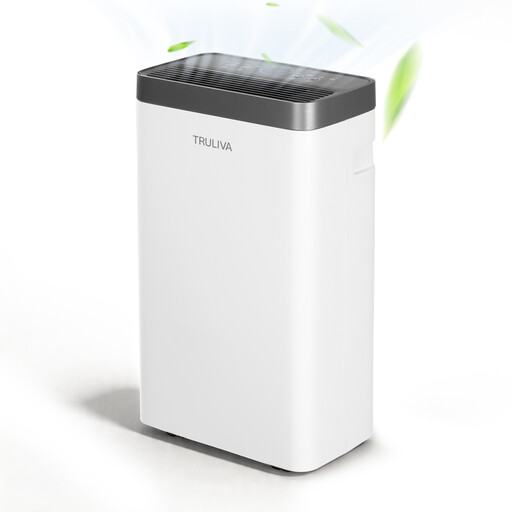 Image unavailable
A handy extra if you’re leaving your clothes on an airer. The stated tank capacity is 1.35 L, and continuous drainage by hose is available if your set-up allows. The stated rate of 16 L/day is based on 95 °F and 90% relative humidity. Check the noise level and energy consumption for your needs.
 Image unavailable
For drying laundry loads in a machine, if an 8 kg capacity suits your needs. This model is listed with a D energy rating. Before choosing where to put it, check the energy label and instructions for energy consumption per cycle, noise, dimensions and installation requirements. If a quick programme matters to you, check its duration too.
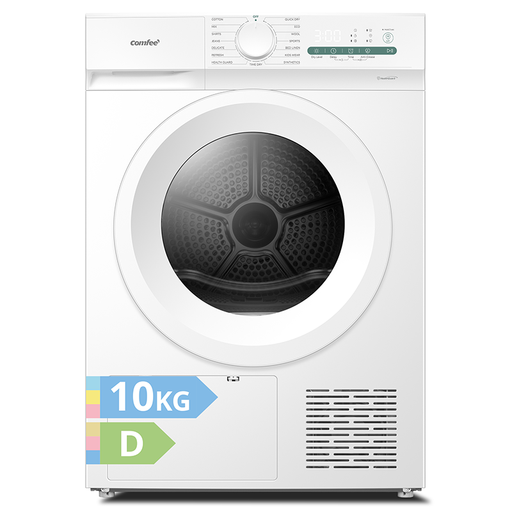 Image unavailable
Consider this for machine drying, but first check that its capacity suits your laundry loads: the title says 10 kg, while the descriptions say 8 kg. A D energy rating is listed. Check the energy consumption per cycle, noise, dimensions and installation instructions before choosing this model, too.
No. A dehumidifier removes water from the air, but it does not refresh the air in your home. ADEME recommends opening the windows wide for 5 to 10 minutes each day and airing your home after activities that create moisture.
Don’t assume that buying an appliance will, on its own, solve a possible ventilation problem. If you suspect an issue, get it looked at. For rented homes in France, ANIL highlights the importance of having openings and ventilation systems in good working order.
No. Check that both model numbers are compatible and that the stacking kit is suitable. The instructions for the Electrolux EW8H4823RE tumble dryer require a kit when it is placed on top of a washing machine. This does not mean that every combination of appliances is approved.
Compare their weighted energy consumption per cycle, noise level, eco programme duration and dimensions on a like-for-like basis, then check the installation requirements. The energy label, explained by ADEME, and the European Commission’s EPREL product information sheets provide model-specific details to help you compare.